Fuel Prices Rising: The Best Ways to Save Energy and Reduce Costs 2026
Fuel prices have surged in 2026, adding pressure to everyday expenses for both households and businesses. From commuting to transport costs, rising petrol and diesel prices are no longer a short-term issue but an ongoing challenge driven by global supply disruptions and volatile oil markets.
As costs continue to climb, simply cutting back on fuel use may not be enough. More people are now looking for smarter ways to manage energy consumption and reduce reliance on fuel. This guide explores what’s behind rising fuel prices and, more importantly, the most effective ways to save energy in today’s changing landscape.
Why Are Fuel Prices Increasing?
Fuel prices are shaped by a combination of global market forces and local factors, which is why they often rise quickly and fluctuate over time. Here are the key reasons behind the increase:
1. International benchmark prices
International benchmark prices are the primary driver of fuel prices. Retail petrol and diesel prices are closely linked to refined fuel benchmarks traded in global markets, particularly Singapore benchmarks such as Mogas 95 for petrol and Gasoil for diesel.
Fuel type | Benchmark price | Price changes |
Regular unleaded petrol | Singapore Mogas 95 unleaded | Daily |
Diesel | Singapore Gasoil (10 ppm sulphur) | Daily |
LPG | Saudi Contract Price (butane and propane) | Monthly |
*Current benchmark prices for fuels sold in Australia
2. Government Taxes and Policies
Fuel prices include taxes such as fuel excise. Changes in government policy—like temporary tax cuts—can reduce prices, but the impact is not always immediate and may vary by location.
3. Local Petrol Price Cycles
In major Australian cities, fuel prices often follow a cycle: sharp increases followed by gradual declines. These fluctuations are driven by retailer pricing strategies rather than direct changes in supply costs.
4. Supply and Demand Pressures
Fuel prices are also influenced by global supply and demand conditions. When demand for oil increases, such as during periods of economic growth, seasonal travel, or higher transport activity, prices tend to rise. At the same time, limited supply, refining constraints, or disruptions to shipping and logistics can reduce availability and push prices higher.
Best Ways to Save Fuel Costs in Daily Life
With fuel prices on the rise, making small changes to your daily habits can lead to noticeable savings over time. While you may not be able to control market prices, you can control how efficiently you use fuel. Here are some practical ways to reduce your fuel costs:
1. Drive More Efficiently
Aggressive driving—such as rapid acceleration and hard braking—can significantly increase fuel consumption. Maintaining a steady speed, anticipating traffic conditions, and using cruise control on highways can help improve fuel efficiency.
2. Find the cheapest fuel nearby
Fuel prices can vary significantly between service stations, even within the same area. Checking the fuel price map before filling up can help you locate the cheapest petrol nearby and avoid paying more than necessary.
3. Reduce Unnecessary Trips
Combining errands into a single trip and avoiding peak traffic hours can save both time and fuel. For short distances, consider walking or cycling instead of driving.
4. Use Public Transport or Carpool
Switching to public transport or sharing rides with others can greatly reduce your weekly fuel expenses. Carpooling is especially effective for daily commutes.
5. Keep Your Vehicle Well-Maintained
Regular maintenance, such as checking tyre pressure, changing engine oil, and replacing air filters, ensures your vehicle runs efficiently and consumes less fuel.
6. Lighten Your Load
Carrying excess weight or using roof racks increases fuel consumption. Removing unnecessary items from your vehicle can improve mileage.
7. Choose Fuel-Efficient Vehicles
If you’re planning to upgrade your car, consider models with better fuel efficiency or hybrid/electric options. While the upfront cost may be higher, the long-term savings on fuel can be substantial.
From Fuel to Electricity: A Smarter Way to Save Energy
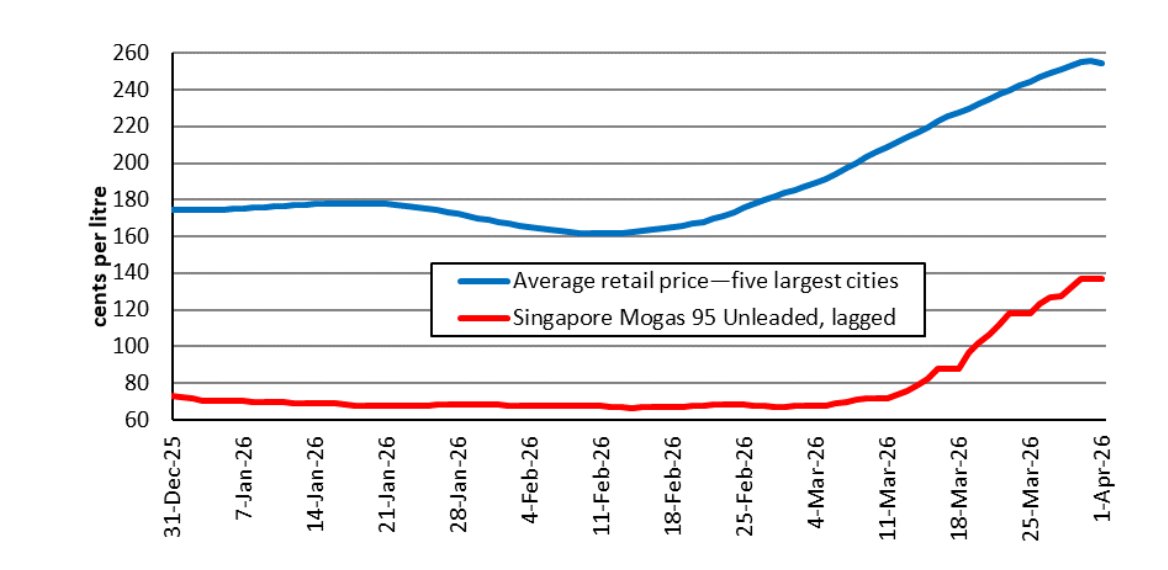
Source: ACCC calculations based Informed Sources, Argus Media and Reserve Bank of Australia data
The retail price is a 7-day rolling average.
The international price is a 7-day rolling average of the Singapore Mogas 95 unleaded price, lagged by 10 days.
As shown in the chart above, the trend in 2026 indicates that fuel prices are not only fluctuating but generally increasing over time. The gap between the international benchmark price, such as Singapore Mogas 95, and the price paid at the pump can remain significant, meaning local petrol prices may stay relatively high even when global markets stabilise.
This has also led many households to reconsider the question of cheaper gas or electricity. Relying heavily on petrol or diesel is no longer only a logistical concern but also a financial consideration due to ongoing price volatility. As a result, more households are exploring the idea of a personal microgrid by shifting part of their energy use from fossil fuels to electricity, especially when combined with solar power. This approach can help reduce exposure to fluctuating fuel prices and provide more stable and predictable long-term energy costs.
Smart Energy Solutions to Reduce Fuel Dependence
As fuel prices remain high, relying solely on petrol or diesel is becoming increasingly costly and unpredictable. While improving driving habits can help reduce expenses, long-term savings often come from reducing dependence on fuel altogether. Flexible energy solutions can provide more stable costs, greater convenience, and improved energy resilience.
1. Portable Power Stations: Flexible Energy and High-Capacity Backup
A portable power station is a versatile alternative to fuel-powered generators, providing quiet, clean electricity without petrol or diesel. They are ideal for home backup or emergency situations, and are safe for indoor use with minimal maintenance.
For households with higher energy demands, models like the EcoFlow DELTA 3 Max Plus Portable Power Station take this a step further. With its large capacity, it can power multiple appliances simultaneously, including refrigerators, lighting, and high-demand equipment. Unlike fuel generators, it operates quietly, requires no refuelling and delivers a cleaner, more convenient, long-term energy solution.
2. Generate Your Own Power with Solar Panels
Pairing portable power stations with solar panels allows you to generate your own electricity and further reduce fuel dependence. The EcoFlow 400W Portable Solar Panel delivers enough power for short-term charging needs, supports high-demand outdoor appliances, and operates across a wide temperature range. Its IP68 waterproof and weatherproof design ensures it can stay outdoors without daily setup, and it folds compactly for easy transport and storage.
3. Build a Complete Solar Generator System
A solar generator combines solar panels and a portable power station into a fully integrated system. It allows you to generate, store, and use electricity day or night—without relying on fuel. This setup provides reliable backup power, supports off-grid living, and helps households achieve energy independence while lowering long-term costs.
Conclusion
Rising energy costs are shaping the way we think about powering our lives. By exploring alternative solutions, embracing efficient practices, and adopting flexible energy tools, households can take control of their consumption rather than being at the mercy of fluctuating fuel prices. The shift toward smarter, cleaner energy not only protects your budget but also contributes to a more sustainable and resilient future.
FAQs
What does "dirty fuel" mean?
“Dirty fuel” generally refers to fuels that produce higher levels of pollution when burned, such as petrol, diesel, and some low-quality fuels with higher sulphur content. These fuels release more emissions, including carbon dioxide (CO₂), nitrogen oxides, and particulate matter, which can affect air quality and the environment. Compared with cleaner energy options like electricity from solar, dirty fuels are less efficient and contribute more to climate change and urban pollution.
Why does Australia not refine oil?
Australia imports most of its refined petroleum because domestic refining capacity has declined over the years. Local refineries face high operating costs and competition from larger, more efficient refineries overseas. As a result, Australia relies on imported fuel for domestic consumption, making local prices sensitive to global crude oil markets and international supply disruptions.
Where does Australia get its oil from?
Australia sources its oil from a mix of domestic production and imports. While the country has some oil fields, domestic output covers only a portion of national demand. The majority of oil is imported from countries like Singapore, South Korea, Japan, and the Middle East. This reliance on overseas supply makes Australian fuel prices sensitive to global market fluctuations and shipping costs.