A Complete Guide to Digital Signal Processing (DSP)
Have you ever wondered how your noise-canceling headphones magically silence the world around you, or how your smartphone turns a shaky video into a smooth clip? The answer lies in a powerful, invisible technology working behind the scenes. It's called Digital Signal Processing (DSP), and it's the hidden "brain" inside nearly every modern electronic device.
What is DSP? The Plain English Meaning
At its core, Digital Signal Processing (DSP) is a method for taking real-world information and translating it into a language that computers can understand and manipulate. Think of it as a universal translator for technology.
The world around us—sound, light, temperature, pressure—exists as analog signals. These are smooth, continuous waves of information. A human voice, for example, creates a complex, flowing sound wave. While perfect for our ears, this format is messy and unreadable for a computer, which thinks in precise, discrete numbers: ones and zeros.
This is where DSP comes in. The process involves two key steps:
Sampling: A device takes lightning-fast "snapshots" of the analog signal thousands or even millions of times per second.
Quantizing: Each snapshot is measured and assigned a specific numerical value.
The result? The smooth, messy analog wave is converted into a clean, orderly stream of numbers. This digital representation can then be filtered, compressed, enhanced, or analyzed with incredible mathematical precision. In short, what is DSP? It’s the bridge that connects our analog reality to the digital world, allowing us to perfect and control the signals that define our experiences.
The Heart of the Operation: The Digital Signal Processor Chip
If DSP is the method, then the digital signal processor is the master craftsman that performs the work. Often called a DSP chip, this is a highly specialized microprocessor designed for one purpose: to perform mathematical calculations on signals at incredible speeds.
How is a digital signal processor chip different from the regular processor (CPU) in your laptop?
- A CPU is a jack-of-all-trades. It's designed to be flexible, running your operating system, web browser, and spreadsheets all at once. It’s like a versatile chef who can prepare a wide variety of dishes well.
- A DSP chip is a specialist. It's built from the ground up to excel at the specific, repetitive math operations required for signal processing—like multiplying and adding numbers over and over again. It’s like a master sushi chef who can prepare one thing with unparalleled speed and perfection.
This specialization makes DSP chips far more efficient and faster than CPUs for tasks like filtering out background noise from a call, compressing a video file for streaming, or precisely controlling the output of a power inverter. They are the high-performance engines that make real-time digital magic happen.

Where Do We See DSP in Everyday Life?
Once you know what to look for, you’ll see that DSP is everywhere. It’s the silent partner enhancing countless daily activities.
- Audio and Sound: When you put on noise-canceling headphones, a DSP chip analyzes the incoming ambient sound and generates an opposite "anti-noise" wave to cancel it out. When you talk to a voice assistant, DSP filters your voice from background noise so the command is understood. It’s also what makes music streaming possible by compressing massive audio files into manageable MP3 or AAC formats without losing too much quality.
- Images and Video: The stunning photos you take on your smartphone are thanks to DSP. The DSP chip processes the raw data from the camera sensor to reduce noise, correct colors, and stabilize the image if your hand shakes. When you watch a movie on a streaming service, DSP is working tirelessly to decompress the video data in real-time, delivering a smooth, high-resolution picture.
- Communications: DSP is the backbone of modern communication. In your smartphone, it filters, amplifies, and encodes your voice to ensure a clear connection, even with a weak signal. In Wi-Fi routers, it helps separate data streams to provide faster, more reliable internet to multiple devices simultaneously.
- Automotive and Medical: Beyond entertainment, DSP is critical for safety. In cars, it powers anti-lock braking systems (ABS) by analyzing wheel speed and modulating brake pressure. It’s also fundamental to medical imaging technologies like MRI and CT scans, where it reconstructs detailed images of the human body from complex sensor data.
Why DSP is Crucial for Modern Power Systems
The benefits of DSP extend beyond media and communications into something even more fundamental: clean, reliable electricity. The power coming from a wall outlet is an alternating current (AC) that should follow a perfectly smooth pattern called a pure sine wave. However, many backup power sources, like basic inverters, produce a choppy, inefficient "modified sine wave."
This blocky, modified waveform can cause problems for sensitive electronics. It can make fans and motors buzz, cause computers to crash, and even permanently damage delicate devices over time.
To create clean, grid-quality power, a modern power station or inverter needs a sophisticated "brain" to manage its output. This is a perfect job for a DSP chip. By constantly monitoring the electricity being produced, a DSP can make thousands of micro-adjustments every second, shaping the output into a perfect, pure sine wave. This ensures that any device you plug in runs smoothly, efficiently, and safely.
Powering Your Life with Precision: EcoFlow and DSP
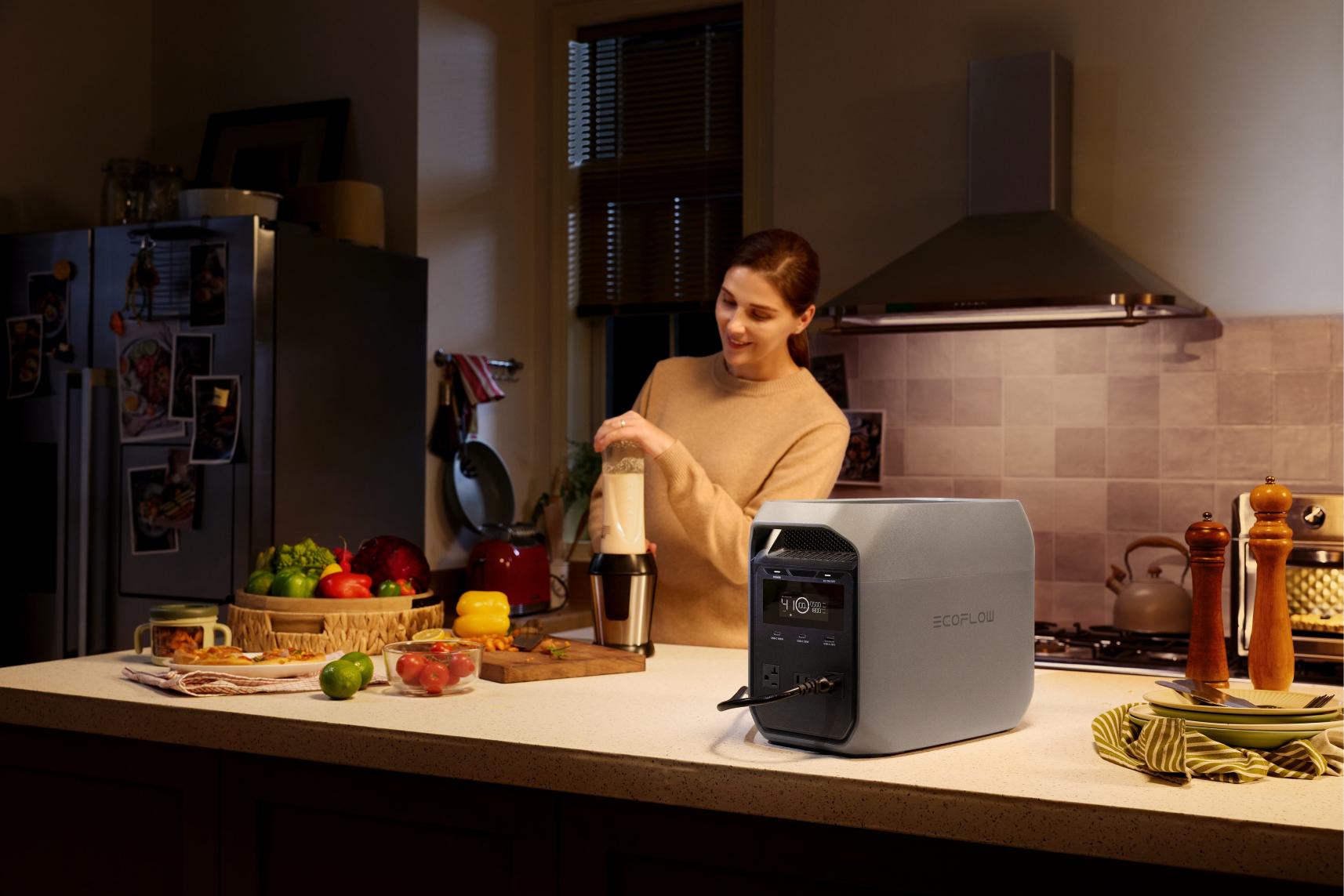
Delivering stable, clean power is at the heart of everything we do at EcoFlow. That's why the advanced technology inside our products, like the EcoFlow DELTA 3 series, relies on a powerful DSP chip to act as its central controller.
Take the EcoFlow DELTA 3 Max for example. Its integrated DSP is the command center for its power output. It samples the voltage and current with incredible precision—every 33 microseconds. This ultra-fast monitoring allows it to generate a pure sine wave that is just as stable and reliable as the power from your home's outlets.
What does this mean for you? It means you can confidently power your most essential and sensitive electronics during an outage or off-grid adventure. From refrigerators and power tools to laptops, high-end cameras, and even medical equipment, the clean energy managed by the DSP ensures your devices run perfectly, without risk of damage. It’s technology that provides not just power, but peace of mind.
How DSP Enhances Everyday Devices
From the music we hear to the photos we share and the life-saving power we rely on, Digital Signal Processing is the unsung hero of the modern world. It’s the tireless translator that converts the chaos of the analog world into the order of digital information. By enabling devices to understand and refine real-world signals with mathematical precision, DSP makes our technology smarter, more efficient, and more capable, empowering us in every aspect of our lives.
FAQs about DSP technology
Q1: Do you think DSP is better than traditional signal processing?
They are not necessarily "better" because they are used for different things. For simple jobs like amplification, analog processing can be easier because it is direct. DSP, on the other hand, is much more adaptable, powerful, and accurate. You can do complicated algorithms with DSP that you can't do with analog, like adaptive noise cancellation or data compression. Digital signals also don't lose quality over long distances and can be perfectly copied, making them more reliable and accurate for most current uses.
Q2: What makes a DSP chip different from a CPU or GPU?
A CPU can do a lot of different things well. A GPU (Graphics Processing Unit) can do a lot of simple jobs at once and do them all very well. A DSP chip was made to do one thing: do math on data streams very quickly and over and over again. Its unique design makes it very good at manipulating signals in real time.
Q3: Can DSP make my devices' batteries last longer?
Yes, significantly. Compression is a major function of DSP. The data is compressed by DSP when you send music or video, for instance. Because of this, less data needs to be sent over Wi-Fi or cellular networks and saved. Sending and storing data use a lot of energy. The digital signal processor does these jobs very quickly and efficiently, which reduces the workload on other components and helps the battery last longer.
Q4: What does a "real-time" DSP program mean?
In a real-time application, the information needs to be processed almost instantly, with no delay that can be seen. Think about a live phone call, a car's anti-lock brakes, or how an EcoFlow power station makes pure sine waves. In these situations, the DSP chip needs to get the data, do its math, and send out an output quickly enough to change the process that is already happening. The system would not work if there was a big delay.
Q5: Can DSP chips be programmed?
Yes. It is one of their best features that they can be programmed. The software (called code) that runs on the DSP chip can be written by manufacturers and updated. They can do this even after a product has been sold to make it work better, fix bugs, or even add new features. For instance, a business that makes headphones could release new software that makes the noise-cancellation algorithm better. This would let you have a better experience without having to buy new hardware.
For press requests or interview opportunities, reach out to our media team
media.na@ecoflow.com