Complete Weather Breakdown Revealing When Will the Heatwave End UK Wide and How to Survive the Heat
- Analysing Weather Patterns to See When Will This Heatwave End
- Regional Forecasts Showing When Will the UK Heatwave End
- Overcoming Daily Discomfort While Asking UK Heatwave When Will It End
- Managing High Energy Bills While Waiting for When Will Heatwave end in UK
- Conclusion
- When Will the Heatwave End UK Frequently Asked Questions
Currently, everyone in the country is asking the same question: when will the heatwave end UK. Late May 2026 was one of the hottest months with temperatures hitting 35°C. The good news is that the heatwave is now breaking down due to the cooler Atlantic systems pushing in from the north-west. However, in southern England, the temperatures are still above-average warmth.
This guide looks at:
Analysis of weather patterns to determine when the heatwave will end
Regional forecasts showing when will UK heatwave end
How to overcome daily discomfort due to the current heatwave
Analysing Weather Patterns to See When Will This Heatwave End
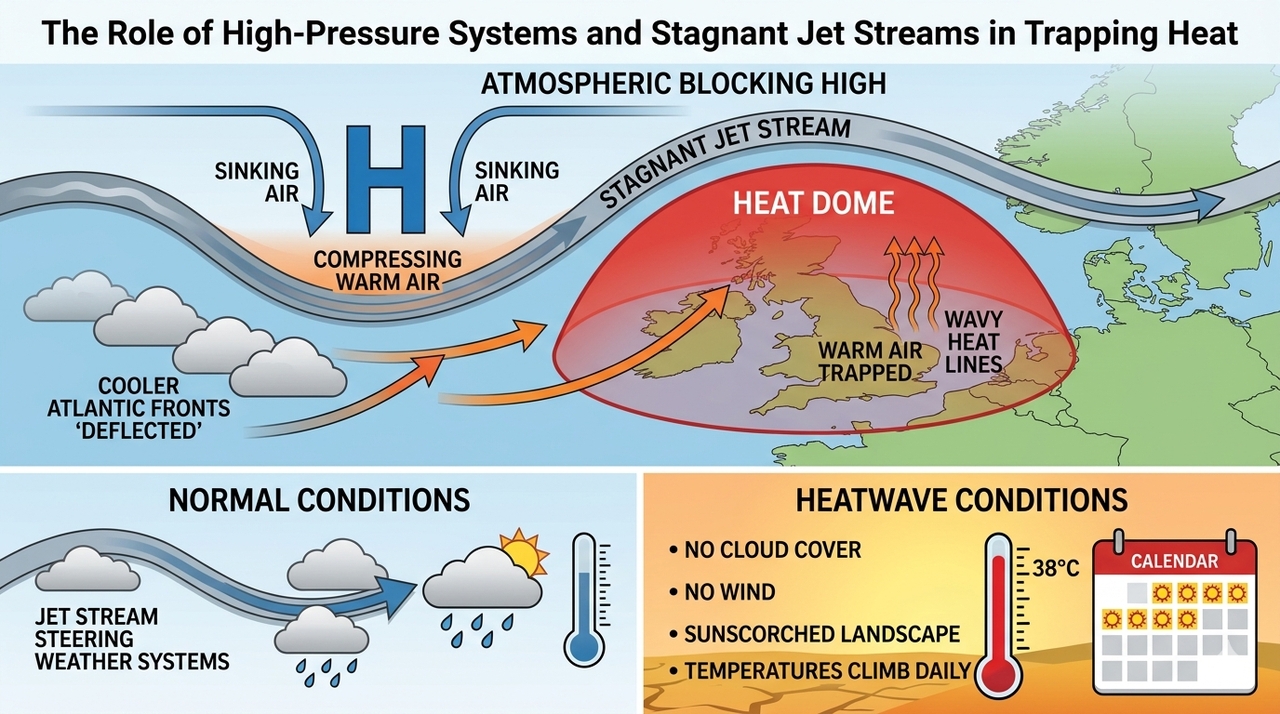
The Role of High-Pressure Systems and Stagnant Jet Streams in Trapping Heat
When will this heatwave end? To answer that properly, you need to understand what caused it. A phenomenon meteorologists call an "atmospheric blocking high"—or, more dramatically, a heat dome—is the culprit. A high-pressure system becomes stationary over the UK, acting effectively like a lid. Warm air sinks, compresses, and heats further; meanwhile, cooler, wetter Atlantic fronts are physically deflected away. No cloud cover. No wind. Temperatures climb daily.
The jet stream is supposed to prevent this. Under normal conditions, this fast-moving band of air at altitude steers weather systems across the Atlantic and into Britain. When the jet stream weakens or shifts poleward—as it increasingly does during periods of above-average sea surface temperatures—it loses the authority to budge that stubborn blocking high. The result is what we lived through: consecutive days of escalating temperatures with no meaningful cloud or precipitation to interrupt them.
Tracking Global Data to Understand When Will Europe Heatwave End and Its Impact On Us
When will the Europe heatwave end is a question with direct relevance to the UK. Britain does not exist in a meteorological vacuum. Hot air masses originating from North Africa and Southern Europe regularly sweep north across the English Channel, and the UK's weather is tightly coupled to broader continental patterns. When Spain, France, and the Iberian Peninsula are baking under extreme heat, that warm air reservoir feeds northward—sometimes directly onto our shores.
Through monitoring European pressure charts, forecasters can get the best signal for UK conditions. The UK heatwave starts dying when the cooler and low pressure system from the Atlantic arrives to the continent from the west. It first hits the north-west and gradually makes its way eastward and southward in a period of 48 to 72 hours, cooling down the continent.
Historical Comparisons of Prolonged Summer Temperature Spikes
When answering the question, when will the heatwave end in UK, we have to look through historical numbers so we can provide accurate responses. The heatwave that hit the UK in 2022 reached 40.3°C which was a national record. However, intense thunderstorms formed which helped drop temperatures by 10 to 15°C within hours. Looking slightly further into 2018, the heatwave ran for a period of six weeks before the Atlantic cloud and rain arrived in August to calm things down. In 1976, the drought heatwave had a period of 16 consecutive days which had temperatures that were above 32°C across parts of England.
From this benchmark data, UK heatwaves don’t snap off cleanly but rather dissolve, in a transition period of 48 to 72 hours. Thunderstorms, sometimes violent ones, are the ones that help reduce the heatwaves. You can expect heavy rains, hail, and lightning before you get sustained coolness.
Regional Forecasts Showing When Will the UK Heatwave End
Temperature Predictions and Relief Timelines for London and Southern England
If you are looking for an honest answer for when will the UK heatwave end for London and the South East, you are definitely in the right place. Currently, the temperatures have begun dropping but this region is historically known for being the last to experience a calm down of heatwaves. This is because of the urban heat island effect that’s caused by concrete, tarmac, and dense buildings which absorb daytime solar radiation and release it slowly throughout the night. This keeps overnight temperatures stubbornly high, and during the May 2026 peak temperatures stayed above 20°C from dusk to dawn.
For temperatures to return to the seasonal norm of the low-to-mid 20s, forecasters are watching for a shift to south-westerly maritime breezes—moist, cooler air from the Atlantic that can cut through the residual heat. Met Office Chief Forecaster Chris Bulmer confirmed that "many areas will begin to feel fresher conditions moving in" as a weak cold front establishes itself. Southern England is expected to see this transition later than anywhere else, with some warm days still possible into mid-June.
Expected Cooling Trends Across the Midlands and Wales
Midlands and Welsh valleys have an inland geography which makes these areas hit rapidly under direct sun and cool faster once the blocking high shifts. So, with this as our basis, let’s respond to when will the heatwave end UK for the Midlands and Wales. The answer is that cooling has already started in waves for Wales. However, the Midlands are still experiencing a more stuttering transition, where mornings are cooler and afternoons are warmer. Therefore, you can expect average summer conditions before mid-June in these areas.
Examining Weather Fronts to See When Will Heatwave End for Scotland And The North
When will heatwave end for Scotland and the North? It already has, for the most part. This is the consistent pattern with UK high-pressure events: northern regions feel the breakdown first. Atlantic low-pressure systems push down from the north-west, and Scotland and Northern England are the first to receive cooler, cloudier air as the blocking high retreats south-eastward.
During the 2026 event, Scotland's peak temperatures were already 5 to 10 degrees lower than southern England's, and the transition to overcast, showery conditions arrived several days earlier. The Pennines and northern England have been cooler since late May. For anyone in Scotland—when will the UK heatwave end is already answered: it has. The focus now is on managing the thunderstorm risk highlighted by current Met Office yellow warnings.
Overcoming Daily Discomfort While Asking UK Heatwave When Will It End
Recognising and Preventing Severe Heat Exhaustion and Dehydration at Home
In May 2026, many people were wondering when will this heatwave end UK. The UK Health Security Agency (UKHSA) issued amber heat-health alerts across multiple regions during the 2026 heatwave—and for good reason. Heat exhaustion is dangerously easy to miss in its early stages. Subtle, persistent headaches are the first red flag. Then comes dizziness when you stand up too quickly, muscle cramps (particularly in calves and thighs), and a heavy, inexplicable lethargy that feels like more than just tiredness.
Many households assume that indoors are safer than outdoors during heatwaves, which is a major mistake. If you are in a building without proper ventilations, temperatures can go higher than what’s outside. Elderly people and young children are vulnerable to this. Therefore, hydration is important and you must drink at least two litres of water daily, and even more if you are involved in more physical activities. To take care of your pets, use a damp towel on cool tiles and give them fresh water to keep them hydrated and refreshed.
Modifying Indoor Routines to Minimise Physical Exertion During Peak Afternoon Hours
The window between approximately 12 noon and 4 pm is when solar radiation peaks and indoor heat gain is highest. UK heatwave when will it end aside—until the temperatures fully normalise, this block of time should be treated as a low-activity zone. Shift your high-energy tasks to either side of it.
Household chores, like washing laundry, cooking, and exercising generate more heat in your home. Running your oven for an hour raises the temperature in your kitchen significantly. Doing a full dishwasher cycle during peak afternoon hours is like opening an extra radiator, which means temperatures will rise. The best way to keep your household temperatures low is doing these tasks before 10 am or after 7 pm. These simple strategies will help you cope and not worry about when will heatwave end UK.
Strategic Home Ventilation and Blocking Midday Solar Heat Gain Through Windows
Here is the mistake almost everyone makes during a heatwave: leaving windows open all day because it "feels like it's doing something." It is—but it may be working against you. If the air outside is hotter than inside (which it almost certainly is between noon and 5 pm), an open window is importing heat, not expelling it.
The correct approach is counterintuitive but effective. Close windows and draw curtains or blinds on any south or west-facing walls before the sun reaches them—typically from late morning. Insulating blinds or heavy curtains block solar radiation before it penetrates the glass and warms the room. Once outdoor temperatures drop below indoor temperatures (usually around 9 to 10 pm during a heatwave), throw everything open and create a cross-breeze through opposite ends of the house. This flush of cooler night air is your most powerful cooling tool—and it costs nothing.
Managing High Energy Bills While Waiting for When Will Heatwave end in UK
The Hidden Costs of Running Traditional Fans and Air Conditioners Around the Clock
During this period, the most Google question is usually when will heatwave end in UK. However, a close second question is "how much is this costing me?" Running cooling appliances continuously is genuinely expensive. A standard tower fan draws around 50 to 100 watts. A portable air conditioning unit typically consumes 1,000 to 1,500 watts. Run a portable AC for eight hours a day at the current Ofgem unit rate of 24.67p per kWh, and you're adding roughly £2.50 to £3.00 to your daily bill—every single day of the heatwave.
Scale this across multiple rooms, and factor in a dehumidifier and several fans running simultaneously. This increases your weekly electricity costs. The upcoming July 2026 price cap is expected to rise to 26.11p per kWh, which means one thing, your household electricity costs will rise further.
Note: Ofgem reviews energy price caps quarterly. Currently, the electricity price cap is 24.67p per kWh and has already been revised to 26.11p per kWh starting on 1 July 2027. To get the up-to-date prices, always check on the Ofgem official website.
Eliminating Grid Dependency and Cooling Bills With the STREAM Ultra X
During the heatwave period, households rely more on fans, portable ACs, and dehumidifiers to keep temperatures low. However, this increases your electricity costs. The EcoFlow STREAM Ultra X is built to help keep your electricity costs low while keeping your household’s temperatures low. This battery is the foundation of a smart home ecosystem and has sufficient capacity to store enough power to run your household appliances. You can charge it using your solar panels, or when the grid electricity costs are low and use it to power your home during peak electricity costs hours.
Securing Uninterrupted Climate Control With the STREAM Ultra
Grid instability increases during the heatwave period due to high demand for electricity by households running air conditioning. Which means outages can occur when you really need your cooling devices on. The EcoFlow STREAM Ultra with 2x400 W Rigid Solar Panels is the solution to this pain point. You can set up the solar panels to charge the battery and then draw from it later when the grid electricity costs are high or when there are power outages. This means that your household will have sufficient power to run your cooling appliances during the high heatwave temperatures, and also you will still have sufficient energy to run your other household appliances.
Conclusion
This article has discussed in detail and answered the question when will the heatwave end UK. The heatwave has already ended in some parts of the UK, such as Scotland and the north parts of the UK. The Midlands and Wales are still easing up and the South East is also dropping, but more slowly. Southern regions can expect the heatwave to be completely over by mid-June. During this heatwave period, remember to stay hydrated, manage indoor temperatures, close sun-facing windows during the day and open them at night, and perform high energy tasks away from the peak afternoon heat window. When you start seeing thunderstorms, don’t be alarmed. This is usually the transition period indicating that the heatwave is close to ending.
EcoFlow is your number one source of the best energy-efficient solutions. Our products are designed for this particular period—when grid costs spike, power becomes unreliable, and households need to stay cool without incurring heavy financial charges. If this summer has made you rethink your home energy strategy, explore our range of solar panels, home battery systems, and smart energy solutions. Get ready for the next heatwave today.
When Will the Heatwave End UK Frequently Asked Questions
How long do high-pressure heatwaves typically last in the UK?
A high-pressure heatwave in the UK usually lasts between 5 and 14 days. However, there are instances, like in 2018 and 1976, when the heatwaves lasted for weeks.
What temperature drop officially signals when will the heatwave end?
The Met Office declares a heatwave over when a location drops below its regional heatwave threshold which sits between 25°C and 28°C in England. The clearest signal is usually a sustained return to the seasonal average of low-to-mid 20s and overnight temperatures of below 15°C. Transitioning from heatwaves to normal conditions is usually signalled by thunderstorms, heavy rain, and a sharp 5 to 15°C drop in maximum daily temperature.
How can I keep my house cool at night without drastically increasing my energy bill?
The single most effective technique is cross-ventilation using night air—opening windows on opposite sides of the house once outdoor temperatures drop below indoor temperatures (typically after 9 pm during a heatwave). Combine this with closing south and west-facing curtains during the day to block solar heat gain before it enters. A bowl of ice in front of a standard fan creates a low-energy evaporative cooling effect. For sustained overnight cooling without grid dependency, home battery systems that store daytime solar energy—like the EcoFlow STREAM Ultra X—allow you to run fans and portable AC units through the night at near-zero additional cost.