Warm Homes Plan: A Practical Guide for UK Households
- What the Warm Homes plan is
- Who is eligible and who benefits?
- What support does the Warm Homes Plan provide?
- How does the Warm Homes Plan help reduce energy bills?
- Smart energy solutions for warmer, more efficient homes
- How to apply for Warm Homes Plan support?
- Is the Warm Homes Plan enough on its own?
- Conclusion
- FAQs
What the Warm Homes plan is
The Warm Homes plan is a major UK government programme launched in January 2026 to help British households lower energy bills, improve comfort, and reduce fuel poverty by upgrading home energy efficiency. It represents a direct public investment of £15 billion over the coming years, with a clear commitment to upgrade up to 5 million homes by 2030 through insulation, low-carbon heating, solar panels and batteries, and other efficiency measures.
Key elements of the scheme include:
The goal is to help approximately 1 million homes escape energy poverty by 2030.
Providing free or subsidized upgrades for low-income households, including insulation, sustainable heating systems, and solar power generation.
Providing government-backed zero- or low-interest loans to all homeowners for the purchase of solar panels, batteries, and heat pumps.
Setting new minimum energy efficiency requirements for rental properties to improve insulation and reduce long-term operating costs.
By setting a clear 2030 delivery deadline and combining grants, loans and regulatory support, the Warm Homes Scheme aims to reduce household energy costs, help households produce and use cleaner energy more efficiently, and support the UK's broader net-zero carbon emissions target. When combined with solutions such as a home solar battery, these improvements can go even further by enabling homes to store cheaper or solar-generated electricity and rely less on expensive grid power day to day.
Who is eligible and who benefits?
Understanding home upgrade grant eligibility is key to making the most of the Warm Homes Plan. Here is who can benefit from the support:
Low-income and vulnerable households
The Warm Homes Plan prioritises low-income households, including those more vulnerable to cold-related health risks. Eligibility is primarily assessed based on income level, benefit status, and property energy performance.
Homes with poor insulation or high heating costs
Properties that are poorly insulated or have inefficient heating systems are prime candidates for support, including through the home upgrade grant scheme. Upgrades like wall and loft insulation, or energy-efficient boilers, can significantly lower energy bills and improve indoor comfort.
Renters, homeowners, and off-grid properties
The Warm Homes Plan supports owner-occupied homes and, in some areas, private rented properties where landlord consent is provided. Off-grid homes are a key focus of the scheme.
Regional delivery through local authorities
Implementation is coordinated through local councils, which assess household needs, manage funding, and deliver energy-saving measures. This approach ensures support reaches the communities that need it most efficiently.
What support does the Warm Homes Plan provide?
The Warm Homes Plan focuses on practical, long-term improvements that make homes warmer, more energy efficient, and cheaper to run. Support is delivered through nationally funded schemes and local authority programmes, with measures tailored to each property's needs. The main types of support include:
1. Home energy efficiency improvements
A core element of the Warm Homes Plan is reducing heat loss so homes stay warm using less energy. This typically includes measures such as loft insulation, cavity wall insulation, and draught-proofing. In some cases, additional improvements—such as upgraded windows or doors—may be included as part of a wider energy efficiency package. By improving a home's thermal performance, these measures lower heating demand, reduce energy bills, and improve comfort throughout the year, particularly during colder months.
2. Low-carbon heating measures
The plan also supports the transition away from older, inefficient heating systems towards cleaner, low-carbon alternatives. This may include the installation of heat pumps and other modern heating technologies, especially in homes that are not connected to the gas grid. These systems are designed to provide reliable warmth while reducing reliance on fossil fuels. Over time, households benefit from lower carbon emissions, improved energy efficiency, and more stable long-term running costs.
3. Local grants and funding schemes
Funding under the Warm Homes Plan is typically delivered through local authorities or regional programmes. Eligible households may receive grants that cover part or all of the cost of recommended upgrades, depending on local criteria and available funding. This locally delivered approach ensures support is targeted at households and communities most in need, particularly those on low incomes or living in energy-inefficient homes. As schemes can vary by area, households are encouraged to check with their local council to understand what support is available.
How does the Warm Homes Plan help reduce energy bills?
The Warm Homes Plan works alongside initiatives such as the home upgrade grant scheme to tackle the root causes of high energy costs. Instead of offering short-term relief, it focuses on improving how efficiently homes use and retain heat. Here's how it helps reduce household energy bills:
Better insulation, less heat loss
Improving insulation is one of the most effective upgrades funded through home energy upgrade grants. By reducing heat loss through walls, roofs, and floors, homes stay warmer for longer without needing constant heating. This lowers overall energy demand and leads to noticeable savings over time.
More efficient heating systems
Upgrading to modern, low-carbon heating systems reduces the amount of fuel required to keep your home comfortable. For households asking whether there are government grants for home upgrades, many schemes include support for replacing inefficient boilers or installing cleaner heating technologies. These improvements directly reduce long-term running costs.
Reduced reliance on expensive energy
When a property becomes more energy efficient, it requires less electricity or gas to maintain comfortable temperatures. Lower overall consumption means smaller bills, particularly during colder months when heating costs are typically the highest.
Long-term financial stability
Structural upgrades funded under these schemes continue delivering savings year after year. By improving your home's overall efficiency, the Warm Homes Plan helps protect households from rising energy prices and supports more stable budgeting in the long term.
Smart energy solutions for warmer, more efficient homes
Creating a warmer home is not just about insulation and heating upgrades; it's also about how you generate, store, and use energy. Smart solar and battery systems allow households to capture renewable energy, store it efficiently, and use it when grid electricity is most expensive. EcoFlow Stream Series solutions combine solar generation with intelligent storage, helping homes reduce reliance on the grid while improving overall energy efficiency.
For everyday home energy use: 450W Rigid Solar Panel + STREAM Ultra X
The 450W Rigid Solar Panel + STREAM Ultra X system is ideal for households with typical daily energy needs that want to lower bills and improve energy resilience. At the centre of the system is the STREAM Ultra X, which features a built-in inverter and provides 3.84 kWh of integrated battery capacity with up to 1,200 W continuous AC output. This enables the system to directly power essential household circuits without additional inverter hardware.
At this output level, STREAM Ultra X is well-suited for low to mid-load everyday usage, including broadband routers, lighting circuits, laptops and monitors, televisions, smart home devices, fans, and phone or tablet charging. These loads can be supported reliably during peak pricing periods or short outages, without running high-draw appliances simultaneously.
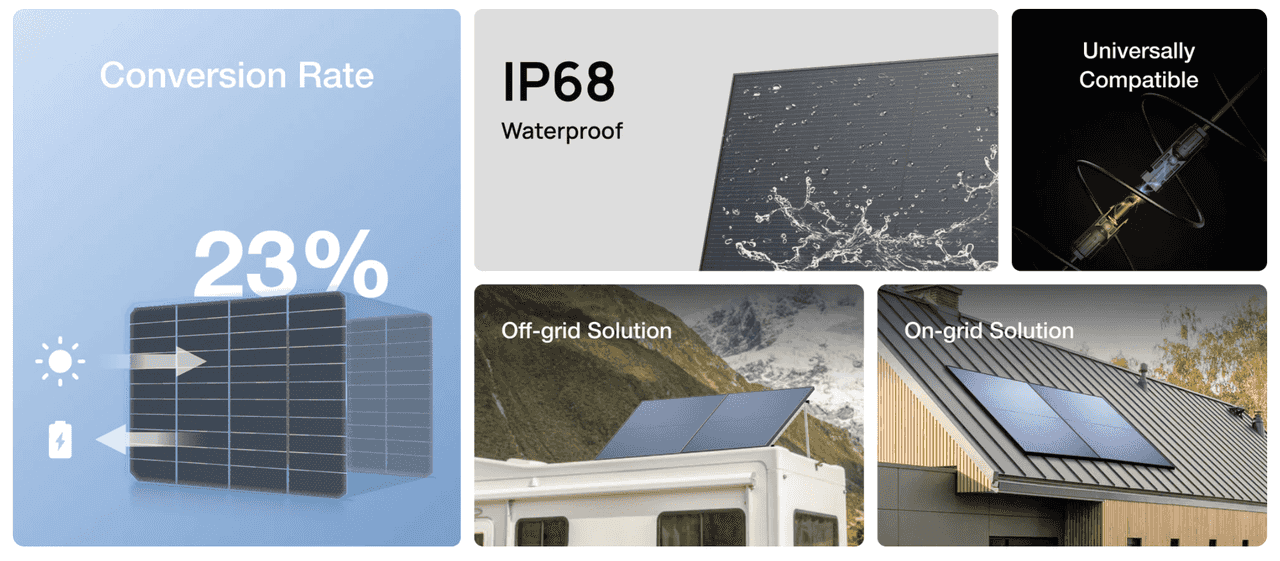
The included 450W rigid solar panel features a high conversion efficiency of around 23%, allowing it to generate more electricity per square metre compared to many conventional panels. This makes it particularly effective for homes with limited roof space. During daylight hours, solar energy is captured and stored in the battery for use later, especially during peak pricing periods or in the event of a power cut.
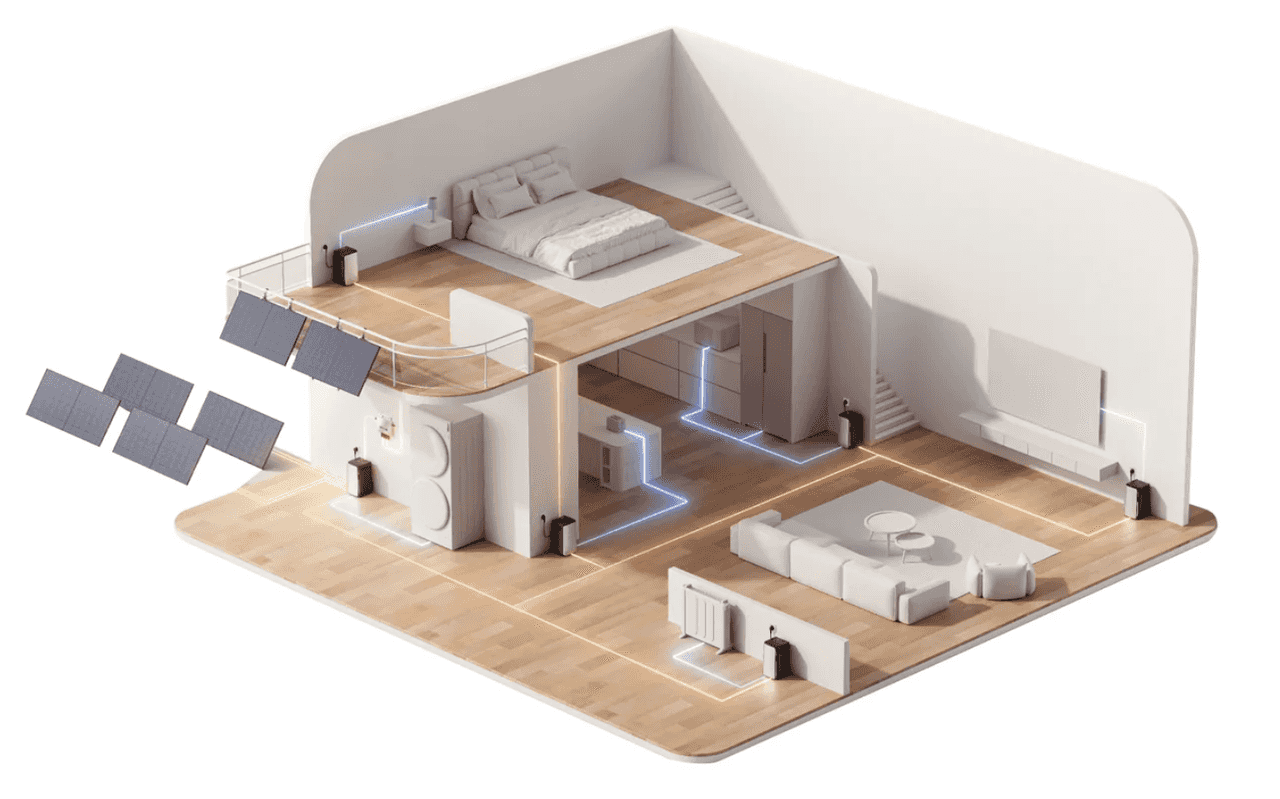
One of the major advantages of this system is flexible battery placement. Instead of stacking units in one location, up to six STREAM batteries can be connected in parallel without stacking. This allows homeowners to position units in a garage, utility room, storage area, or other well-ventilated spaces, improving safety, airflow, and space efficiency.
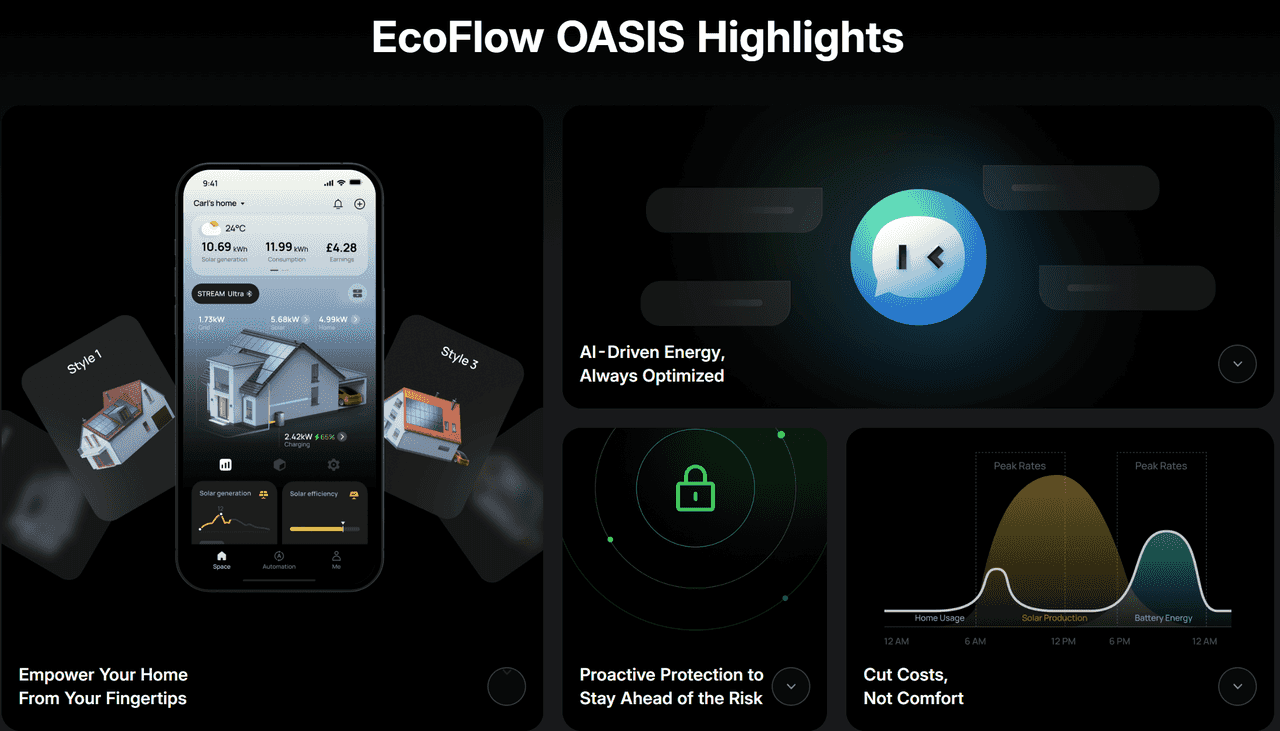
Energy management is handled through the EcoFlow app and OASIS Home Energy Management System, which provides real-time monitoring of solar generation, battery charge levels, and household consumption. Users can automate charging during off-peak periods, schedule discharge during peak tariffs, review historical data, and receive system alerts, ensuring full visibility and control over home energy use.
For high-demand homes: 450W Rigid Solar Panel + STREAM AC Pro + STREAM Ultra
For larger households or properties with higher electricity consumption, the 450W Rigid Solar Panel + STREAM AC Pro + STREAM Ultra bundle delivers expanded storage and stronger output capacity.
STREAM Ultra is the core battery of the system and comes with a built-in inverter, which means it can work independently without any extra equipment. It provides 3.84 kWh of battery capacity and converts stored DC power directly into usable AC electricity for your home. One Ultra unit delivers up to 1,200 W of continuous output. When charged by solar panels during the day, it stores energy for later use, helping reduce reliance on high-priced peak electricity.
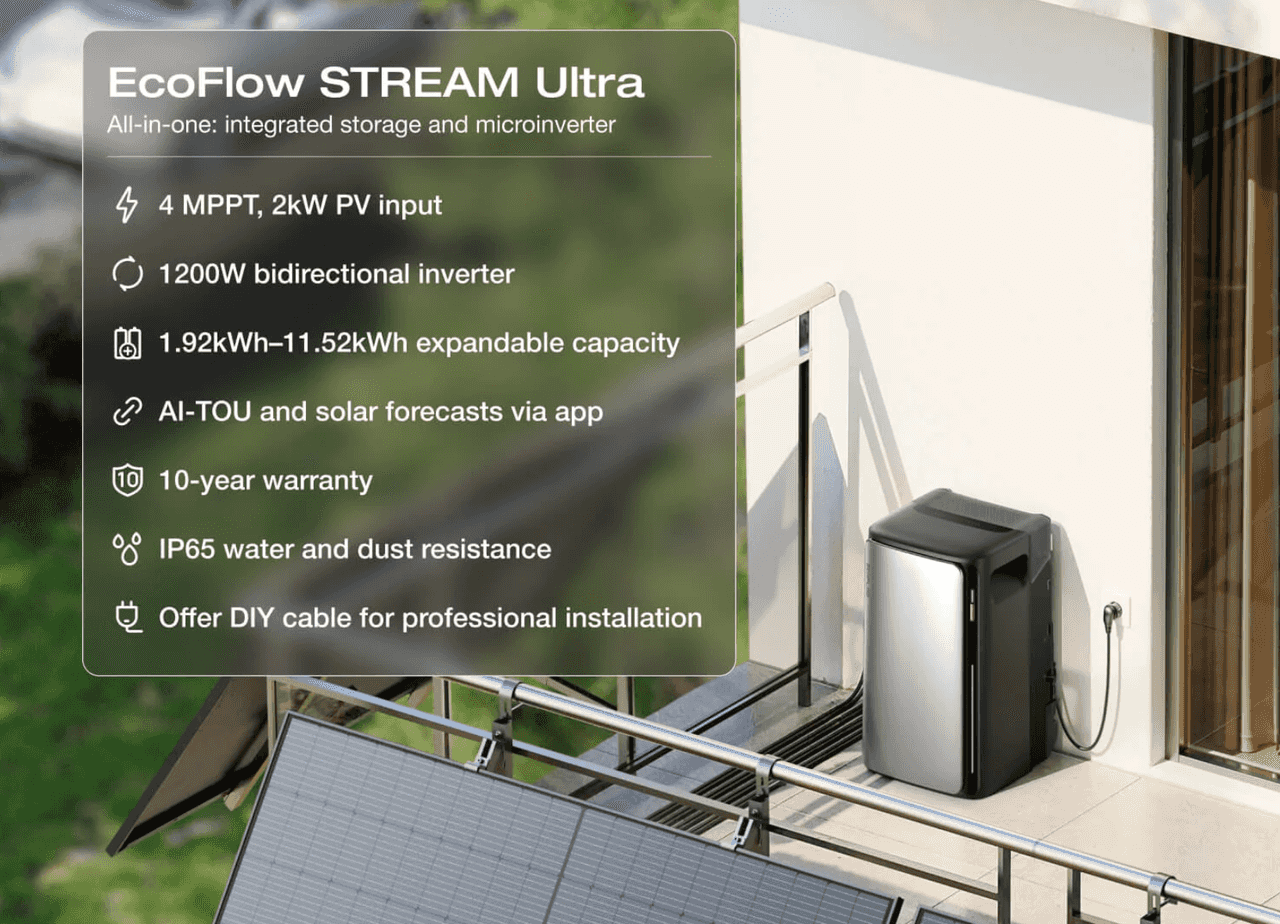
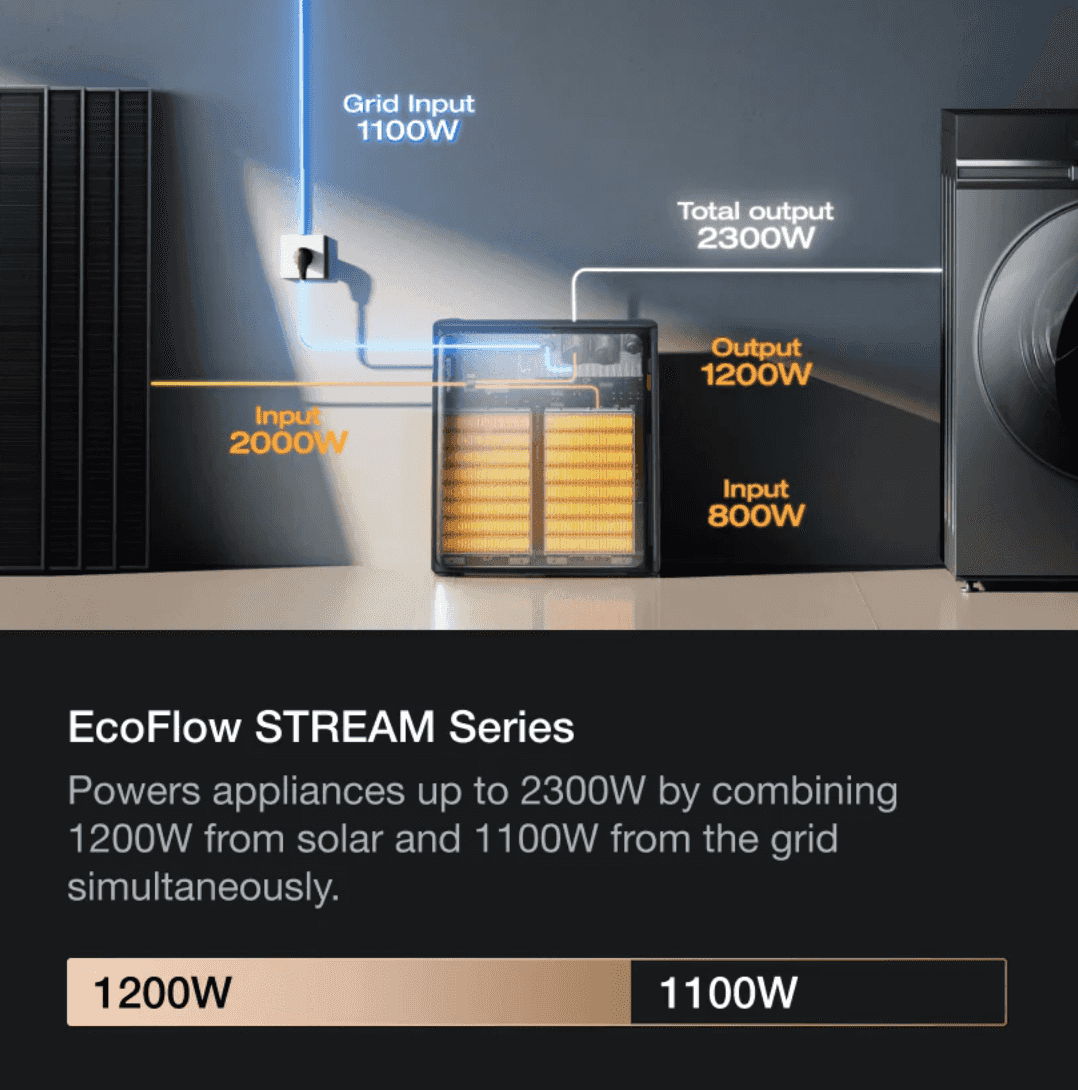
STREAM AC Pro is an expansion battery designed to work alongside the STREAM Ultra. It adds 1.92 kWh of extra storage capacity but does not include a built-in inverter. When paired together, STREAM Ultra + STREAM AC Pro deliver up to 2,300 W of total output, allowing the system to handle higher-demand situations—such as running a washing machine, microwave, multiple kitchen appliances, or a home office setup at the same time—while keeping power delivery stable and efficient.
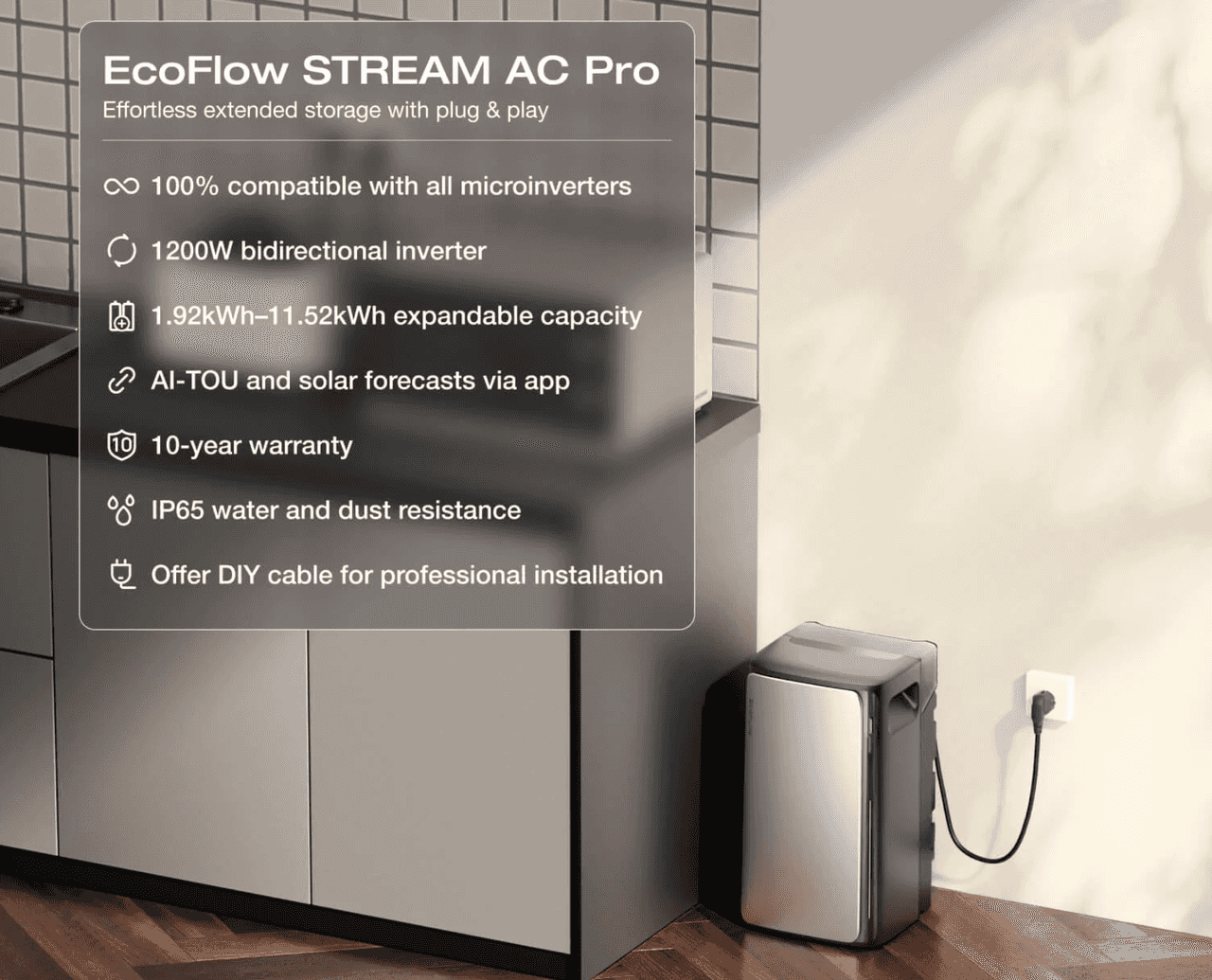
This setup also benefits from a distributed battery design, allowing multiple units to be placed across different areas of the home, such as a basement, garage, or utility room, rather than stacked in a single location. This flexible placement enhances safety, improves ventilation, and makes it easier to scale storage capacity as energy needs grow.
How to apply for Warm Homes Plan support?
If you think your household could benefit from the Warm Homes Plan, the application process is typically managed through your local authority under the government's Warm Homes: Local Grant scheme. This support is open to eligible homes in England and delivered with fully funded upgrades at no upfront cost.
Check home upgrade grant eligibility
Start by reviewing the home upgrade grants eligibility criteria. Criteria usually include household income (typically £36,000 or less per year), receipt of certain means-tested benefits, and having a property with a lower energy performance rating (e.g., EPC D, E, F or G).
Contact your local authority
Most local councils run the Warm Homes: Local Grant through their own delivery teams. You can either use the official online eligibility checker or contact your local council directly to start the process. They'll confirm whether funding is available in your area.
Property energy survey
If your initial eligibility appears to be met, the council or its delivery partner will arrange a home energy assessment. This survey identifies insulation gaps, inefficient heating systems, or other improvements that could reduce energy bills and improve warmth.
Submit required documentation
You may need to provide proof of income, benefits, tenancy or ownership details, and sometimes recent energy bills. Providing accurate information helps ensure your application is processed without unnecessary delays.
Approval and installation
Once approved, the local authority coordinates with approved installers under the scheme to carry out the recommended upgrades at no upfront cost to you. These can include insulation, low-carbon heating systems, and other energy efficiency measures.
Is the Warm Homes Plan enough on its own?
The Warm Homes Plan, including schemes such as the home upgrade grant scheme, provides valuable help, but it may not meet every household's needs. Funding caps, eligibility rules, and phased delivery mean some properties may receive partial improvements or face waiting periods, leaving gaps in overall efficiency.
For higher-demand households, insulation or heating upgrades funded through government grants for home upgrades may not fully offset rising electricity costs. Combining public support with smart solar and battery systems like EcoFlow can deliver deeper savings, better energy control, and stronger long-term resilience.
Conclusion
The Warm Homes Plan is a significant step toward creating warmer, more energy-efficient homes across the UK. Through initiatives such as home energy upgrade grants, it helps households improve insulation, adopt low-carbon heating, and reduce long-term energy costs. These measures play a vital role in tackling fuel poverty while supporting the country's wider net-zero ambitions.
To maximise the benefits, many households can go a step further by combining grant-funded improvements with smart solar and battery storage. EcoFlow home energy systems offer greater control, improved resilience, and smarter energy management, helping homeowners turn government support into lasting savings and a more sustainable future.
FAQs
What is the Warm Homes Scheme 2026?
The Warm Homes Scheme 2026 is a government-backed initiative designed to improve energy efficiency in eligible UK households. It works alongside programmes such as the Home Upgrade Grant UK to fund insulation and low-carbon heating improvements. The goal is to reduce energy bills, cut carbon emissions, and tackle fuel poverty. Delivery is typically managed through local authorities.
Is funding guaranteed if I meet the eligibility criteria?
Funding is not automatically guaranteed, even if you meet the eligibility requirements. Approval depends on available budgets and local authority allocations. Many programmes operate in phases with limited funding windows. Applying early and submitting complete documentation can improve your chances.
What documents or evidence do I need to apply?
Most applicants need to provide proof of income or benefits, identification, and evidence of property ownership or tenancy. Recent energy bills or an EPC rating may also be required. In some cases, a home assessment is arranged to confirm eligibility and suitable upgrades.