Renewable energy UK explained: growth, net-zero goals, and smart home solutions
What is renewable energy in the UK?
Renewable energy in the UK is electricity and heat produced from naturally replenished sources such as wind, solar, hydro, and biomass. These sources are sustainable and generate far fewer carbon emissions than fossil fuels. It matters because it supports the UK's net-zero goals, reduces climate impact, and strengthens energy security. By relying more on domestic clean energy, the UK can cut fuel imports, stabilize energy costs, and build a more resilient energy system for the future. To make the most of renewable energy, a solar battery enables households to store solar power for later use, supporting lower costs and a more resilient UK energy system.
Renewable energy UK: current share, growth trends, and future targets
The UK's renewable energy sector has expanded rapidly over the past decade, transforming how electricity is generated and consumed. Here's a clear look at where things stand today and where they are heading next.
Current share of renewables in UK electricity
Renewables now generate around 44.9% of the UK's electricity, with wind contributing about 24.2%, solar around 6.1%, biomass about 7.1%, and hydro roughly 1.1% of the total energy mix, marking a major shift from fossil fuel dependence and showing how quickly clean energy has become a core part of the national grid.
Historical growth and key milestones
The UK has seen consistent growth in renewable capacity, especially in offshore wind. In 2024, renewables surpassed 50% of total electricity generation for the first time, a milestone that highlights strong policy support, falling technology costs, and large-scale infrastructure investment.
Future targets for wind, solar, and emerging sources
Looking ahead, the UK aims to significantly expand offshore wind capacity, scale up solar deployment, and invest in emerging solutions like tidal and green hydrogen. These targets are central to achieving net-zero emissions and building a more secure, low-carbon energy system.
Renewable energy UK and the path to net-zero carbon
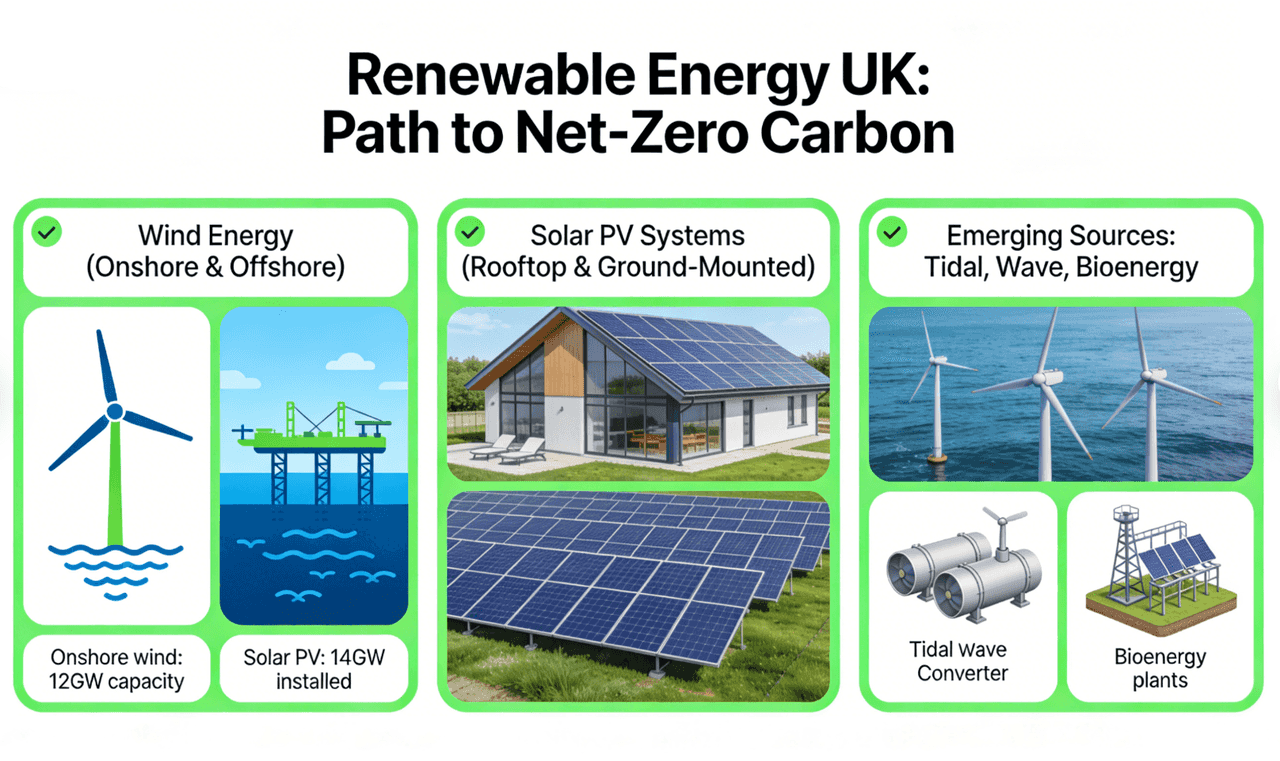
The UK's net-zero strategy relies heavily on scaling up renewable energy across power, heat, and transport. Clean electricity from wind, solar, and emerging sources reduces fossil-fuel use, cuts greenhouse gas emissions, and strengthens long-term energy security as part of national climate commitments.
Wind energy (onshore & offshore)
Wind power is the largest source of renewable electricity in the UK, with offshore wind playing a leading role. The UK has one of the biggest offshore wind markets globally, benefiting from strong coastal wind resources and large-scale investment. Onshore wind remains one of the cheapest forms of electricity generation, though expansion has varied due to planning policies. Together, both forms are critical for replacing gas-fired power and supporting net-zero targets.
Solar PV systems (rooftop & ground-mounted)
Solar PV systems use solar panels to generate electricity directly from sunlight and are widely installed on homes, commercial buildings, and solar farms. Costs have fallen significantly over the past decade, making solar one of the most affordable renewable technologies. Rooftop systems support decentralized generation, while large ground-mounted projects supply power to the national grid. Solar complements wind by producing more electricity during sunnier and often calmer periods.
Emerging sources: tidal, wave, bioenergy
Tidal and wave energy harness the UK's strong marine resources, offering predictable and low-carbon power, though still at an early stage of commercial deployment. Pilot projects are testing long-term viability and cost reduction. Bioenergy, derived from organic materials, contributes to electricity and heat generation and can provide flexible backup power. These emerging sources diversify the renewable mix and support a more resilient, low-carbon energy system.
How to harness renewable energy in the UK at home
With rising energy costs and growing climate awareness, more UK households are turning to renewable solutions. Home-based systems can increase energy independence and long-term savings. If you want to know how much of UK energy is renewable, here's how to maximise the use of renewable energy in your home for savings, efficiency, and energy independence.
Store daytime solar for nighttime use
Installing a home battery system allows you to store excess electricity generated by rooftop solar panels during the day. Instead of exporting all surplus energy to the grid, stored power can be used in the evening when demand is higher. This improves self-consumption rates and maximizes the value of your solar investment. It also helps reduce exposure to peak-time electricity prices.
Reduce reliance on the grid and cut electricity bills
Generating and storing your own renewable electricity lowers the amount of power you need to import from the grid. This reduces monthly energy bills and protects against price volatility. Over time, combining solar panels with battery storage can significantly increase household energy efficiency. Smart energy management systems can further optimize when and how electricity is used.
Ensure backup power during peak hours or outages
Home battery systems can provide backup power during grid outages or high-demand periods. This is especially useful for running essential appliances such as lighting, refrigeration, and internet routers. During peak tariff hours, stored energy can be used instead of drawing expensive electricity from the grid. This adds both financial and practical resilience to your home energy setup.
Using Ecoflow STREAM for home storage and optimisation
EcoFlow's STREAM range combines solar-ready battery storage with smart energy management to help UK homes get more from rooftop panels and cut electricity costs. These systems allow stored solar energy to power appliances, support the grid when needed, and provide resilience against outages, making home energy more efficient and sustainable.
Solutions for solar-equipped homes: STREAM Ultra + AC Pro
The EcoFlow STREAM Ultra + AC Pro combines a smart solar battery with an expandable home storage module to maximize both solar generation and grid power. The STREAM Ultra integrates with rooftop solar, featuring up to four MPPT inputs, and stores surplus energy in a 3.84 kWh battery capacity.
Designed for distributed placement across multiple rooms or floors, it allows UK households to position units where power demand is highest. Adding the STREAM AC Pro increases usable capacity and AC output to around 2300 W, supporting everyday appliances and providing reliable backup during outages.
The system also connects seamlessly with EcoFlow's OASIS Home Energy Management System, enabling AI-driven energy optimization, real-time monitoring, and maximized self-consumption to lower electricity bills while enhancing home energy resilience.
High energy consumption homes: 450W Rigid Solar Panel + STREAM AC Pro + STREAM Ultra
The 450W Rigid Solar Panel + STREAM AC Pro + STREAM Ultra setup adds high-efficiency solar generation to the home storage system, increasing the amount of clean power you can harvest. With a rugged, weatherproof build, every 450W solar panel maintains steady power generation, even under cloudy skies or adverse weather. Multiple panels feed energy into the STREAM Ultra battery with a 3.84 kWh capacity, which stores the surplus for later use, while the STREAM AC Pro expands storage and AC output to around 2,300 W. This setup can power everyday home appliances such as refrigerators, washing machines, laptops, LED lighting, fans, and small kitchen appliances, and provides backup during grid outages. Its modular design allows for distributed placement across different rooms or floors, and the system can be monitored and optimized in real time via the EcoFlow app for intelligent energy management and maximum self-consumption.
Smart tips for optimising your home with renewable energy in the UK
Making the most of renewable energy in the Uk at home is not only about installing solar panels, but it's also about using energy more smartly every day. With the right strategies, you can maximise savings, improve efficiency, and strengthen energy independence. Here are five smart tips to optimise your home.
Schedule energy use during off-peak hours
Take advantage of time-of-use tariffs by running high-energy appliances such as washing machines, dishwashers, or EV chargers during off-peak periods. This lowers electricity costs and reduces strain on the grid. Pairing this with battery storage allows you to store cheaper energy for later use.
Increase solar self-consumption
Instead of exporting excess solar power to the grid, use it directly within your home. Running appliances during sunny hours or storing surplus energy in a battery improves efficiency and financial returns. Higher self-consumption means greater savings over time.
Upgrade to energy-efficient appliances
Switching to energy-efficient appliances reduces overall electricity demand, making your renewable system more effective. Look for high energy ratings and smart features that optimise performance. Lower consumption means your solar and storage systems can cover a larger share of your needs.
Install smart energy monitoring systems
Smart meters and energy management apps provide real-time insights into consumption and generation. This helps you identify energy-intensive habits and adjust usage accordingly. Better visibility leads to smarter decisions and improved long-term savings.
Combine solar with battery storage
Adding battery storage to your solar setup allows you to use clean energy even after sunset. It reduces reliance on grid electricity, protects against peak pricing, and provides backup during outages. This combination significantly enhances resilience and returns on investment.
Conclusion
The continued rise of renewable energy in the UK highlights a major shift toward cleaner and more secure power generation. As the UK renewable energy percentage continues to grow, households have greater opportunities to contribute to national net-zero targets while reducing long-term energy costs through smarter consumption and storage.
EcoFlow's STREAM series products, including STREAM Ultra and STREAM AC Pro, support this transition by helping homeowners store surplus solar power, cut grid reliance, and maintain reliable backup. With scalable capacity and intelligent energy management, the STREAM range makes home optimisation simple and future-ready.
FAQs
How much of the UK's energy is renewable?
Currently, around 45–50% of electricity generation comes from renewable energy in the UK, mainly wind, solar, hydro, and biomass. Wind power contributes the largest share of this total. The exact figure can vary each year depending on weather patterns and overall demand. Still, the upward trend clearly shows steady growth in the UK's renewable energy percentage.
What is the UK doing about renewable energy?
The government has committed to reaching net-zero emissions by 2050, placing renewable expansion at the centre of climate policy. Major investments are being directed toward offshore wind, solar farms, grid modernisation, and emerging technologies such as green hydrogen. Financial support schemes like Contracts for Difference (CfD) encourage private investment. These actions aim to strengthen energy security while increasing renewable energy in the UK.
Who are the big 6 energy companies in the UK?
The "Big 6" energy suppliers traditionally included British Gas, EDF Energy, E.ON, npower, Scottish Power, and SSE. Market changes have shifted this landscape, with major players now including British Gas, Octopus Energy, EDF, E.ON Next, Scottish Power, and OVO Energy. These companies supply electricity and gas to millions of homes across the UK, playing a key role in supporting renewable energy in the UK initiatives.