Portable Fridge Freezers UK: Best Picks And Buying Guide
Portable fridge freezers are a great way to make travel, camping, road trips, and even home use more convenient. If you want cold drinks on the go or need to keep food frozen during longer journeys, choosing the right model matters. When paired with reliable portable power stations, these fridges can run efficiently anywhere without access to mains electricity. This guide covers the best small portable fridges in the UK. Read on to discover the fridge that fits your needs.
What is a portable fridge freezer?
A portable fridge freezer is a small, easy-to-move appliance that keeps your food and drinks cold while you travel. It usually runs on electricity from a wall socket, car, or portable battery, making it great for camping, road trips, or outdoor activities. These fridges are light and simple to carry. Many models let you adjust the temperature, use less energy, and are built to last when you're on the go.
Types of portable fridges
To find the best fridge for your trips, it helps to know the different types available. Each type has its own features, cooling method, and ideal uses. Below are some of the most common types of portable camping fridges:
Compressor fridge freezers
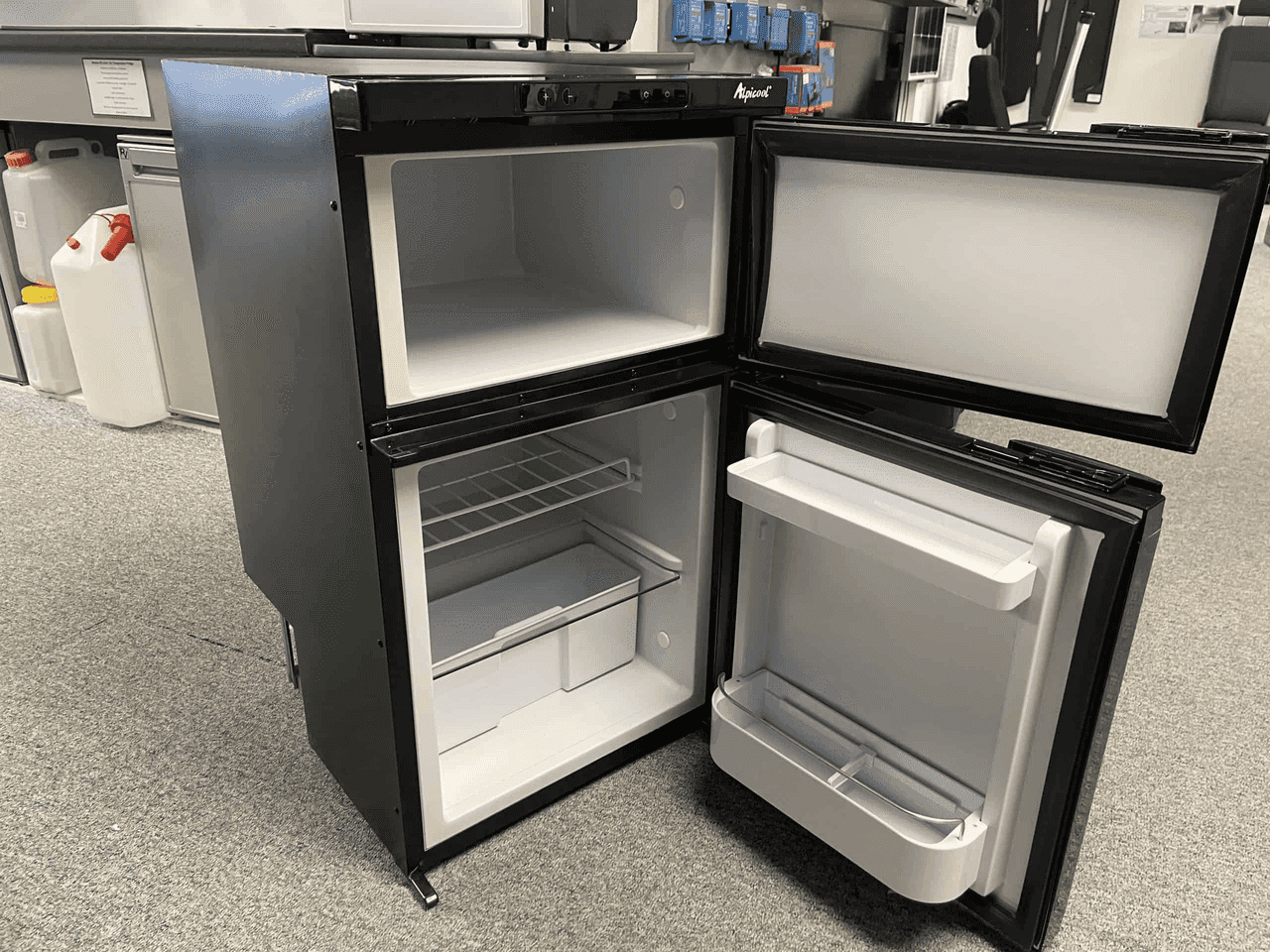
Compressor fridge freezers are powerful and cool quickly, even when it's hot outside. They work like regular fridges and stay efficient in warm weather. These are a great choice for long trips, road adventures, or outdoor activities where you need to freeze food.
Dual-zone portable fridges
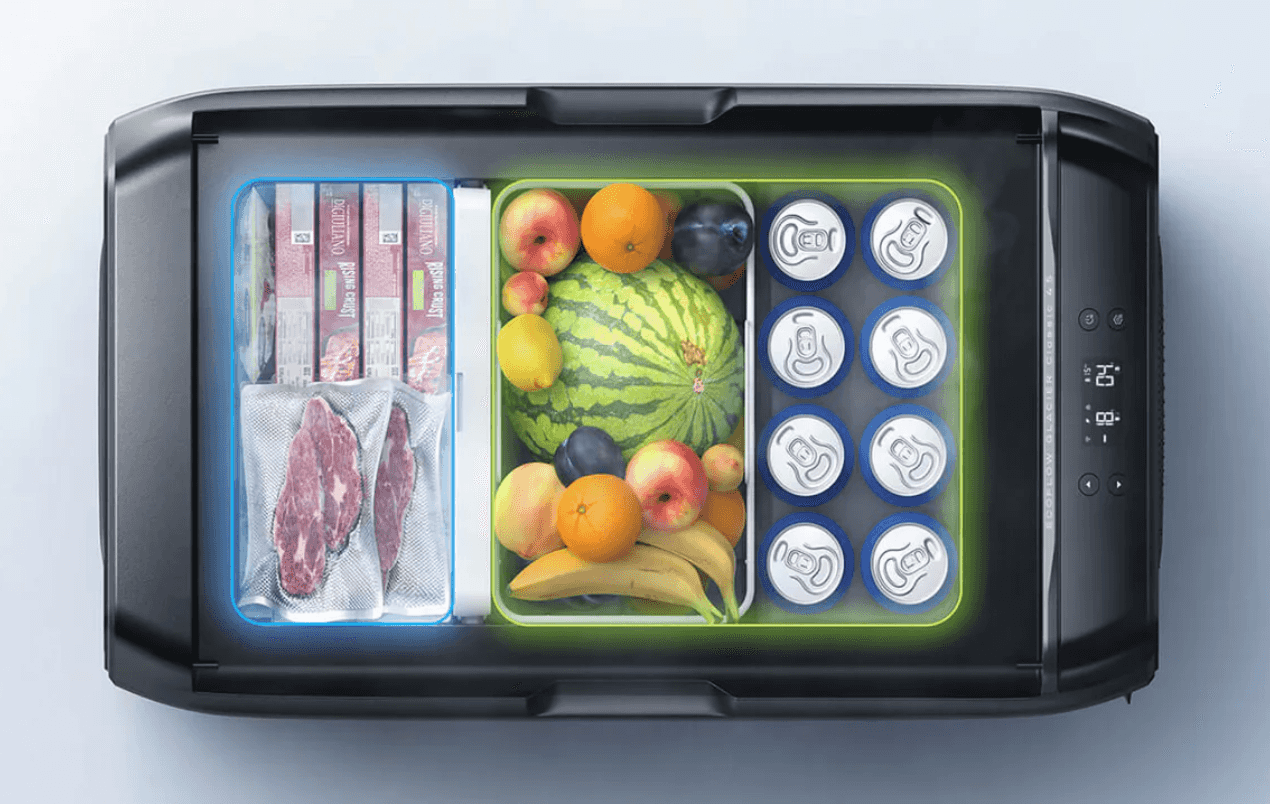
Dual-zone portable fridges have separate sections for fridge and freezer use. This means you can store fresh and frozen items together without changing their temperatures. They're great for keeping food organised on long trips, family outings, or camping holidays when you need both options.
Single-zone fridges
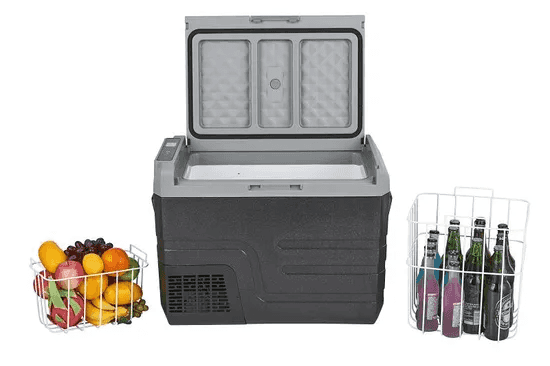
Single-zone fridges are designed just for cooling, not freezing, which makes them simple to use. They are compact, lightweight, and easy to carry for short trips. A small portable fridge is perfect for day outings, weekend getaways, or short car journeys where you don't need to freeze anything.
Absorption and thermoelectric coolers
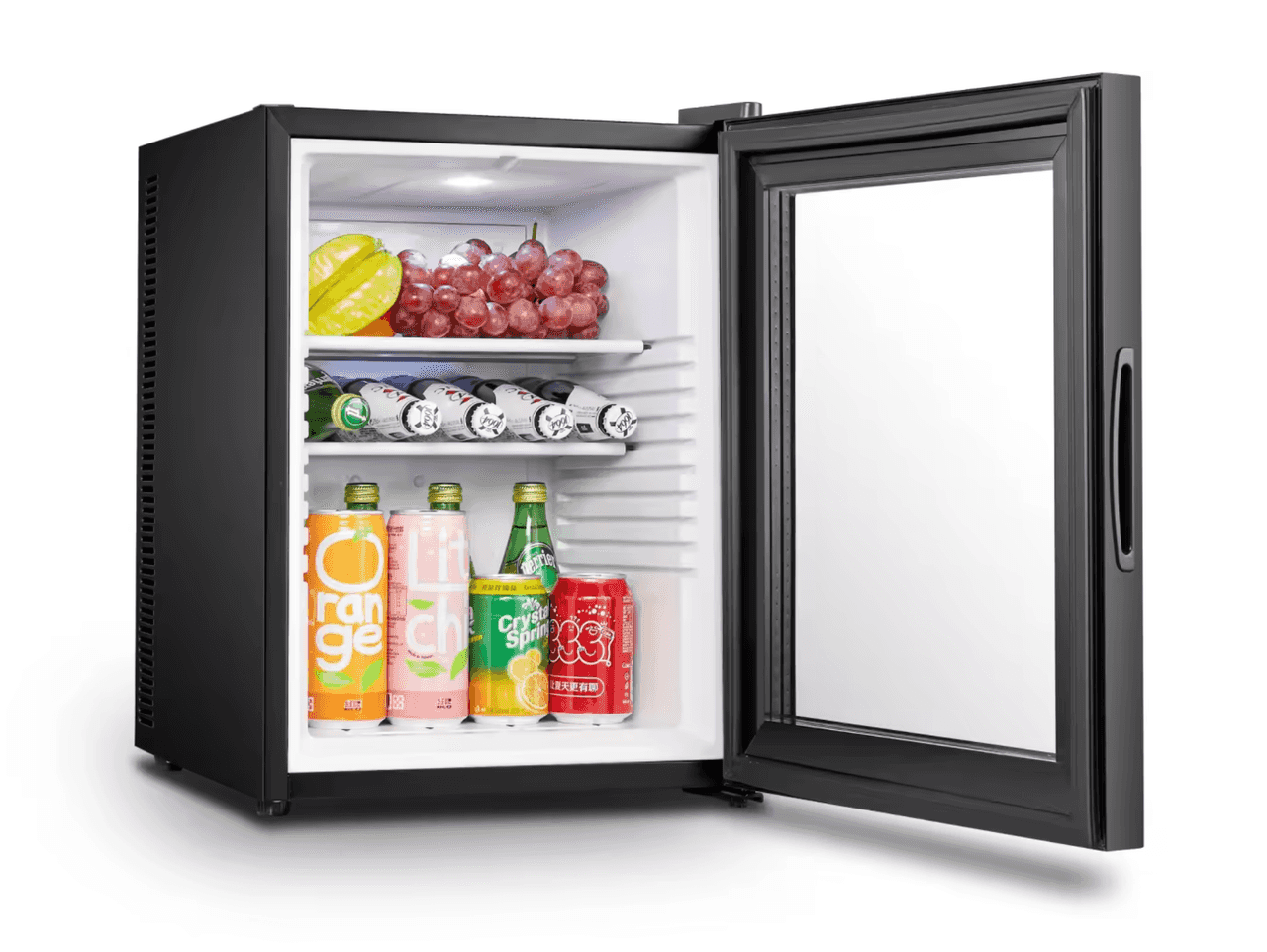
Absorption and thermoelectric coolers use gas, electricity, or both to maintain cool temperatures for your items. They are quiet, lightweight, and portable, but less efficient in very hot conditions. Suitable as a portable camp fridge for casual use, picnics, beach trips, or short outdoor adventures.
Size guide: 35L vs 45L vs 55L vs 75L
Picking the right size portable camping fridge is important for convenience and efficiency. The size affects how much you can store, how easy it is to carry, and how much power it uses. Here's a simple guide to popular sizes from 35L to 75L to help you choose the best one for your trips:
Size | Ideal use | Pros | Cons | Tips |
|---|---|---|---|---|
35L | Solo trips or couples | Lightweight, easy to carry, low power use | Limited storage, not suitable for long trips | Perfect for short trips or day outings, store essentials only |
45L | Small family or weekend trips | Moderate storage, still portable | Slightly heavier than 35L | Good for 2–3 people, pack efficiently to maximise space |
55L | Family trips or extended camping | More storage for food and drinks can freeze items | Heavier, needs more power | Ideal for 3–4 people, use dual-zone if available for fridge & freezer |
75L | Large families or long journeys | Large storage, versatile for fridge & freezer | Bulky, heavy, higher power consumption | Best for long trips or groups, check vehicle space before purchase |
A guide to the different fridge door styles available
Choosing the right fridge door style can really affect how easy your fridge is to use. Each style gives you different ways to reach your food and drinks, which can change how much space you need and how portable the fridge is. Knowing your options helps you pick a fridge that fits your travel or camping setup.
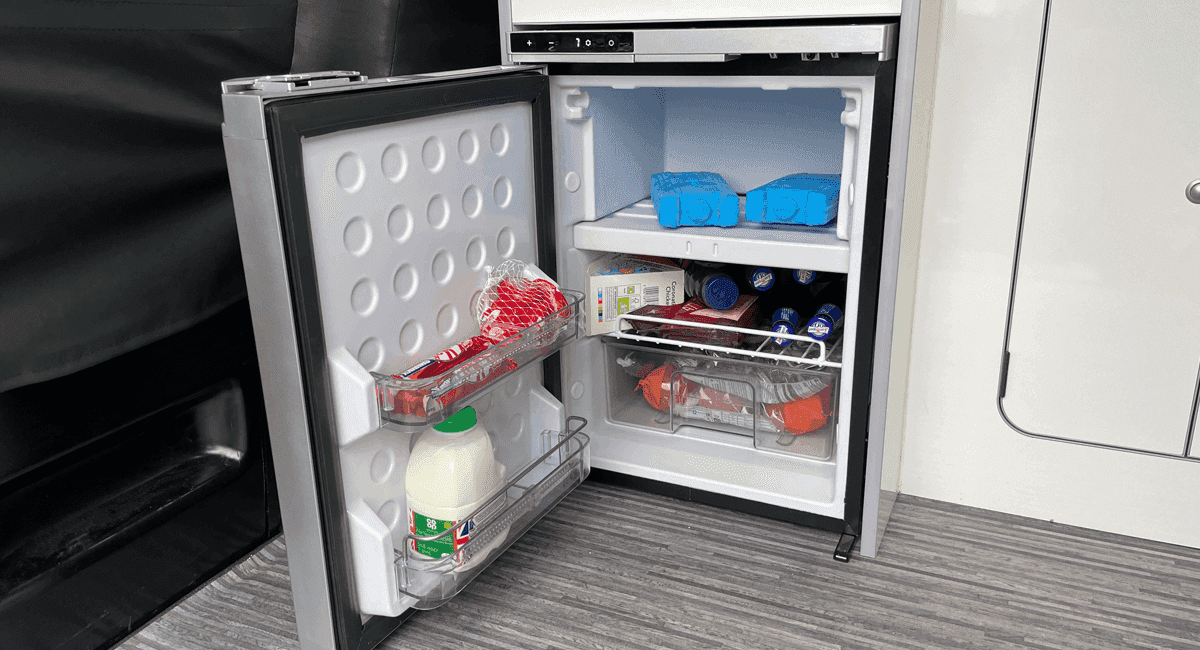
Front-loading fridges
Front-loading fridges open from the front like a standard home fridge, with a hinged door. This design makes it easy to organise and reach all your items at once without bending over. They work well in cars, vans, or small kitchens where side clearance is not an issue.
Pros
Easy to organise and reach items.
Can fit in tight side spaces.
Simple temperature management.
Works well in both cars and homes.
Cons
Requires more side clearance to open fully.
Heavier models can be harder to move.
Top-loading fridges
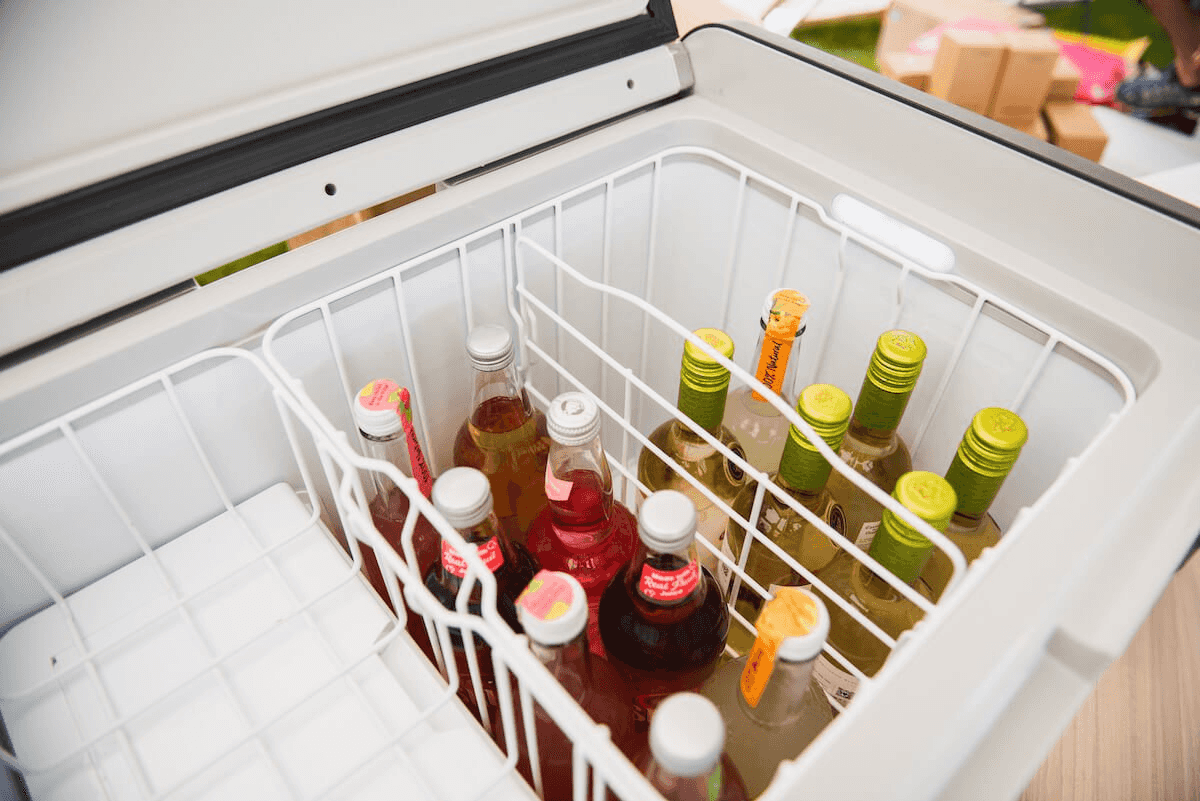
Top-loading fridges open from the top, like a chest freezer, so you access your items from above. They keep cold air in better because it doesn't escape as much when you open the lid. These fridges are great for outdoor trips or tight spaces where you don't have much room on the sides.
Pros
Retains cold air better.
Excellent for deep freezing.
Compact footprint for tight spaces.
Often more energy-efficient.
Cons
Harder to organise items vertically.
Accessing lower items can be inconvenient.
Drawer-style fridges
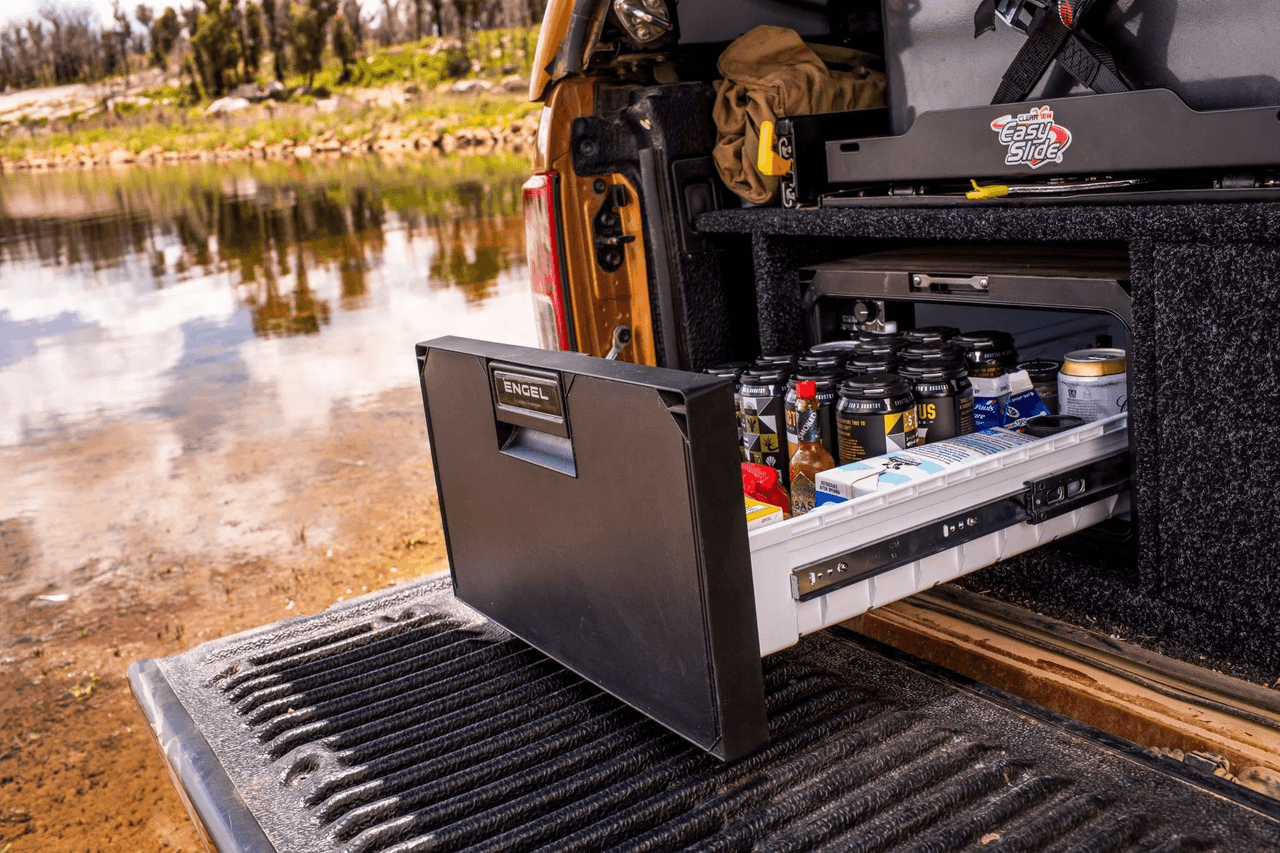
Drawer-style fridges have sliding drawers instead of a full door, so you can easily reach specific sections. They help keep food organised and save energy because only the open drawer is exposed. These are perfect for campervans, boats, or small spaces where a full-door fridge would be hard to use.
Pros
Easy access to specific compartments.
Saves energy by opening only one drawer.
Keeps food organised.
Great for small or mobile setups.
Cons
Limited capacity per drawer.
It can be more expensive compared to other styles.
Top 5 portable fridge freezers you should buy
Here are the top 5 portable fridge-freezers in the UK that are worth buying:
EcoFlow GLACIER Classic portable fridge freezer
The EcoFlow GLACIER Classic Portable Fridge Freezer is a premium option for keeping food and drinks chilled or frozen on the go. It comes in 35 L, 45 L, and 55 L sizes, making it suitable for everything from short trips to extended off-grid use.
Equipped with a high-efficiency compressor and thick insulation, it delivers fast cooling and reliable temperature retention. With the optional plug-in battery, it can run for up to 40+ hours at 4 °C, ideal for camping and road trips without constant power.
Key features:
Multiple capacity options: 35 L / 45 L / 55 L.
Fast compressor cooling for quick temperature drop.
Optional plug-in battery for true cordless use.
Up to ~40+ hours runtime (at 4 °C, depending on conditions).
Dual-sided door design for flexible access.
App control for temperature adjustment and monitoring.
Flexible charging via AC power or car input.
Thick insulation for improved energy efficiency.
Compact, travel-friendly design for cars and RVs.
Price (UK): ~£629 (from ~£899)
Pros
Excellent cooling and insulation for reliable cold holding.
Smart app controls with alerts and history.
Long off‑grid runtime on battery.
Dual‑sided access and handy accessories.
Cons
Higher price than basic fridge coolers.
Battery sold separately for best performance.
Alpicool NCF35 portable fridge freezer
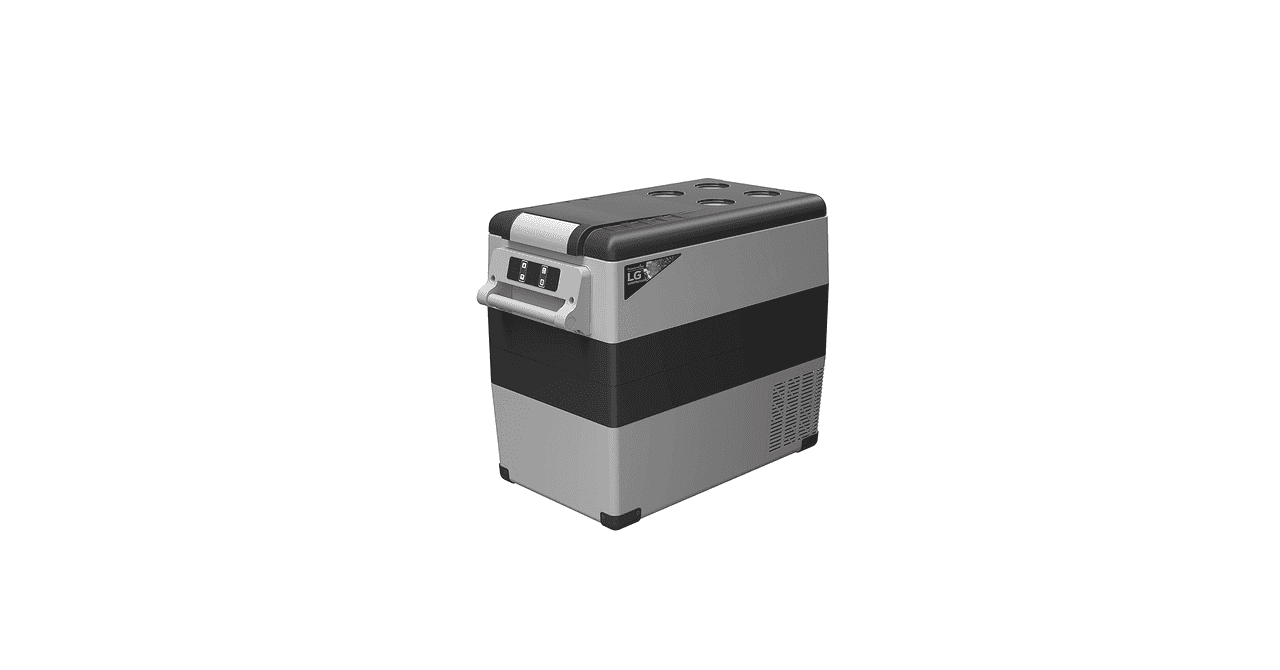
The Alpicool NCF35 is a reliable mid‑range fridge freezer with around 35 L capacity, ideal for everyday camping trips and van life. It offers adjustable temperature control for chilled or frozen storage and works on car, mains, or solar power. The design is robust and practical, making it a solid choice for outdoor use and long drives. With a clear display and simple controls, it is easy to operate even for first‑time buyers.
Price (UK): ~£250–£300
Pros
Affordable and practical choice.
Good cooling range for food and drinks.
Simple controls and clear display.
Works with multiple power sources.
Cons
Not as energy efficient as premium units.
No advanced smart features or app control.
Alpicool S15 portable fridge freezer
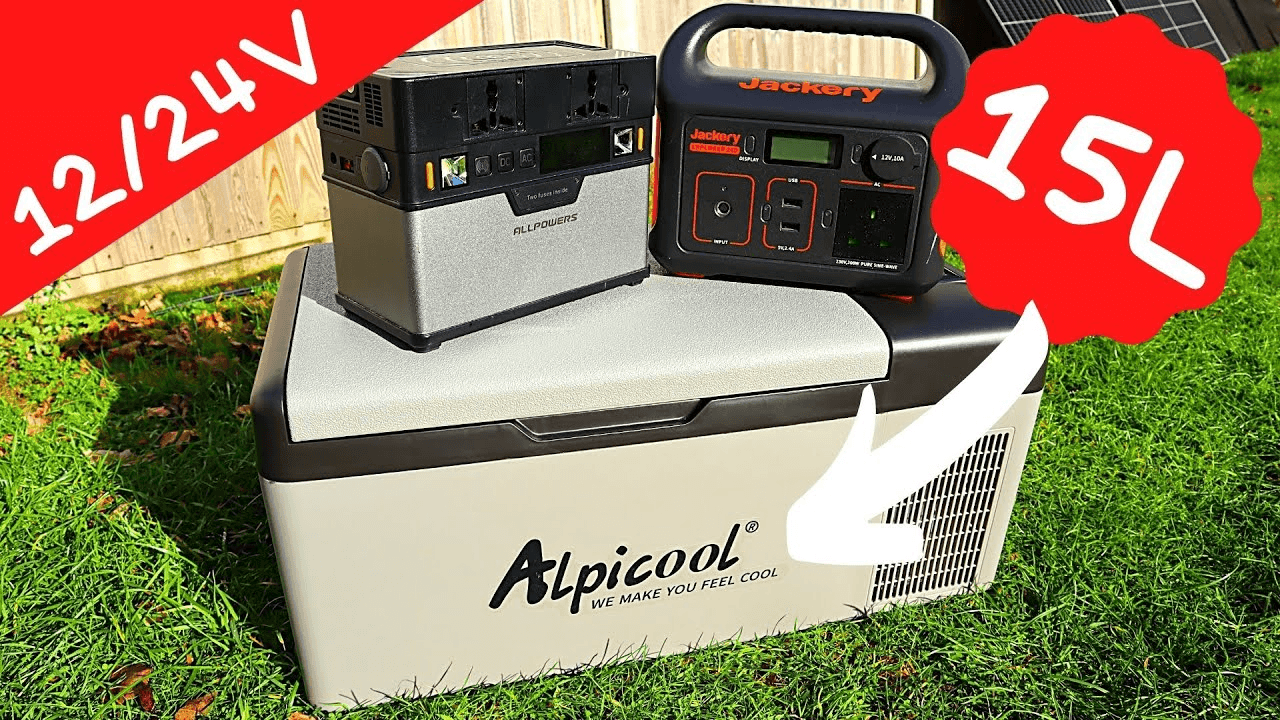
The Alpicool S15 is a compact portable fridge freezer with about 15L capacity, perfect for day trips or personal use. It's lightweight and easy to carry, fitting well in cars or camper boots. The unit runs on 12V or mains power and cools drinks, snacks, and small food items effectively. With simple controls, it's ideal for people who want reliable cooling without extra features.
Price (UK): ~£130–£150
Pros
Very compact and lightweight.
Easy portability for short trips.
Low power consumption.
Good for personal storage needs.
Cons
Limited storage space.
Not ideal for extended freezing or large items.
myCOOLMAN 15L Recreational portable fridge freezer
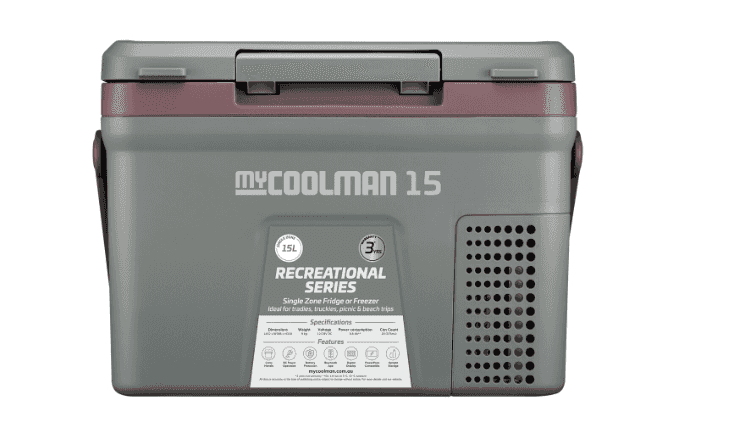
The myCOOLMAN 15L fridge freezer is designed for casual campers and weekend trips. It keeps drinks and food cold with simple, easy-to-use features. The lightweight design and plug-in power make it easy to set up in cars or tents. It works well for its size, offering reliable cooling for smaller loads. This model is a good choice if you want cold storage without spending a lot or needing a lot of space.
Price (UK): ~£120–£160
Pros
Easy to use with a car plug‑in.
Compact size for shorter trips.
Quiet running operation.
Good value for budget seekers.
Cons
Cooling depth is moderate.
Limited freezer performance.
Alpicool C9 Mini portable fridge freezer
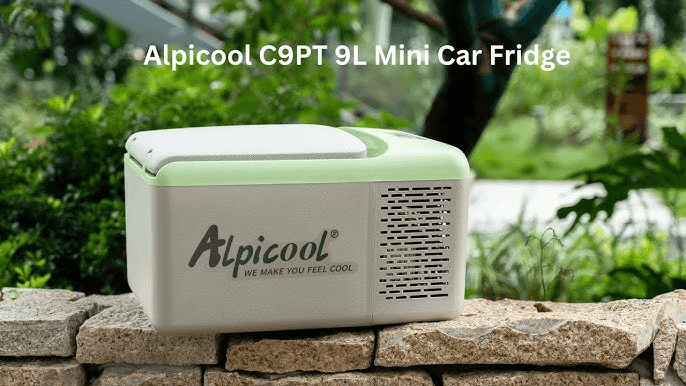
The Alpicool C9 Mini is a very small portable fridge with about 9L capacity, perfect for cars, desks, or small spaces. It's ultra-compact and easy to move, using little power while keeping drinks and snacks cool. You can plug it into a car socket or mains adapter, and it keeps a steady temperature for short trips. Its small size is great for solo travellers or as an extra cooling unit.
Price (UK): ~£80–£120
Pros
Very small and ultra‑portable.
Budget‑friendly entry option.
Low power draw.
Great for drinks or lunch storage.
Cons
Very limited capacity.
Not suitable for longer trips with many items.
How to charge a portable fridge
Charging your portable camping fridge the right way keeps your food and drinks fresh during trips. You can use solutions like EcoFlow portable power stations, solar panels, car batteries, or mains electricity. Understanding each method helps you choose the best option for your energy needs.
Using a portable power station
The EcoFlow DELTA 3 Max Plus portable power station is a powerful and reliable solution for running portable fridge-freezers during off-grid trips. With a 2 kWh battery capacity, it delivers long-lasting energy to keep food fresh and drinks cold wherever you go.
In real-world use, a typical 12V portable fridge (40–60 W) can run for 30–40 hours on a full charge, depending on usage conditions such as ambient temperature and compressor cycles. With up to 3000 W AC output and 6000 W surge, the unit can also handle multiple appliances at once, making it ideal for camping, road trips, and RV living.
Built with durable LFP (LiFePO₄) battery technology, the DELTA 3 Max series ensures long lifespan, safety, and stable performance. It supports flexible recharging via AC, solar panels, an alternator, or a generator, so you can easily top up power in any environment.
Paired with the EcoFlow app, users can monitor energy usage and manage outputs effortlessly. Its low-noise operation and high efficiency make it a dependable companion for keeping your portable fridge running smoothly for extended periods.
Using solar panels
The EcoFlow 400W Lightweight Portable Solar Panel is a reliable solution for powering portable fridge setups sustainably. Its bifacial design captures sunlight from both sides, improving overall energy generation and helping speed up charging in outdoor conditions.
With an adjustable stand (30°, 45°, 60°), the panel allows you to optimise sun exposure throughout the day, making it easier to maximise solar input while camping or travelling off-grid.
Weighing around 10.2 kg, it remains relatively lightweight for its power class and is easy to transport and set up next to a tent, RV, or vehicle. The foldable design helps save space during travel, while IP68-rated protection ensures durability against water, dust, and harsh outdoor environments.
Using a van or car battery
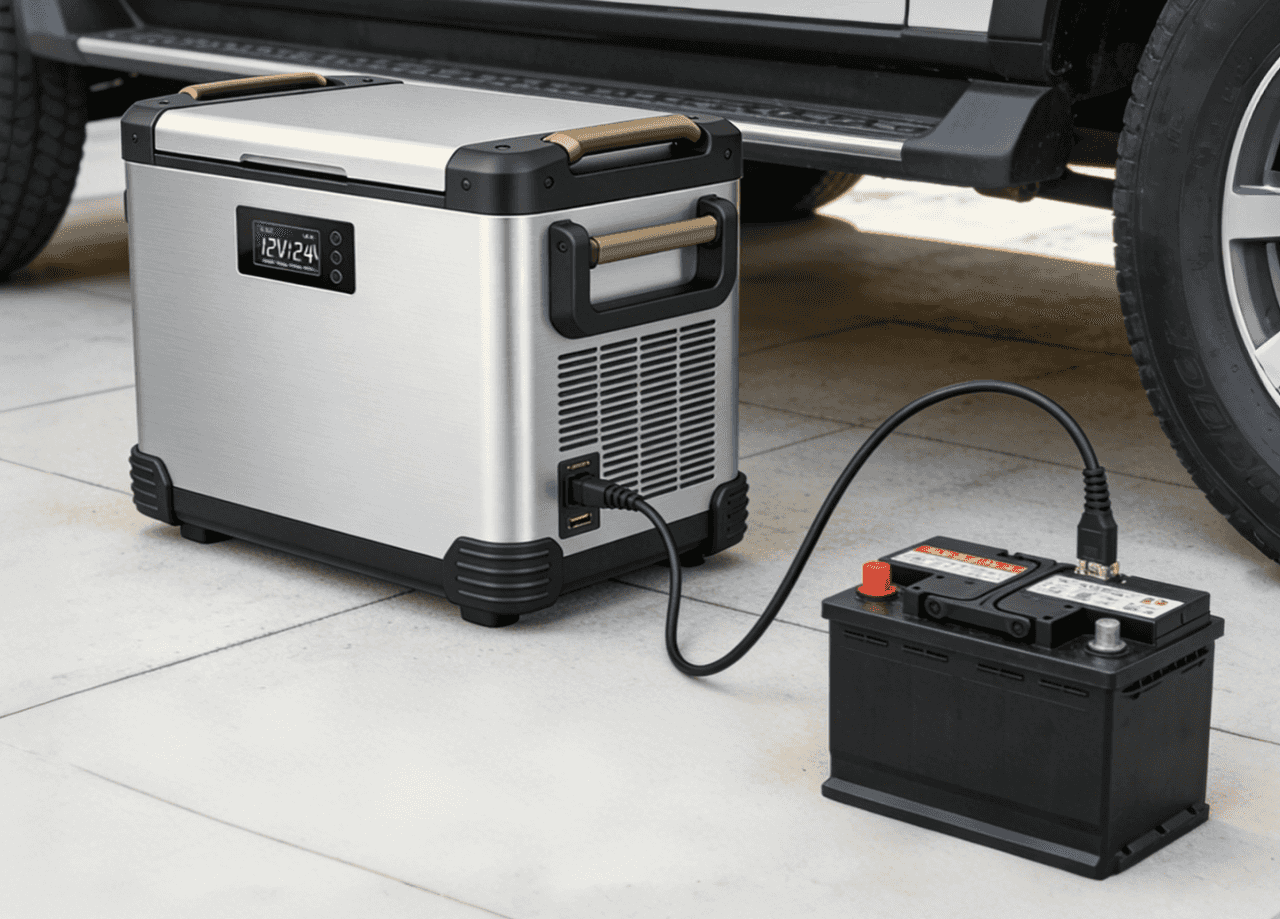
Many portable compressor fridges can run directly from a 12V or 24V vehicle battery, keeping your food and drinks cold while you drive. Adding a solar panel or portable power station can help them run longer on extended trips. Using proper wiring and a fuse helps prevent battery drain and electrical problems. This setup is great for short trips or mobile cooling without needing large external batteries.
Using mains electricity
Plugging your portable mini fridge into a standard AC outlet gives you steady cooling without worrying about battery life. This is perfect for longer stays at home, RV parks, or campsites with power hookups. Some fridges can also charge their internal battery while plugged in, so they're ready for off-grid use. This method keeps your fridge running smoothly and makes energy management simple.
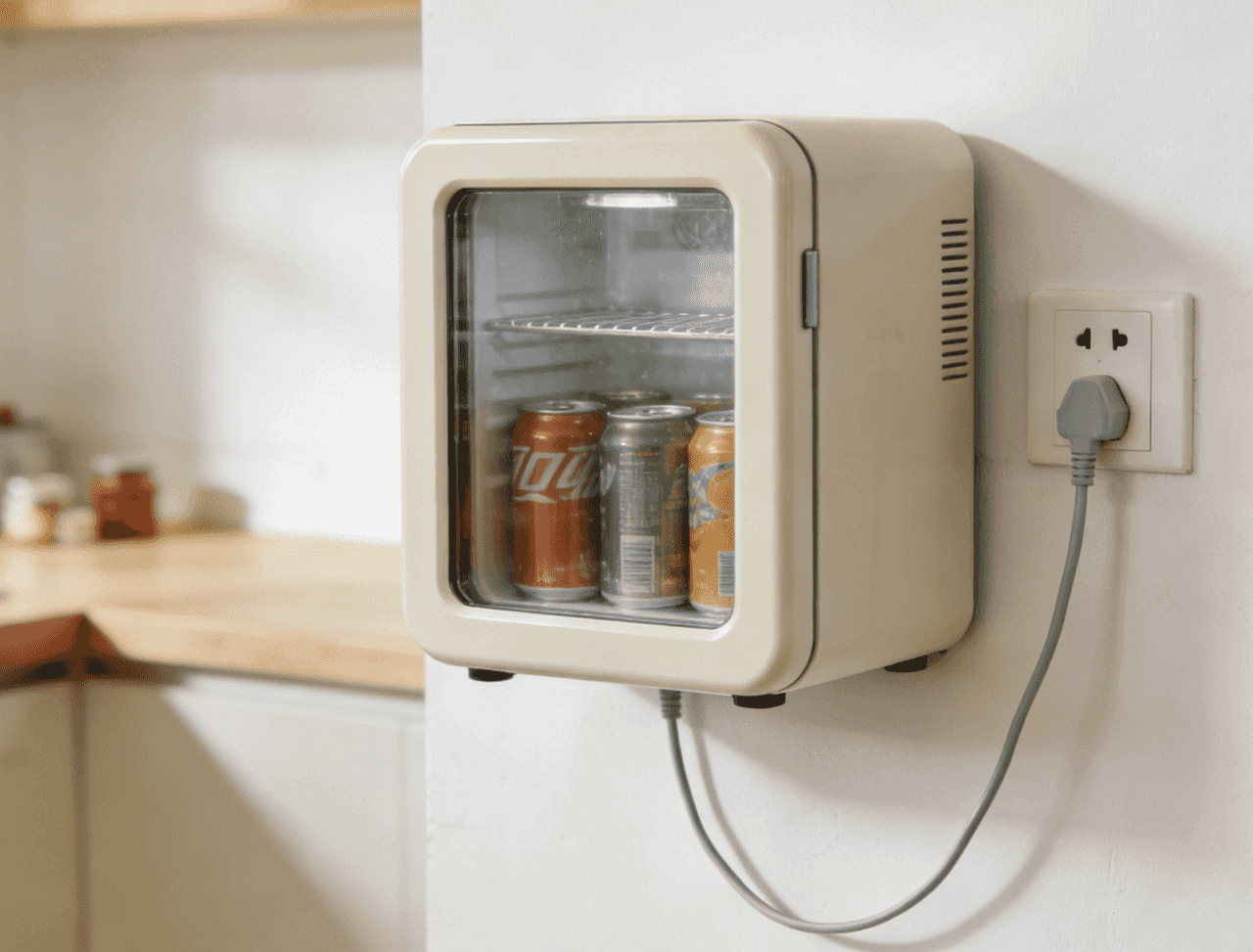
How to use a portable fridge efficiently to save power
Using your portable small fridge efficiently saves battery power and keeps your food fresh for longer. Simple habits can make a big difference, whether you're at home, in a car, or camping. Here are some tips to help you use your fridge more efficiently:
Set the right temperature
Keep your small portable fridge at the recommended 3–5 °C for cooling or –18 °C for freezing. Avoid setting it colder than needed, as this wastes energy unnecessarily and reduces efficiency. This saves energy and keeps food fresh for longer periods.
Limit door openings
Every time you open a portable fridge, cold air escapes, and the compressor works harder to restore the temperature. Plan what you need before opening, reducing unnecessary usage. This habit reduces energy use and extends battery life efficiently.
Pre-chill items
Place already-cooled items into your portable compressor fridge before storing them. Warm items make the compressor run longer than usual, consuming extra power. Pre-chilling saves power and maintains consistent cooling for all stored items.
Keep fridge full but not overloaded
A moderately full portable mini fridge retains cold air better, helping it run efficiently. Avoid stuffing it too much, which blocks airflow and forces the compressor to work harder. Proper filling keeps the temperature even and food fresh longer.
Optimize placement
Keep your portable fridge away from direct sunlight, heaters, or hot surfaces that increase energy use. Heat forces the compressor to work harder than necessary. A shaded, ventilated spot improves efficiency and prolongs battery life effectively.
Use insulation and covers
Adding insulation helps a small portable fridge maintain cold air longer, reducing energy consumption. Covers are especially useful outdoors or in vehicles where temperatures fluctuate. This reduces compressor cycles and saves power for extended trips.
Monitor energy usage
Track power use with apps or built-in displays on your portable fridge regularly. Knowing consumption helps manage battery life and prevents overuse. This prevents unexpected power loss and keeps devices running reliably for longer.
Conclusion
Portable fridge-freezers are great for keeping food and drinks fresh while you travel, camp, or go on outdoor trips. Choosing the right type, size, and door style makes things easier and more efficient. Using simple tips helps your fridge work well and saves power. When you use your fridge efficiently, your trips are smoother and more enjoyable.
EcoFlow products, such as the EcoFlow GLACIER Classic fridge freezer and DELTA 3 Max Plus power station, offer reliable portable cooling. When paired with the 400W solar panel, they give you flexible off-grid energy for any adventure. These devices keep your food chilled or frozen efficiently while you're on the move. Using EcoFlow helps your portable fridge setup run smoothly and easily.
FAQs
Do portable fridges work?
Yes, portable fridges effectively keep food and drinks cold or frozen while on the move. They run on cars, mains, or solar power, making them versatile for travel, camping, road trips, or outdoor adventures. Modern models are efficient, reliable, and easy to use.
Are compressor fridges better than thermoelectric fridges?
Compressor fridges cool faster and handle hot conditions more efficiently. Thermoelectric fridges are quieter and lighter but less effective in high temperatures. For long trips or heavy use, compressor fridges are usually the better choice.
How long can a fridge run off a battery?
Runtime depends on battery capacity, fridge size, and temperature settings. Small portable fridges can run 20–40 hours on a fully charged battery, while larger units may last longer with solar or dual charging. Monitoring usage helps extend battery life efficiently.