How peak and off-peak times affect your electricity bill
- What do peak and off-peak times mean
- Why electricity prices differ by time of day
- Typical peak and off-peak time periods
- Time-of-use tariffs and how they work
- How to know if you are on a peak or off-peak rate
- Energy-smart solutions for maximising peak/off-peak benefits
- Ways to benefit from off-peak electricity
- Conclusion
- FAQs
What do peak and off-peak times mean
Peak and off-peak times refer to the hours when electricity demand is either high or low throughout the day. Peak times usually occur when many households and businesses are using power at the same time, often in the morning and early evening. Because demand on the grid is higher, electricity rates are typically more expensive during these periods.
Off-peak times are when overall usage drops, commonly late at night or early in the morning. During these hours, suppliers may offer lower rates to encourage energy use when the grid is under less pressure. Understanding peak and off-peak electricity times can help you plan usage more efficiently and reduce overall costs.
Knowing when peak and off-peak periods occur allows households to make smarter decisions about when to use electricity. When combined with a home solar battery, off-peak or solar-generated energy can be stored and then used during expensive peak hours, helping reduce reliance on high-rate grid electricity and lower overall energy bills.
Why electricity prices differ by time of day
Electricity prices are not fixed throughout the day because power demand constantly rises and falls. Here is why rates differ depending on the time you use energy.
Supply and demand
Electricity must be generated and delivered in real time, so pricing reflects how much people are using at any given moment. When demand increases sharply, energy providers often need to activate additional generation sources, which are typically more expensive. Those higher production costs are passed on during peak pricing periods.
Grid pressure during peak hours
Morning preparation times and evening routines create the highest levels of electricity consumption. This increased demand places a strain on infrastructure, requiring more resources to maintain a stable supply. As a result, electricity peak and off-peak times exist to manage usage and prevent overload.
Lower demand in off-peak hours
During late-night and early-morning hours, overall electricity use drops significantly. With fewer homes and businesses drawing power, supply is more stable and cheaper to maintain. That is why off-peak electricity is usually priced lower, encouraging consumers to shift flexible activities to these hours.
Typical peak and off-peak time periods
Typical peak and off-peak times for electricity vary depending on your tariff and supplier. There is no universal schedule, as each provider sets its own pricing windows based on regional demand patterns and grid conditions. This means your off-peak hours may differ from another household's, even within the same area.
In many cases, peak electricity and off-peak hours follow a common pattern: higher rates during busy morning and evening periods, and lower rates late at night when overall demand falls. Off-peak windows often run overnight, while daytime and early evening usage is usually charged at peak rates.
Smart meters or time-of-use meters help you clearly identify your own peak and off-peak electricity times. They automatically record when you consume power, allowing you to review detailed usage data through your supplier's app or online account and adjust your habits to benefit from cheaper periods.
Tariff type | Peak time (higher rate) | Off-peak time (lower rate) | How pricing works |
Standard single-rate tariff | All day | Not applicable | One fixed price per kWh, no time-based variation |
Economy 7 | Approximately 07:00 – 00:00 | Approximately 00:00 – 07:00 (7 hours overnight) | Lower overnight rates, higher daytime rates |
Economy 10 | Morning and evening peak periods | 10 hours spread across day and night | More flexible off-peak hours than Economy 7 |
Time-of-use smart tariff | Commonly 16:00 – 19:00 | Late night or midday (varies by supplier) | Prices vary by time to reflect grid demand |
Agile/dynamic pricing tariff | Changes daily | Changes daily | Electricity prices update every 30 minutes based on supply and demand |
Time-of-use tariffs and how they work
Once you understand what the peak and off-peak times for electricity are, it becomes important to see how suppliers turn those time differences into actual pricing on your bill — here is how time-of-use tariffs are structured.
What is a time-of-use tariff?
A time-of-use tariff is an electricity pricing plan where the cost per unit changes depending on the time of day. Instead of a single flat rate, you pay different prices during peak and off-peak periods. This approach reflects real demand patterns and encourages consumers to shift flexible activities to cheaper hours.
How does peak and off-peak pricing work?
Under these plans, higher rates apply during high-demand periods, while discounted rates apply when overall usage is lower. Some suppliers may also include additional bands such as mid-peak or super off-peak windows. These structured price differences are directly linked to peak and off-peak hours of electricity, helping balance demand on the grid.
Why are smart meters usually required?
Smart meters are typically necessary because they record exactly when electricity is consumed. Since billing depends on time-specific usage data, suppliers need accurate interval readings to calculate charges correctly. Without this technology, electricity peak and off-peak times cannot be applied precisely to your bill.
How to know if you are on a peak or off-peak rate
If you are unsure about your peak and off-peak electricity times, there are a few simple ways to check your current tariff and pricing schedule.
Checking your tariff documents
Start by reviewing your energy contract or tariff confirmation. Suppliers clearly outline whether you are on a single-rate or multi-rate plan, including the specific time bands that apply. This will help you identify your official peak and off-peak electricity times and the rates charged during each period.
Using a smart meter's in-home display
A smart meter's display can show real-time usage and, in some cases, the rate currently being applied. By checking it at different times of the day, you can see when electricity costs more and when it drops to an off-peak level.
Apps and supplier portals
Most suppliers offer apps or online dashboards that provide detailed breakdowns of your usage by time of day. These tools often highlight cheaper periods, making it easier to plan energy-intensive tasks when rates are lower and manage your bill more effectively.
Energy-smart solutions for maximising peak/off-peak benefits
Understanding peak and off-peak electricity pricing is powerful, but storing cheaper energy and using it at the right time is what truly maximises savings. This is where EcoFlow provides a practical, scalable solution through its STREAM series and app. Solar panels generate electricity during the day by converting sunlight into usable power for your home. Any excess electricity is stored in a home battery instead of being wasted or sent back to the grid. When solar generation drops or electricity prices move into peak periods, the stored energy is then supplied back into the household power system, reducing the need to buy expensive grid electricity and helping maximise savings.
Solutions for solar-equipped homes: STREAM Ultra + AC Pro
For households that already have solar panels installed, the STREAM Ultra + AC Pro bundle delivers flexible storage and smart optimisation. STREAM Ultra acts as the main home battery with a built-in inverter, storing surplus solar electricity and converting it into usable power for everyday appliances. STREAM AC Pro works alongside it as an expansion unit, helping distribute that stored energy more smoothly around the home when demand increases. The system provides 3.84 kWh total battery capacity and up to 2,300 W output, capable of powering refrigerators, lighting circuits, TVs, routers, microwaves, and other essential appliances during peak-rate periods or grid outages. It stores surplus solar energy generated during the day and automatically releases it in the evening when electricity costs are higher.
A major differentiator is its scalable, distributed placement design. STREAM Ultra supports up to six batteries connected in parallel without stacking, allowing units to be installed separately in a garage, utility room, or other convenient spaces. This avoids bulky vertical stacking and adapts to your home's layout while maintaining full performance.
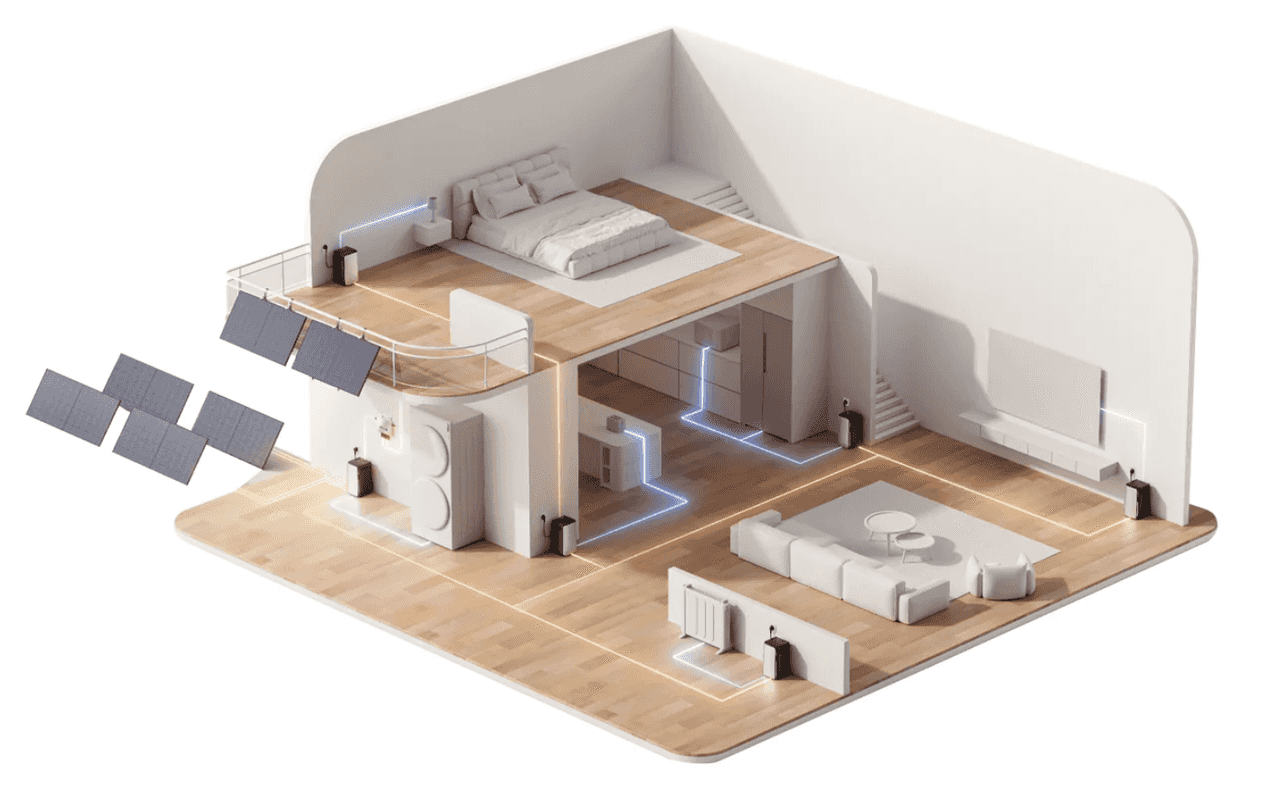
Through the EcoFlow app and OASIS Home Energy Management System, the system uses AI to monitor solar production, household demand, and tariff schedules. It automatically charges during off-peak windows or when excess solar energy is available, then discharges during expensive peak hours, helping reduce grid dependence and maximise self-consumption.
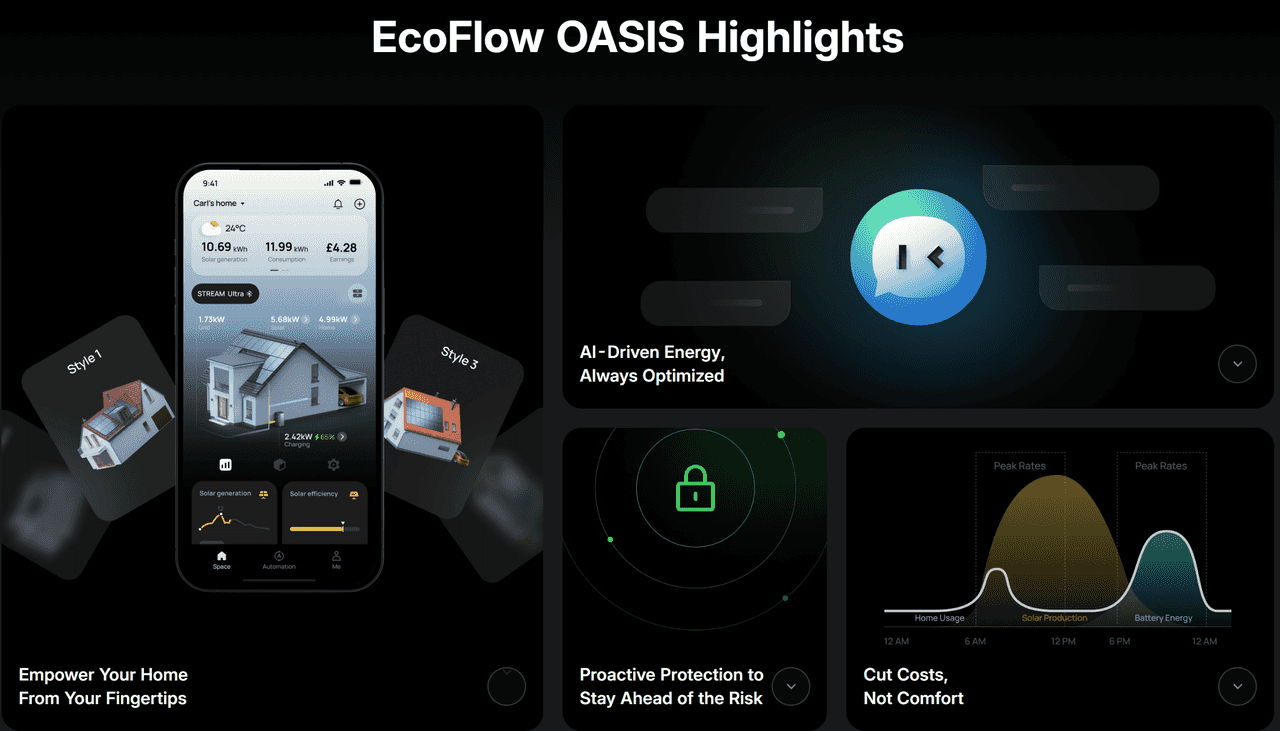
Solutions for homes without solar panels: 450W Rigid Solar Panel + STREAM AC Pro + STREAM Ultra
For homes without existing solar panels, the 450W Rigid Solar Panel + STREAM AC Pro + STREAM Ultra bundle combines generation and storage into one complete solution. It also delivers 3.84 kWh storage capacity and 2,300 W output, making it suitable for running washing machines, dishwashers, ovens, microwaves, refrigerators, space heaters, and home office equipment. The system captures solar energy during daylight hours and stores it for use at night or during high-tariff peak periods.
The included 450W rigid solar panel features 23% conversion efficiency, producing more electricity per square metre compared to many standard panels, ideal where roof space is limited. Its durable, weather-resistant construction ensures stable long-term outdoor performance. When paired with STREAM Ultra and AC Pro, it improves charging efficiency and increases renewable energy utilisation.
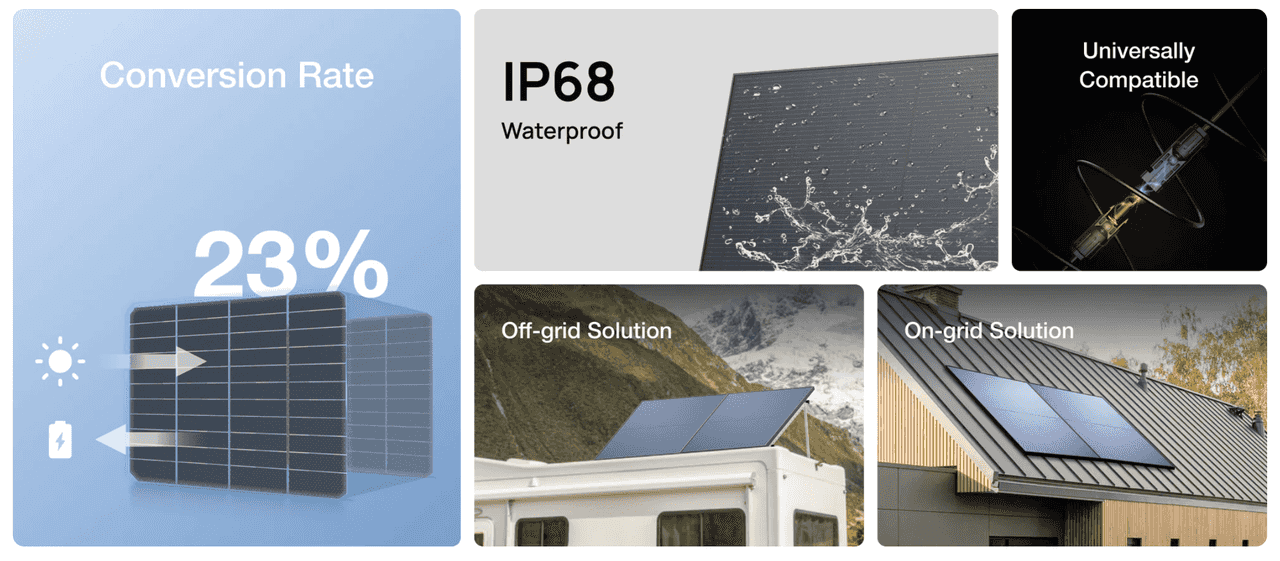
Like the solar-ready bundle, this setup supports up to six distributed batteries in parallel, allowing flexible placement throughout the home rather than stacking units in one location. Managed through the EcoFlow app and OASIS system, the solution intelligently balances solar input, battery storage, appliance demand, and time-of-use pricing, enabling cost-effective energy use across both day and night.
Ways to benefit from off-peak electricity
Once you understand your tariff and cheaper time windows, the next step is adjusting how and when you use power. Small timing changes can lead to noticeable savings over time — here are some of the most effective ways to make the most of off-peak electricity.
Running dishwashers and washing machines during off-peak hours
Dishwashers and washing machines use significant electricity, particularly for heating water. Running them during peak and off-peak hours for electricity when rates are lower can reduce the cost per cycle. Shifting these tasks to late evening or early morning makes a measurable difference over time.
Using tumble dryers or washer-dryers overnight
Dryers are among the highest energy-consuming household appliances. Operating them overnight during off-peak periods can significantly lower the cost per cycle. Using delay-start functions ensures the appliance runs safely and automatically during cheaper hours.
Charging electric vehicles when nighttime rates are lowest
Electric vehicle charging can substantially increase household electricity usage. Scheduling charging sessions during overnight off-peak windows helps reduce charging costs. Many EV chargers and vehicles allow programmed charging times to align with the lowest tariff periods.
Heating water with immersion heaters in off-peak periods
Immersion heaters use considerable electricity to heat water tanks. Activating them during off-peak windows allows you to store hot water at a lower cost for use throughout the day. Timers can automate this process efficiently.
Pre-heating or pre-cooling your home before peak pricing starts
Heating or cooling systems often run heavily during peak hours. By pre-heating or pre-cooling your home shortly before peak pricing begins, you reduce the need for high energy usage when rates are highest. This strategy improves comfort while lowering peak consumption.
Using timers or delay-start functions on appliances
Many modern appliances include built-in timers or delay-start options. Setting these features to run during cheaper electricity periods helps optimise usage without disrupting your routine. It is a simple yet effective way to shift demand automatically.
Charging home batteries with cheaper off-peak electricity
If you have a home battery system, charging it during off-peak periods allows you to store lower-cost electricity. You can then use that stored energy during expensive peak hours, reducing reliance on high-rate grid power and improving overall efficiency.
Avoiding high-load appliances during evening peak times
Evening hours often carry the highest electricity rates due to increased demand. Avoiding simultaneous use of high-load appliances such as ovens, heaters, and dryers during these times can prevent unnecessary cost spikes. Spreading usage more evenly throughout the day helps manage bills more effectively.
Conclusion
Understanding what peak and off-peak times are is more than just knowing when electricity costs change; it's about using that knowledge to take control of your energy spending. By shifting high-consumption activities to cheaper periods and avoiding heavy usage during peak hours, you can reduce strain on your budget and make your home more efficient.
For even greater savings, combining smart timing with intelligent energy storage can amplify the benefits. Solutions from EcoFlow allow you to store lower-cost or solar electricity and use it when rates are highest, all managed through the EcoFlow app. It's a practical way to turn peak and off-peak awareness into long-term savings and smarter energy independence.
FAQs
What are off-peak hours in the UK?
Off-peak hours are the times of day when electricity demand is lower, typically late at night or early in the morning. During these periods, energy is often cheaper because fewer households and businesses use power. The exact peak and off-peak hours for electricity depend on your supplier and tariff structure. Checking your plan details or smart meter data will confirm your specific schedule.
Is 5 pm peak or off-peak?
In most cases, 5 pm is considered a peak period. Early evening is when demand rises as people return home and use high-energy appliances. This falls within typical electricity peak and off-peak hours, when prices are usually higher. However, the exact classification can vary based on your tariff.
What is the cheapest time of day to do laundry?
The cheapest time to do laundry is usually during overnight off-peak periods. These lower-cost windows are part of your supplier's peak and off-peak electricity times, when overall demand on the grid is reduced. Running washing machines or dryers during these hours can help lower your electricity bill. Always review your tariff's time bands to be sure.