How to Pack for a Ski Trip with Warm Layers, Safe Driving and Backup Power
There is nothing quite like the rush of carving down fresh powder on a crisp morning. A successful ski trip is the highlight of the winter season for many Canadians, offering a perfect blend of adrenaline, nature, and cozy evenings. However, the difference between a dream vacation and a freezing, stressful ordeal often comes down to one thing: preparation. Packing for the mountains requires a strategic approach, balancing warmth, safety, and connectivity. By planning ahead, you ensure that you spend less time worrying about cold toes or dead batteries and more time enjoying the slopes.
Packing Warm Layers for a Ski Trip
When you go on a winter ski trip to the mountains, the clothes you wear are the best way to keep you safe and warm in the harsh weather.
Base Layer
The foundation of your warmth starts here. The goal of a base layer is moisture management. When you ski, you sweat; if that sweat stays against your skin and cools down, you will freeze.
First, this layer should be snug against your skin to effectively wick away moisture.
For material, choose Merino wool or high-quality synthetic fibers. Merino is naturally odour-resistant and stays warm even when damp. Never wear cotton next to your skin. Cotton absorbs moisture and loses all insulating properties when wet, leading to rapid body cooling.
Mid Layer
The mid-layer is responsible for trapping body heat. It acts as insulation, retaining the warmth your body generates.
Fleece is a breathable option that dries quickly, making it excellent for high-output skiing where you might overheat.
For extremely cold days—common when learning how to plan a family ski trip in the Rockies or Quebec—a lightweight down jacket provides the best warmth-to-weight ratio. Synthetic insulation is heavier but performs better if it gets damp.
Outer Layer
Your outer shell protects you from the elements: wind, snow, and slush.
Make sure the shell is waterproof: Look for high ratings (20,000mm is a good standard) or materials like Gore-Tex. This keeps melted snow out while allowing sweat vapour to escape.
Also, look for "pit zips" for ventilation, a powder skirt to keep snow out of your pants during falls, and a hood that fits over your helmet.
Accessories
Your extremities are the first to suffer from the cold.
Socks: One pair of thin, wool ski socks is better than two pairs of thick ones. Thick socks can restrict circulation, making feet colder.
Gloves vs. Mittens: Mittens are warmer because your fingers share heat, while gloves offer better dexterity.
Neck Gaiter: Essential for covering the chin and nose on windy chairlifts.
Sun Protection
The sun at high altitudes is deceptive. Snow reflects up to 80-90% of UV rays, and may double your exposure.
Goggles: Essential for visibility and eye protection. Bring different lenses: dark for sunny days and yellow/rose for flat light.
Sunscreen: Even on cloudy days, high-SPF sunscreen is non-negotiable to prevent severe burns on exposed skin.
Ensuring Safe Driving to Your Ski Destination
The journey to the mountain is often the most dangerous part of the trip. Mountain roads are unpredictable, often plagued by black ice, heavy snowfall, and steep gradients. Whether you are a local or a tourist on snow skiing trips, vehicle preparation is critical.
Check Your Tires
In many Canadian skiing regions, winter tires are a legal requirement.
First, ensure your tires carry the "Mountain Snowflake" symbol. All-season tires begin to harden and lose grip below 7°C, whereas winter tires stay soft and grip the ice.
And don't forget that cold temperatures cause the air inside tires to contract. Your tire pressure will drop as the temperature plummets, so check your pressure before you leave and again when you arrive at the destination.
Pack Snow Chains
Even with 4WD and winter tires, conditions can get severe enough that traction devices are required.
Ensure you buy chains that fit your specific tire size. Do not wait until you are stuck on the side of a highway in a blizzard to open the box; practice installing them in your driveway at home first.
Emergency Kit
Winter mountain roads can be unpredictable. If you get stuck or need to wait out bad weather, having a few essentials in your car can make a big difference:
Collapsible snow shovel and jumper cables
Sand or kitty litter for traction under tires
Extra blankets or a compact sleeping bag
Bottled water and snacks
Car Battery Backup and Power Security
Winter is tough on car batteries. Cold temperatures reduce their cranking power, and using the car's engine to charge devices while idling wastes fuel and risks carbon monoxide buildup if snow blocks the exhaust.
To protect your car battery and ensure you have electricity during roadside emergencies, packing a portable power station is a smart move.
Keeping Your Devices On on a Ski Trip
From digital trail maps and lift pass apps to capturing memories on camera, you need power. But cold weather is tough on batteries.
Phones
Cold temperatures can make your phone shut down unexpectedly, even when the battery isn't actually dead.
Keep it in an internal jacket pocket close to your body
Switch to airplane mode in the mountains (weak signal drains battery fast)
Camera
Action cameras and DSLRs lose power quickly in the cold.
Bring twice as many batteries as you think you need
Keep spares in a warm inside pocket and swap them out frequently
Drone
Mountain drone footage is spectacular, but the cold brings challenges.
Ice can form on propellers in freezing, humid conditions
Batteries drain much faster—land well before you hit 20%
Keep flights short
The "Hub" for Your Gear
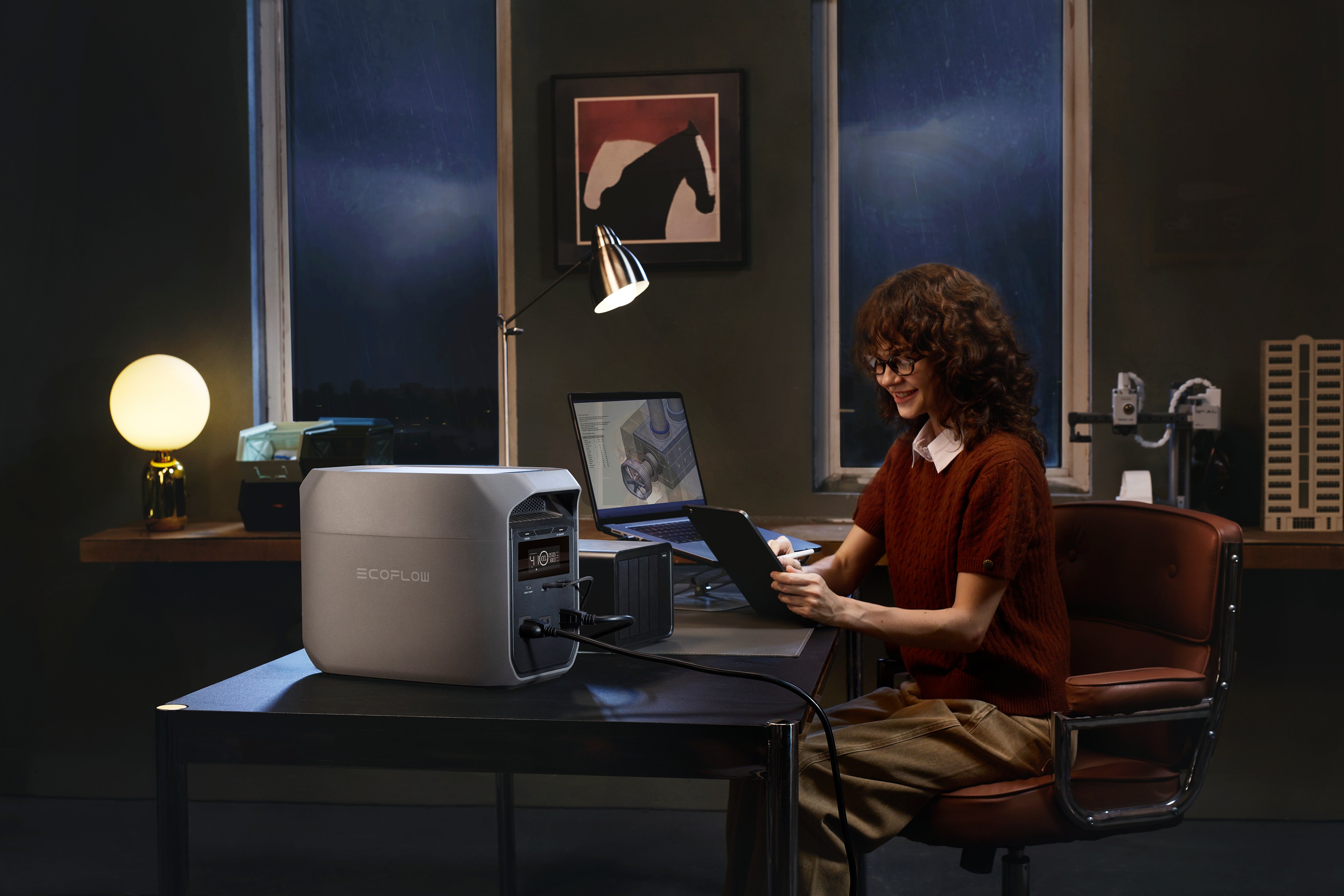
At the end of the day, you return to your accommodation. Ski resorts and mountain cabins are notorious for having insufficient power outlets—often just one or two per room. You have boots to dry, phones to charge, and cameras to prep for tomorrow.
The EcoFlow DELTA 3 solves this "outlet anxiety" completely.
Central Charging Station: With its multiple USB and AC ports, the DELTA 3 acts as a hub. You can charge the whole family's gear simultaneously without hunting for outlets behind hotel furniture.
Sleep Peacefully: In a quiet hotel room, you don't want a noisy generator. The DELTA 3 operates at a whisper-quiet 30dB, ensuring a restful night's sleep while your devices power up.
Storm Security: Mountain weather is volatile. If a blizzard knocks out power to your Airbnb, the DELTA 3 has a powerful 1800W output (and up to 3600W surge). It can run a lamp, keep phones charged, or even power a small appliance like a travel kettle or microwave using X-Boost™ tech, ensuring your family stays comfortable until the grid comes back online.
Winter Essentials You Might Forget
Stay Warm
Wool base layers (top and bottom)
Waterproof jacket and ski pants
Extra ski socks and hand warmers
Neck warmer or balaclava
Stay Safe
Helmet and goggles (bring an extra lens for low light)
Sunscreen (SPF 50+) and lip balm
First aid kit
Keep Powered
EcoFlow DELTA 3 for your car
Portable power bank for the slopes
Phone charging cable
For Your Car
Ice scraper and snow brush
Windshield washer fluid (winter-rated)
Collapsible shovel
Stay Warm and Safe
A ski trip is an investment in joy, health, and family memories. By meticulously planning your layers, you ensure physical comfort against the biting cold. By preparing your vehicle with the right tires and emergency gear, you ensure a safe arrival and return. And by managing your power needs with the EcoFlow DELTA 3, you guarantee that you are never left in the dark or disconnected, whether you are dealing with a crowded cabin outlet or a sudden mountain power outage. With these bases covered, you are free to focus on what really matters: the snow, the scenery, and the experience.
FAQs
Q1: How should I dress my children to ensure they stay warm all day?
Children lose body heat more quickly than adults. You can still use the three-layer method, but for little kids, a one-piece snowsuit is better to keep snow from getting in at the waist. Mittens are much better than gloves at keeping little fingers warm. To keep them happy and healthy, make sure they take plenty of breaks for hot chocolate and bring extra hand warmers.
Q2: What is the single most important car check before a ski trip?
Your tires are the most important thing to check. Make sure they are approved winter tires with the mountain snowflake symbol on them, and check that the tread depth is okay. All-season tires often don't work on steep, icy roads in the mountains. Second, look at the "Cold Cranking Amps" (CCA) of your battery. Cold weather can drain an old battery quickly. If yours is more than three years old, get it checked.
Q3: Why does my phone power run out so quickly when I'm skiing?
Lithium-ion batteries use chemicals to make power. Extreme cold makes these processes slower, which means there is more resistance inside. Even though the battery still has a charge, this makes the phone think it's empty, so it shuts down to protect itself. To stop this from happening, keep your phone in an inside pocket close to your body and use a heated phone case if you can.
Q4: How do I prevent altitude sickness during a mountain trip?
Altitude sickness happens if you go too fast to a very high place. To avoid it, drink a lot more water than you normally do because the air is dry. Don't drink a lot of alcohol on your first night. Before going to the peak, eat foods that are high in carbs and, if you can, spend a night at a middle elevation. Go down right away if you're feeling dizzy.
Q5: Is a portable power station really necessary for a hotel stay?
It is very helpful. Ski condos and older hotels usually have very few outlets, and they are often hard to get to because they are behind heavy furniture. The EcoFlow DELTA 3 is a good example of a unit that works like a portable power strip, letting you charge up computers, cameras, boots, phones, and other devices all at once and from the same place. It also helps you feel better during winter storms, which often cause short power cuts in mountain towns.