Quiet Portable Air Conditioners Explained: Noise Levels, Features & Best Options in Canada (2026 Guide)
- Why Quiet Portable Air Conditioners Matter in Canada
- How Loud Is a Portable Air Conditioner? (Understanding dB Levels)
- What Makes a Portable Air Conditioner Quiet? Key Features to Look For
- How to Choose a Quiet Portable AC in Canada
- Recommended Quiet Portable Air Conditioners in Canada (2026 Picks)
- Are Quiet Portable ACs Worth It in Canada?
- Conclusion
- FAQs
As Canadian summers shift from “a bit warm” to a full blown Southern Ontario sauna, cooling has become a non-negotiable. But for anyone living in a modern condo or trying to grind through a home office shift, a loud AC is just as disruptive as the heat. This 2026 guide is about finding that sweet spot where you aren’t choosing between a heatwave and a massive headache. We’re breaking down the quietest portable ACs for the Canadian lifestyle, balancing high performance cooling with the acoustic peace you need for a functional home sanctuary.
Why Quiet Portable Air Conditioners Matter in Canada
In Canada, portable units are often the only way to survive the summer. Between strict condo bylaws banning window units and heritage homes where you can’t touch the brick, we’re tethered to these rigs. But with our spare rooms now serving as 24/7 offices, that old-school AC roar has become a professional liability. It’s hard to focus on a 2026 budget when your cooling system sounds like a jet engine in the corner of the room.
Common Noise Complaints from Portable AC Users
Most complaints aren’t just about the volume, but the type of noise. You get that jarring “clunk” every time the compressor kicks over, usually right as you’re drifting off, and a constant, high pitched fan whines. In a quiet Canadian home, these sounds are amplified. You eventually end up choosing between sweating through your shirt or actually being able to hear your own thoughts.
Why Noise Matters for Sleep, Work, and Condo Living
If you’re in a tight Vancouver studio, you’re likely sitting three feet from your unit. On a Team’s call, that hum makes you sound like you’re in a wind tunnel. Beyond work, noise over 45 dB actually wrecks your REM cycles. You might stay cool, but you’ll wake up feeling like you pulled an all-nighter because your brain never tuned out the compressor’s rhythm.
Canadian Living Scenarios: Small Apartments, Bedrooms, and Home Offices
From Montreal duplexes to Calgary new-builds, space is a luxury. When your bed, desk, and AC share the same 150 square feet, “ultra-quiet” is the most critical feature of the season. In a small apartment, there’s no escaping the racket. When considering the best portable AC units for small spaces, finding a balance between compact design and low decibel output is essential for maintaining a peaceful living environment. For 2026, the move is away from loud BTU monsters toward smart, inverter-based units that can throttle down when you’re nearby.
How Loud Is a Portable Air Conditioner? (Understanding dB Levels)
Before you start hunting through the aisles at Canadian Tire or browsing Best Buy, you’ve got to understand the math of noise. It’s a bit of a trip because the decibel (dB) scale is not linear; it is logarithmic. That’s a fancy way of saying that every 10 dB jump actually sounds twice as loud to your ears. If you’re comparing a 50 dB unit to a 60 dB one, you are getting way more than a “little” more noise, the volume actually doubles.
What Is a Decibel (dB) and How It Affects Perceived Noise
In a practical sense, most of us only start to notice a difference in sound once it hits about a 3 dB shift. When you’re looking at these high-end “quiet” ACs in 2026, those few digits on the box are the difference between a peaceful night and a headache. Here’s a quick reality check on how those numbers translate to your Canadian living room:
| Noise Level (dB) | Real-World Analog | Effect on Home Environment |
|---|---|---|
| 30 dB | A quiet whisper, late night in a rural area | Barely audible. Ideal sleep environment. |
| 40 dB | Quiet library, gentle rainfall | Goal for "Ultra-Quiet" AC. Perfect for sleep. |
| 50 dB | Quiet office, modern dishwasher | Acceptable for home office and concentration. |
| 60 dB | Normal conversation, background music | Standard AC level. Will notice it on Team calls. |
| 70 dB | Busy city traffic, vacuum cleaner | Loud and distracting. Hard to ignore. |
Typical Noise Levels of Portable AC Units (40–60 dB Explained)
Most standard portable ACs you’ll find sitting on the shelf today chug along between 55 and 65 dB. That’s basically the volume of someone talking right next to you, fine for a noisy kitchen, but a total dealbreaker for a nursery or a bedroom. The newer “quiet” generation is aiming for that 45-52 dB sweet spot. It’s comparable to a gentle rainfall; it’s a steady, soothing hum rather than a mechanical roar.
What Is Considered a Quiet Portable AC? (Quick Guide)
Under 45 dB: Exceptionally quiet. If you’re a light sleeper or have a baby in the house, this is the only tier you should look at.
45-50 dB: Quiet. This is the perfect range for a home office where you need to focus but don’t want total silence.
Over 55 dB: Standard. These are best kept in living rooms or basements where the TV or background music can drown out the fan.
What Makes a Portable Air Conditioner Quiet? Key Features to Look For
Engineering has come a long way from those old “rattle-trap” boxes we used to shove in our windows. In 2026, the quietest units on the market are using some pretty slick tech to keep the noise down. If you’re shopping around, these are the features that actually move the needle.
Dual Hose vs. Single Hose: Which Is Quieter?
While dual-hose units are generally more efficient at cooling because they don’t create negative pressure, they can sometimes be slightly louder due to the secondary fan. However, because they cool the room faster, the compressor runs for shorter durations, leading to less total noise over time.
Inverter Technology and Variable Speed Compressors
This is easily the biggest game changer. Traditional AC compressors are basically binary, they are either 100% on or 100% off. When they fire up, you get that jarring mechanical “clunk” that wakes the baby or ruins a recording. Inverter compressors (found in 2026 models from LG and Midea) work more like a dimmer switch. They speed up and slow down gradually. Once your room hits the target temp, the motor just purrs along at a low speed, keeping things steady without those noisy, aggressive restarts.
Sleep Mode & Low Fan Settings
There’s a bit of a debate here. Single-hose units are usually simpler and quieter at the moment because they only have one fan. However, they create negative pressure, pulling warm, humid air in from the rest of the house. Dual-hose units cool a room roughly 40% faster. While the extra fan might add a tiny bit of hum, the unit reaches its goal sooner and then settles into a whisper-quiet maintenance mode. Bottom line: you spend less time listening to the “full blast” setting.
Anti-Vibration Design and Compressor Insulation
Premium 2026 models now come with internal sound blankets, basically a heavy duty cozy for the compressor, to muffle mechanical noise. They also feature rubberized “feet.” If you’ve ever had an AC vibrate across a laminate floor in a Vancouver condo, you know how loud that resonance can be. These dampening features stop the floor from acting like a giant speaker for the motor. For those looking to eliminate even the faintest electrical hum, pairing your AC with a high-quality portable power station ensures a stable, surge-free current that keeps the compressor running at its quietest efficiency levels.
Smart Features: App Control for Noise Scheduling
Most of the top-tier units now link to an app on your phone. This is huge for noise management. You can schedule the AC to “pre-cool” your place at full blast while you’re at work or out for groceries. The moment you walk through the door, the app automatically throttles it down to “Quiet Mode.” You get a cool house without ever having to shout over the fan.
How to Choose a Quiet Portable AC in Canada
Choosing the right portable air conditioner for home means you can’t just grab the first unit you see on sale at Canadian Tire. You have to balance your floor plan against how Canadian weather actually hits. If you don’t do the homework, you’ll end up with a noisy machine that barely keeps up with a July humidity spike.
1. Match BTU to Room Size (Avoid Overworking Noise)
If you buy a unit that’s too small for your room, that compressor is going to run 24/7 at max speed just to keep you from melting. That’s where the constant noise comes from. Always look at the SACC (Seasonally Adjusted Cooling Capacity) rating on the box. In 2026, this is the gold standard for how a unit actually performs in a real-world room, not a lab.
2. Check Energy Efficiency (Quieter Long-Term Operation)
Here’s a pro tip: high CEER (Combined Energy Efficiency Ratio) ratings usually point to better-built internals. Manufacturers who invest in high efficiency parts tend to use higher-quality motors and fans that naturally run smoother. Plus, it keeps your Hydro bill from becoming a second mortgage during a three-week heatwave.
3. Look for Verified Noise Ratings (Not Just Marketing Claims)
Every box says “Whisper Quiet” these days. It’s basically a meaningless sticker. Before you drop $600 at Best Buy, check verified reviews from actual Canadians who’ve tested the unit in humid conditions like Ottawa or Southern Ontario. Look for independent lab tests that measure the dB levels on “High,” not just the “Sleep” setting.
4. Consider Canadian Climate Needs (Humidity + Heat Waves)
In places like the GTA or out on the East Coast, the heat alone won’t kill you, it’s that soup-thick air that does the damage. Finding a quiet AC that handles moisture like a beastly dehumidifier is honestly worth its weight in gold. You want to look for units with high moisture-removal ratings. It stops the machine from making those annoying “gurgling” or “sloshing” sounds while it’s fighting to manage all that condensed water.
5. Portability & Storage for Seasonal Use
Since we only actually need AC for about three or four months, portability is huge. Look for units with sturdy, easy-roll casters and a compact footprint. You’re going to want something that can be easily tucked into a closet or a storage locker once the first frost hits. Another thing to remember? When you store it for the winter, keep it upright. If you lay it on its side, the oil in the compressor will migrate, and you’ll likely kill the unit before next summer even starts. This flexibility is enhanced when you treat your cooling setup as a complete solar generator system, allowing you to maintain a peaceful environment in remote cabins or during summer blackouts without the intrusive roar of a gas engine.


Recommended Quiet Portable Air Conditioners in Canada (2026 Picks)
Choosing the right unit usually comes down to three things: how much noise you can tolerate, how big your room is, and how much you hate your Hydro bill. For 2026, we’ve narrowed it down to the units that actually deliver on their “quiet” promises in the Canadian climate.
Best Overall Quiet Portable AC-Midea Duo (Smart Inverter Edition)
The Midea Duo is basically the MVP for Canadian households right now. It uses a “hose-in-hose” design which solves the efficiency problem of single-hose units without the clutter of two separate pipes. Thanks to the variable-speed inverter, it can drop as low as 42 dB. This is the perfect middle ground for a living room or a larger home office. You can find it at Canadian Tire or Amazon.ca, and it’s one of the most reliable high-performers we’ve seen this season.
Best for Bedrooms (Ultra Quiet)- GE Profile Ultra Quiet (with Inverter)
If you’re a light sleeper trying to survive a humid Ontario night, this is your best bet. The GE Profile is engineered with an S-shaped air duct and high density insulation specifically to kill noise. It sits around 40-43 dB on its lowest setting. It’s one of the few units that won’t make you feel like you’re sleeping in a mechanical room, and it keeps a rock-steady 20°C without the constant on-off cycling.
Best for Larger Rooms-Whynter ARC-1230WN / ARC-14S
For those open-concept condos in downtown Vancouver or a big suburban basement, you need raw power. The Whynter dual-hose series is the heavy hitter here. It’s a bit louder when it’s gunning for the target temp (around 52-56 dB), but because it cools up to 40% faster than its competitors, it hits the mark quickly and then drops into a much quieter maintenance mode.
Portable Cooling Alternatives (Battery-Powered & Hybrid Options)
EcoFlow WAVE 3 – Portable Cooling Alternative
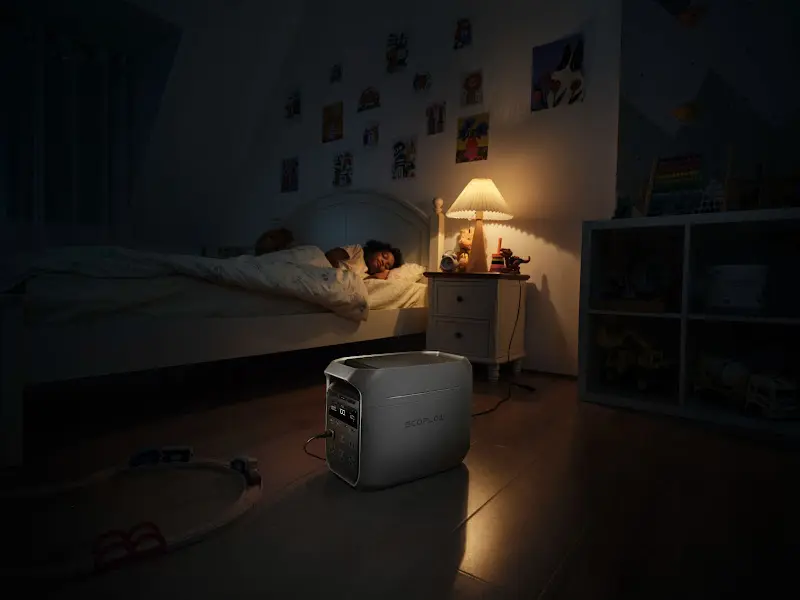
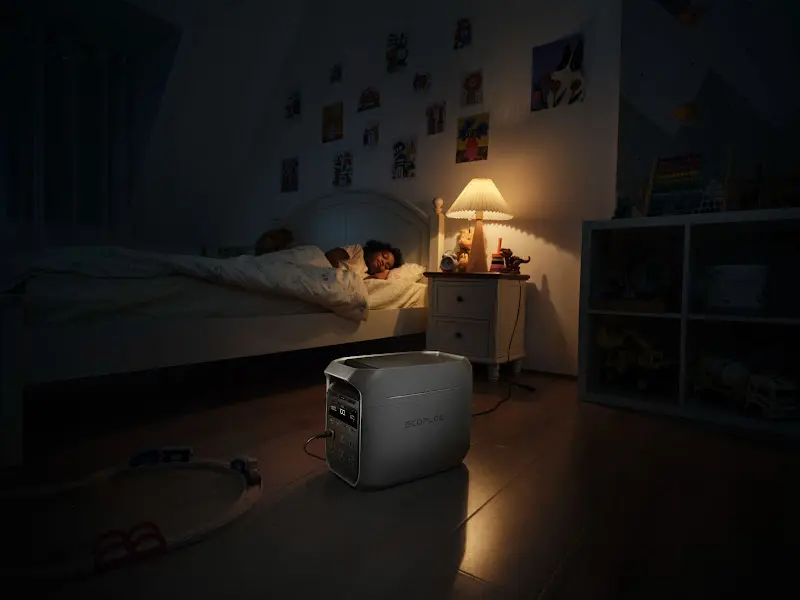
If you’re looking for a “low noise + high flexibility” setup, the EcoFlow WAVE 3 Portable Air Conditioner is a bit of a revolutionary pick for the 2026 Canadian market. Traditional dual-hose units are great, but they can be clunky. The WAVE 3 is an integrated, portable design that actually supports optional battery power. This means it can run without being tethered to a wall outlet, which drastically reduces those annoying noise fluctuations you get from frequent compressor cycling. In high density condo hubs like Toronto or Vancouver, the “low-interference” mode is a lifesaver for both night-time sleep and focused home office days. It’s also the go-to recommendation for Canadian outdoor life. Whether you’re tucked away in an RV, a camper, or a remote “cottage country” cabin, it gives you quiet cooling (and heating) without the deafening roar of a traditional gas generator. It’s light enough to actually move around, too, clocking in at about 15.3 kg, making it one of the few units that doesn’t feel like a permanent piece of furniture.
EcoFlow DELTA 3 Plus – Power Support System
If you’re serious about overall energy management, the EcoFlow DELTA 3 Plus Portable Power Station is the ultimate silent partner for your home. While it is not an AC itself, this portable power station provides rock-solid electricity for your low-noise devices. In 2026, this unit stands out because it operates at a barely-audible 30 dB when running loads under 600W. That’s quieter than a whisper, meaning it won’t add to the racket while keeping your fans or portable cooling units humming. Given our rising hydro costs, it’s a practical move, you can charge it up when rates are low and use that stored power to stay cool during expensive peak hours. Plus, it replaces those noisy, gas-guzzling backup generators during a blackout, keeping your home office functional and your sleep environment peaceful.
Are Quiet Portable ACs Worth It in Canada?
Investing in a high end unit usually kicks off a debate between the upfront price and your long term sanity. In Canada, where a July heatwave can feel relentless but we still value a quiet home, the decision really comes down to how you’re using your space.
Cost vs. Comfort: Is It Worth Paying More?
Generally, yeah, it is. The premium you pay for an inverter or an insulated unit pays off in better sleep and fewer distractions. Another thing to consider is the 2026 energy landscape. With electricity rates in provinces like Alberta hitting 25.8¢/kWh and Ontario’s “On-Peak” rates climbing, an efficient, quiet unit is more than just a way to kill noise, it keeps you from getting fleeced on your Hydro bill. Plus, if you’re in BC or Toronto, check for the 2026 rebates; some programs are even handing out free portable units to eligible households this year.
When You Should Prioritize Noise Over Power
If you’re cooling a bedroom or a nursery, a slightly lower BTU rating with a much lower dB level is almost always the better trade-off. It doesn’t matter how cold the room is if you can’t sleep because the compressor sounds like a lawnmower. Bottom line? For a sleep environment, aim for something under 45 dB. If it’s for a basement workshop or a living room where the TV is always on, you can probably save a few bucks and get a standard, louder model.
Portable AC vs. Window AC: Which Is Quieter?
Window units are usually quieter because the compressor, the part that actually makes the racket, is literally hanging outside the building. But for most Canadian condo dwellers, window units are a total no-go due to strict bylaws or weird window shapes. In that case, a high-end “ultra-quiet” portable unit is your only real move.
Conclusion
Choosing a quiet portable air conditioner in Canada means looking way past the cooling numbers. By getting a handle on decibel levels and hunting for features like inverter tech, you can stay chilled without sacrificing the peace of your home. Whether you go for a top-tier traditional unit or a flexible, battery-ready setup like the EcoFlow WAVE 3, the right choice will keep you comfortable through the hottest 2026 stretches without blowing out your eardrums.
FAQs
1. Is 50 decibels loud for an air conditioner?
Not really. It’s roughly the sound of a quiet conversation or a moderate rainfall. In a dead-silent room, you’ll definitely notice it, but it’s usually low enough to work beside or sleep through without your brain latching onto the noise. If you’re sensitive, though, aim for a unit under 45 dB for the bedroom.
2. Are dual hose portable ACs quieter?
They aren’t necessarily quieter at their peak, but they are much faster. Because they don’t create “negative pressure” (which pulls warm air back into the room), they hit your target temp and throttle down sooner. You basically spend less time listening to the loudest part of the cooling cycle.
3. How do I make my portable AC quieter?
First, park it on a thick rug or an anti-vibration mat. Hardwood and laminate floors love to act like a giant speaker for AC vibrations. Second, keep the exhaust hose as short and straight as possible. If the fan has to push air through a bunch of kinks, it’s going to roar. Finally, clean those filters, a choked motor is a noisy motor.
4. Why is my portable AC louder than expected?
Usually, it’s a maintenance issue. A clogged filter or a dusty internal fan makes the unit strain, which ramps up the decibels. If it’s a new sound, the unit might be sitting unevenly on the floor, or a screw has rattled loose inside. Give it a quick “health check” before you assume it’s dying.
5. How to tell if a portable AC compressor is bad?
Listen for the “death sounds.” If you hear grinding, screeching, or a constant, frantic clicking, that’s not normal. If those sounds are paired with the unit blowing warm air, the compressor is likely toast. At that point, with 2026 repair costs being what they are, you’re usually better off looking into a new ENERGY STAR model.