How Many Amps Does a Fridge Use? A Complete Canada Appliance Guide (2026)
- Fridge Amp Usage Explained (Running vs. Starting Amps)
- How Many Amps a Fridge Uses in Canada (Real 2026 Data)
- Why Fridge Amps Matter in Canadian Homes (Breaker & Energy Reality)
- How to Calculate Fridge Amps (Step-by-Step Guide)
- How Much Electricity a Fridge Uses Compared to Other Canadian Appliances
- How to Reduce Fridge Electricity Use + Warning Signs
- Conclusion
- FAQ
Whether you’re overhauling a kitchen in a Toronto condo or sorting out a backup power plan for a cabin in the Rockies, you need to know your fridge’s electrical draw. In 2026, with Canadian energy prices swinging and smart homes becoming the standard, “amps” are the metric that matters. It’s the difference between a smooth-running kitchen and a tripped breaker right when you’re mid-dinner prep. This guide looks at how much power your fridge actually pulls, why a humid Ontario summer spikes that number, and how to keep things cold when the grid inevitably blinks.
Fridge Amp Usage Explained (Running vs. Starting Amps)
A fridge is not a steady power consumer. It doesn’t just pull the same juice every second it’s plugged in. It operates in cycles, think of its energy demand like a mountain range rather than a flat prairie.
What “Amps” Means in a Refrigerator
Amperage (amps) is the volume of electricity flowing through the wires. If you think of electricity like water in a garden hose, “amps” is the amount of water moving at any given time to keep that compressor humming.
Running Amps vs. Starting Amps (Key Difference)
This is the key distinction for any Canadian homeowner.
Running Amps: are the steady-state power, usually 3A to 6A, which is used once the compressor is up.
Starting Amps: this is the massive “jolt” required to kick the motor into gear. This surge can be 3 to 5 times higher than the running rate. If your backup battery can’t handle that split-second spike, your fridge isn’t going to start, period.
How Many Amps a Fridge Uses in Canada (Real 2026 Data)
Individual models from brands like Samsung, LG, or Whirlpool vary, but these benchmarks are based on the latest Natural Resources Canada (NRCan) efficiency trends.
2026 Canadian Fridge Amperage Benchmarks
| Fridge Type | Common Use Case | Running Amps (Avg) | Estimated Starting Amps (Peak) |
|---|---|---|---|
| Small / Compact (5–10 cu ft) | Student rentals, "beer fridges," or basement suites. | 1.0A – 2.5A | 3A – 8A |
| Standard (10–20 cu ft) | Typical suburban family homes (Top/Bottom freezer). | 3.0A – 5.0A | 9A – 15A |
| Large / French Door (20+ cu ft) | High-capacity units with dual-compressors & ice makers. | 5.0A – 8.0A | 15A – 25A |
Breakdown by Category
Small Fridge: The go-to for basement suites and dorms. They’re easy to power but have thin insulation. This means the compressor cycles constantly to stay cold, which can drain a portable power station faster than you’d expect.
Standard Fridge: The typical family workhorse. While they run on 15-amp circuits, they hog nearly that entire limit during startup. If you’re running a coffee maker on the same line when the compressor kicks in, expect a tripped breaker.
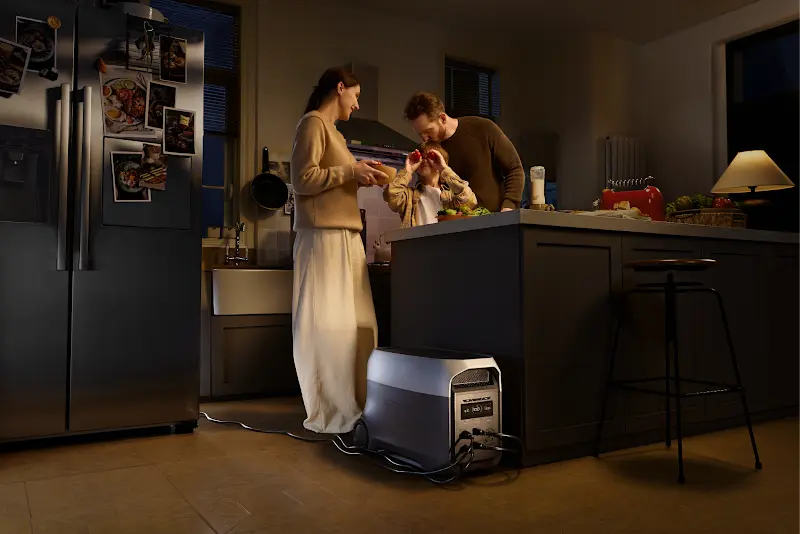
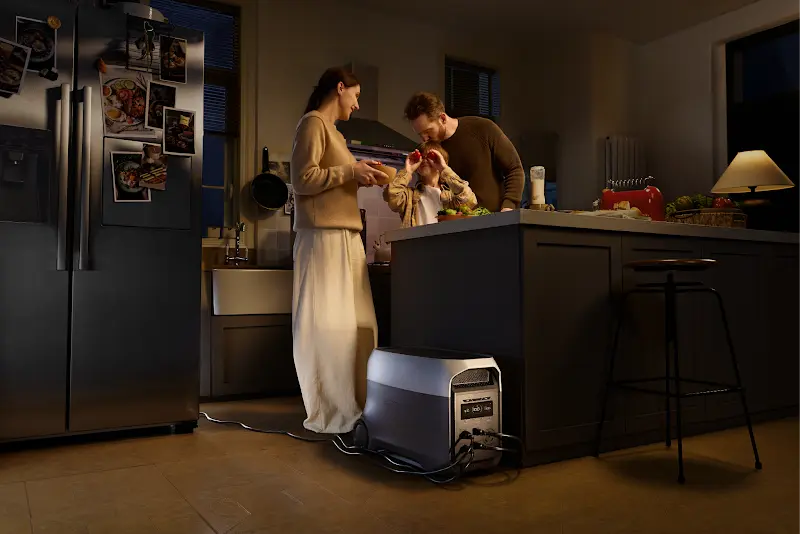
Large Units: High capacity French-door models with dual compressors. These are power-hungry beasts that usually need a dedicated 20-amp circuit in newer homes. You’ll need a heavy duty backup like the DELTA Pro Ultra just to handle their massive startup surge.
Why Fridge Amps Matter in Canadian Homes (Breaker & Energy Reality)
Living in Canada means our appliances have to fight the seasons. Understanding how your fridge talks to your electrical panel is the only way to avoid “the big click” of a tripped breaker when you least expect it.
Can a Fridge Trip a 15-Amp Circuit in Canada?
Can a fridge kill your circuit? You bet. While it only sips power once it’s running, that initial startup surge is a hog. If your fridge kicks on while you’re mid-toast or brewing a coffee on the same line, the total draw easily blows past the 15A limit. It’s a classic Canadian kitchen headache.
Why Summer Increases Fridge Power Load
When heatwaves bake Southern Ontario or the Okanagan, your fridge doesn’t get a break. It has to run its compressor way more often just to keep your milk from turning. This extra “on-time” spikes your Hydro bill and strains the local grid during those humid 4:00 PM peaks.
What Happens During Power Outages or Voltage Drops
During nasty summer storms in Calgary or Montreal, the voltage can dip. When that happens, your fridge actually tries to pull more amps to keep up, which can fry the motor. Knowing how to keep your fridge cold without power is essential for these situations to prevent losing hundreds of dollars in groceries.
What Canadian Homeowners Use When Fridges Must Stay Running
Relying on the grid is starting to feel like a gamble lately. Whether it’s a surprise ice storm in Quebec or a transformer blowing during a July scorcher in Toronto, having a plan for your groceries is more than “prepper” talk, it’s just common sense.
Whole-Home Backup Power for Critical Appliances
If you’ve got a house full of hungry kids and a deep freezer stocked with half a cow, you can’t mess around with small batteries. A lot of folks are moving toward the DELTA Pro Ultra Whole-Home Backup Power as a proper home backup. It’s a beast. It’ll handle the heavy startup grunt of a dual-compressor fridge without so much as a flicker in the kitchen lights. Another thing? It’s a massive help with the bill. You can charge the thing overnight when Hydro is cheap and then run your heavy appliances off it during those peak afternoon hours when the province is raking you over the coals on pricing. Think of it as an energy solution that not only keeps your home running smoothly but also helps save on costs.
Portable Backup Power for Fridge & Daily Essentials
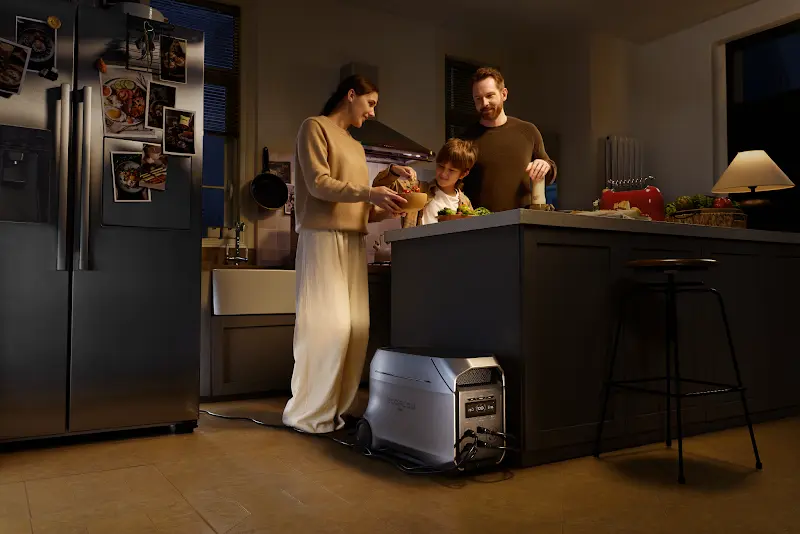
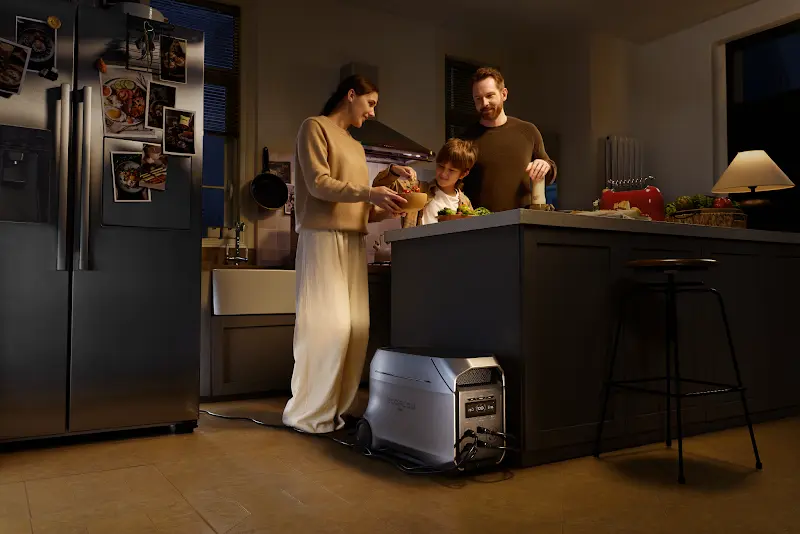
Not everyone has the space for a massive home-integrated system, eh? If you’re in a condo or a smaller detached place, the DELTA 3 Ultra Plus Portable Power Station (3072Wh) is the 2026 go-to. It’s punchy enough to keep a full sized French-door fridge alive for over a day, but small enough that you can actually move it. I’ve seen families use this as their “everything” battery. It stays in the kitchen to save the milk during a summer blackout, but come Friday, it’s tossed in the back of the truck for a weekend at the lake. It charges from 0 to 80% in about 48 minutes, which is a lifesaver if the power only comes back on for an hour between storms. It’s a solid, versatile unit that doesn’t take up half your closet.
How to Calculate Fridge Amps (Step-by-Step Guide)
You don’t need a degree in electrical engineering to figure out what’s going on with your kitchen setup. It mostly just takes a quick look at a sticker and a bit of basic math.
Formula (Watts ÷ Volts = Amps)
If your fridge only lists its power in Watts, don’t sweat it. Just use the standard power formula to get the number you actually need for your breaker or power station:
I = P / V (Amps = Watts ÷ Volts)
Real Canadian Voltage (120V Context)
In Canada, our wall outlets pump out a standard 120V. So, if that silver sticker on your fridge says it pulls 600 Watts, the math is dead simple: $600 / 120 = 5A$. That’s your running current.
How to Read the Nameplate
To get the real data, open the fridge door and look for a small silver or white sticker. It’s usually tucked away on the inner side wall or behind the veggie crisper. This tag is the most reliable way to find out how many watts does a fridge use or its “Rated Current,” providing the specific baseline for your unit’s energy needs.
How Much Electricity a Fridge Uses Compared to Other Canadian Appliances
To understand why your fridge is such a unique beast, you have to see how it stacks up against the other gear in your house. The raw numbers matter, but the real story is how that power is pulled.
| Appliance | Average Amps (at 120V) | Usage Type |
|---|---|---|
| Refrigerator | 3A - 6A | Constant/Cycling |
| Space Heater | 12.5A | High/Continuous |
| Window AC | 5A - 15A | High/Continuous |
| Microwave | 8A - 13A | Short Bursts |
Fridge vs. Space Heater
The contrast here is massive. A space heater, something most of us lean on during those deep Canadian winters, pulls a heavy, constant load that sits right at the limit of a standard circuit. A fridge plays it differently. It’s a marathon runner that sips power, shuts off, and sips again. But because it never stops, it ends up being a huge chunk of your monthly base-load on your hydro bill.
Which appliance uses most electricity in Canada homes?
If you look at the total kilowatt-hours over a year, the fridge is not the biggest hog. In provinces like Quebec, electric water heaters and baseboard heating systems are the heavy hitters, often taking up over 60% of a home’s energy use. Adding a solar generator to your home setup can help offset these continuous costs by utilizing renewable energy for smaller, constant loads.
How to Reduce Fridge Electricity Use + Warning Signs
Keeping your fridge healthy is a solid way to shave a few bucks off your monthly provincial hydro bill. A struggling unit is a nuisance that actively burns through your cash every single day.
How to Lower Your Fridge Electricity Bill in Canada
Clean the Coils: Dust and pet hair act like a thick sweater, forcing the motor to work twice as hard to dump heat.
Check the Seals: Close the door on a bill. If it slides out easily, your gaskets are shot and you’re cooling the floor.
Keep it Full: Cold items act like thermal mass. A full fridge holds its temp better than an empty one, just don’t block the vents.
Warning Signs Your Fridge Is Wasting Electricity
If the compressor hums 24/7 without a break, it’s struggling. Another red flag? If the back of the unit feels hot enough to warm up your coffee, it’s likely pulling way more amps than it should.
When to Replace Your Refrigerator (Canada 2026 Guide)
Fridges made before 2010 are basically “energy hogs.” Modern ENERGY STAR models are about 40-60% more efficient than those old relics. Also, with the 2026 provincial rebates, upgrading often costs less than keeping a clunker on life support.
Conclusion
Figuring out your fridge’s amp draw is the first real step toward a resilient Canadian home. Once you get a handle on those running and starting loads, you can actually manage your circuits without crossing your fingers every time the compressor kicks in. It also makes picking a backup solution a lot less like guesswork.
Whether you’re leaning on the DELTA series to survive a July heatwave or just trying to keep the lights on during a winter storm, the goal is the same. You want your food to stay fresh and your house to stay functional, no matter how shaky the grid gets. Don’t wait for a blackout to realize your “safety margin” was thinner than you thought. A little bit of prep today ensures you aren’t tossing out $400 worth of groceries tomorrow.
FAQ
How many amps does a standard fridge use in Canada?
Most residential units pull between 3A and 6A while they’re hummin’ along. But here’s the kicker: that can spike to 15A or more for a split second when the compressor first kicks in. It’s that quick jolt that usually makes your lights flicker.
Does a fridge use a lot of electricity compared to other appliances?
Honestly, no. It’s pretty efficient compared to something like a space heater or a dryer. But since it never gets a day off, it ends up being a huge part of your “base load.” It’s the steady, quiet drain on your Hydro bill that adds up over 30 days.
Can a fridge run on a 15-amp circuit in Canada?
Yeah, and in most older Canadian houses, that’s exactly how it’s wired. But modern codes are shifting toward dedicated 20-amp circuits. Why? Because if you’re running a kettle on the same line when that fridge surge hits, your breaker is going to pop.
Why does my fridge use more electricity in summer?
Your fridge uses more electricity in the summer because higher ambient temperatures force the compressor to run more frequently to maintain the set internal temperature.
How do I check my fridge’s amp rating?
You can check your fridge’s amp rating by looking at the manufacturer’s nameplate, usually located on a sticker inside the refrigerator compartment or on the back of the unit.