Home Electric Battery Backup: How to Choose the Right System for Your Canadian Home
- What Is a Home Electric Battery Backup System and How Does It Work?
- What Can a Home Battery Backup Power in Canada?
- How to Choose the Right Battery Backup for Your Home
- How Much Battery Backup Do You Actually Need?
- Best Home Battery Backup Systems for Canadian Homes (2026 Guide)
- Battery Backup vs. Gas Generators: Which Is Better for Canadian Homes?
- Cost, Savings, and Final Buying Advice
- Conclusion
- FAQs
From the ice storms of Ontario to the wildfire-induced outages in British Columbia, Canadians are no strangers to unpredictable power grids. By April 2026, the old habit of wrestling with a pull-start gas generator in a blizzard is finally being replaced by silent, high-tech electric storage. This guide will break down the mechanics of modern storage, identify which appliances you can actually keep alive during a mid-winter outage, and help you vet a system that won’t flake out when the temperature drops well below zero.
What Is a Home Electric Battery Backup System and How Does It Work?
Think of a home battery as a massive, high-tech reservoir for electricity. Most modern setups use Lithium Iron Phosphate (LFP) chemistry, which is way more durable than older tech. These batteries are paired with an inverter that takes the stored energy and turns it into the AC power your appliances need. Understanding these components is the first step when you look to build a home battery backup system tailored to your specific energy needs.
The real benefit happens during an outage. A quality system detects a grid failure in milliseconds, usually so fast your clocks won’t even reset. You can recharge them from a standard wall outlet when the grid is healthy or hook up solar panels to create your own self sustaining loop.
What Can a Home Battery Backup Power in Canada?
In Canada, essential power changes with the seasons. A heatwave in the GTA means keeping the AC or fans humming. In the Prairies during a January deep freeze, it’s about keeping the furnace fan blowing so your pipes don’t burst.
Depending on your capacity, you can keep several things running:
The Hub: Your modem, router, and phones to stay on top of emergency alerts.
The Fridge: Preventing a few hundred dollars in groceries from spoiling in the heat.
Health: CPAP machines or home dialysis units that can’t afford a power gap.
The Basement: Sump pumps are a big one, especially during a messy spring thaw.
How to Choose the Right Battery Backup for Your Home
Finding the right system isn’t simply choosing the biggest box on the shelf. Instead, it comes down to matching the hardware to how your home actually behaves during a power outage.
Understand Your Power Needs
Are you just trying to keep the kids entertained and the Wi-Fi alive during a two-hour glitch? Or do you need the “Essential Appliance” route to save a fridge full of steaks overnight? If you’re in a rural spot where a transformer blowing means three days of silence, whole home coverage is the target. This ensures life doesn’t stop just because the grid did.
Key Features That Matter in Canada
Capacity (kWh) & Output (W): Think of capacity as your fuel tank, how long you can run. Output is the engine size, how many things you can turn on at once. You need both to play nice together.
Expandability: Go for “stackable” systems. Your power needs will probably grow as you add more tech to your life. It’s significantly cheaper to buy an add-on battery module later than to scrap your entire setup because it’s too small.
Cold-weather Performance: Batteries are basically like humans, they hate being frozen. If you’re sticking your backup in a cold garage or shed, look for units with internal heating elements. Without them, your discharge rates will tank when the thermometer hits -20°C.
Charging Speed & Solar Compatibility: When the sun barely clears the treeline in mid-winter, you need high-speed solar compatibility. A system that can’t recharge quickly from a small solar array or backup generator will leave you in the dark by day two. A solar panel setup can further improve charging performance during extended outages or off-grid use.
Portable vs. Whole-Home Systems
Portable units are the Swiss Army knives of the power world. You can drag them to the backyard for a DIY project or toss them in the SUV for a weekend at the lake. A portable power station is especially useful for camping trips or temporary power needs where full home systems are unnecessary. Integrated whole home systems, however, are wired directly into your electrical panel with a transfer switch. They’re seamless and handle the heavy lifting automatically, but you’ll need a pro to install them.
The upshot? If you want something you can take to the cottage, go portable. If you want to forget the power even went out, go for the wired-in panel solution. Moving through 2026, the flexibility of modular units is making them a massive favorite for Canadian homeowners who want the best of both worlds.
How Much Battery Backup Do You Actually Need?
In Canada, power requirements are never one-size-fits-all. Surviving a three-day maritime blizzard is a completely different beast than outlasting a two-hour summer brownout in a downtown condo. To get the math right, you have to look at the “Running Watts” of your appliances versus the “Watt-hours” you need to bridge the gap.
Most households across the provinces land in one of three categories. Here is a breakdown of what that looks like in the real world:
Quick Reference: Canadian Home Power Sizing Guide
| Scenario | Essential Appliances Powered | Recommended Capacity |
|---|---|---|
| The "Digital Life" (Apartments) | Wi-Fi, Phone, Laptop, LED Lights, Small Fridge | 1kWh – 5kWh |
| The "Safe Harbor" (Townhomes) | Fridge, Freezer, Furnace Fan, Sump Pump, Router | 5kWh – 15kWh |
| The "Off-Grid Resilience" (Detached) | Whole-home coverage: AC/Heater, Well Pump, Laundry | 15kWh – 30kWh+ |
Best Home Battery Backup Systems for Canadian Homes (2026 Guide)
Selecting the right backup system in Canada means finding a balance between raw power and climate resilience. Whether you’re bracing for Atlantic winter storms or the grid strain of an Ontario heatwave, the following systems stand out for their reliability and performance in the 2026 market.
Best for Whole-Home Backup (Large Families & Year-Round Reliability)
The Canadian grid faces massive pressure during peak summer heat and winter freezes. If you want year-round energy security, not just a temporary fix, you need a high capacity, expandable system.
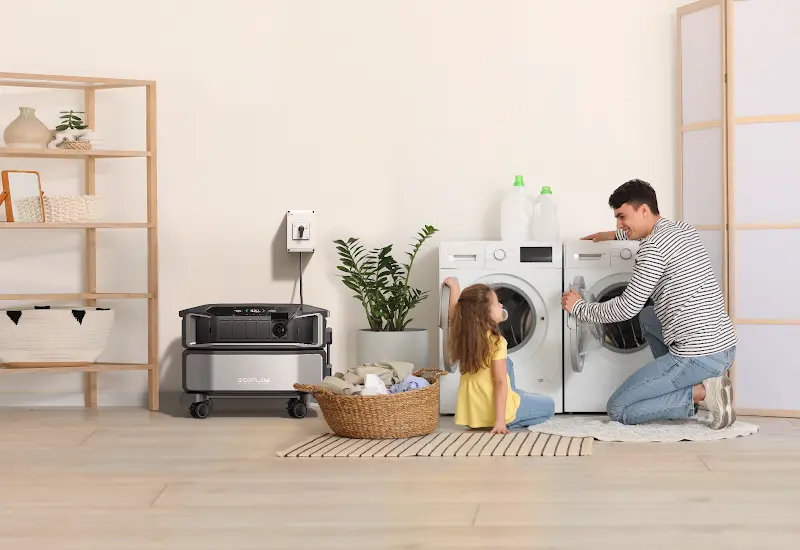
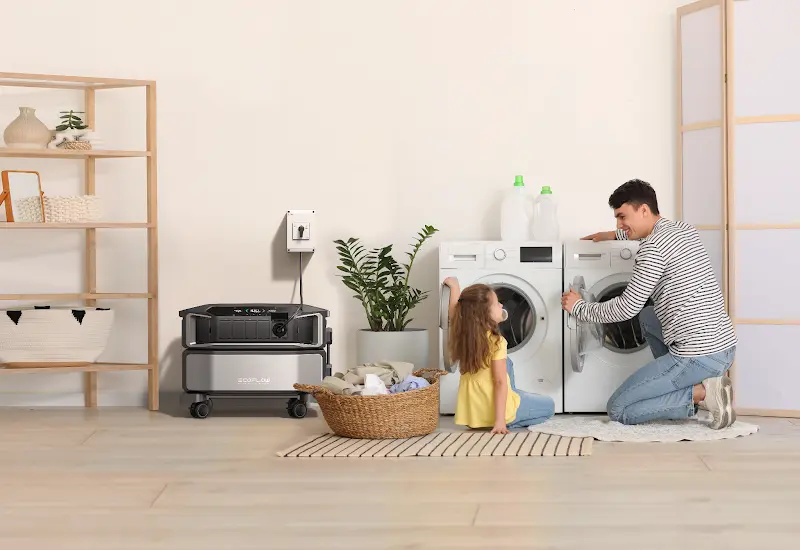
The EcoFlow DELTA Pro Ultra Whole-Home Backup Power is built for exactly this. It delivers a 7.2kW to 21.6kW output, which is plenty to handle heavy duty loads like central air conditioning or well pumps. A single battery unit starts at 6kWh, but the “stackable” design means you can expand up to 90kWh as your needs grow.
The real winner for northern homeowners is its solar input.With up to 16.8kW achieved by connecting three inverters, the system can generate a full day’s typical household energy in around 60 minutes under optimal conditions. For those looking to significantly reduce reliance on the utility grid, this can be a strong long-term energy solution.
Best for Essential Backup (Apartments & Small Homes)
In urban spots like Toronto or Vancouver, a blackout’s biggest hit is usually to your productivity, Wi-Fi dropping during a meeting or a fridge full of spoiling groceries. For apartment dwellers, the goal is “essential” coverage rather than powering the whole building.
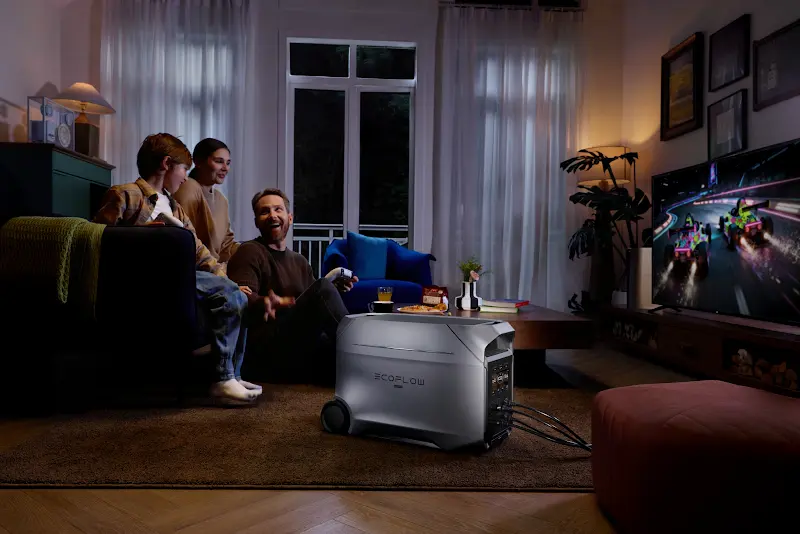
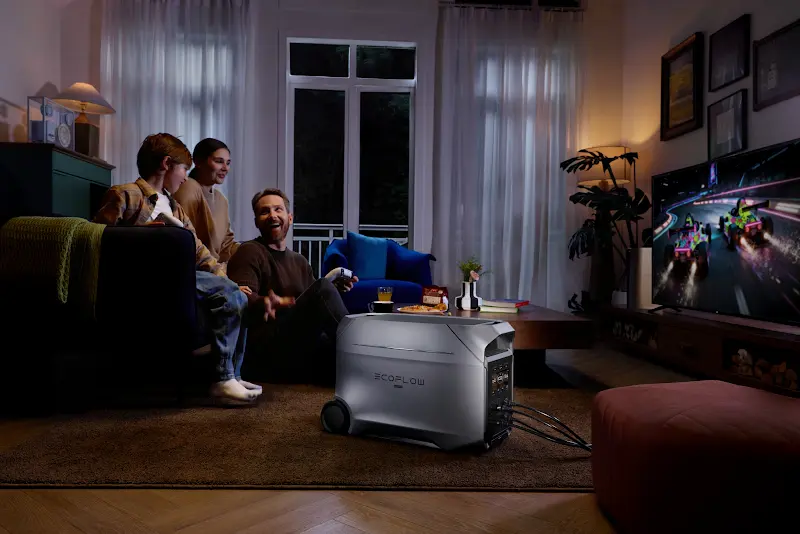
The EcoFlow DELTA 3 Ultra Plus Portable Power Station (3072Wh) fits this “lightweight” scenario perfectly. It offers a 3072Wh capacity and a massive 3600W output, which is enough to run a full sized fridge, router, and laptop for hours. It’s built for the 2026 pace. It uses X-Stream technology to charge from 0-80% in just 48 minutes when the grid is healthy. Plus, it’s compact enough to store in a closet or toss in the car for a weekend at the cottage. This modular approach offers a flexible way to manage backup power without the need for a permanent, bulky installation.
Battery Backup vs. Gas Generators: Which Is Better for Canadian Homes?
While gas generators have been the “old reliable” for decades, the tide is definitely turning. Gas units are high maintenance, loud, and frankly dangerous if you aren’t meticulous. Battery backups are silent, emission free, and safe for indoor use. While the upfront cost is higher, they require zero maintenance and provide “instant-on” power that gas engines simply can’t match.
Cost, Savings, and Final Buying Advice
Investing in a home energy system is a significant move, especially as we deal with rising utility costs and a push toward “greener” living. While the initial price tag is higher than a gas generator, the 2026 financial landscape offers more ways than ever to recoup that money through sheer efficiency.
Upfront Cost vs. Long-Term Value
A battery system is a functional asset you can use every single day to manage your home’s energy load. Unlike gas generators that just sit in the shed and depreciate, these units add immediate value to your property. For those exploring the best whole-home battery backup systems for power outages, it’s important to consider how the system integrates with your daily energy consumption for maximum ROI.
Off-Peak Savings (Peak Shaving)
In Canada, home battery systems can help reduce electricity costs by shifting usage from peak to off-peak hours (“rate arbitrage”). In Ontario, the Ultra-Low Overnight (ULO) rates are regulated by the Ontario Energy Board, with off-peak pricing around 3.9¢/kWh (11 PM–7 AM) and peak pricing around 39.1¢/kWh (4 PM–9 PM), subject to updates over time.
In British Columbia, the BC Hydro offers programs such as Peak Saver and other energy efficiency rebates, designed to help balance grid demand, with eligibility and incentive levels varying by program. Bottom line? A battery backup can help optimize electricity costs through rate arbitrage, but actual savings depend on usage patterns and provincial rate structures.
Who Should Invest?
If you’re living in a storm-prone area like the Maritimes or the BC coast, work from home, or rely on essential medical equipment, a battery backup stands for both luxury and necessary insurance policy. It offers the peace of mind that no matter what the Canadian climate throws at the grid, your home remains a sanctuary.
Conclusion
Choosing the right battery backup for your Canadian home means balancing capacity, cold-weather resilience, and long-term savings. Whether you need the seamless, whole-home power of the EcoFlow DELTA Pro Ultra or the modular flexibility of a portable unit, these systems offer a silent, maintenance-free alternative to traditional gas generators. By understanding your household’s peak energy demands and leveraging LFP technology, you can secure a reliable energy sanctuary that stands up to extreme temperatures while lowering your utility bills for years to come.
FAQs
1. How long can you run a house on battery backup?
It’s a bit of a moving target. A 15kWh system typically handles the “essentials”, fridge, lights, and Wi-Fi for about 12 to 14 hours. If you’re careful, you can stretch that to 24 hours. But if you try to run the AC or a dryer, you’ll be in the dark in under three hours.
2. Can I run a fridge or heater?
Modern backups handle refrigerators without breaking a sweat. Heaters are the real battery-killers. An electric space heater pulls so much wattage it’ll drain a mid-sized battery in a few hours. The smarter play is using the battery to power the blower motor of a gas or propane furnace. That only pulls a few hundred watts, keeping your whole house warm for much longer.
3. How much does a whole home battery backup system cost?
For a professional whole-home setup in 2026, expect to pay between $12,000 and $22,000 CAD installed. A Tesla Powerwall 3 usually lands around $16,500. If you just want a “plug-and-play” unit for the basics, those range from $1,500 to $6,000. The silver lining? Provincial rebates in BC and Ontario can now slash up to $5,000 off those professional installs.
4. What are the pros and cons of home battery backup?
The upside is huge: silent operation, zero fumes, and no maintenance. Plus, they switch on in milliseconds, so your Wi-Fi doesn’t even drop. The downside is the upfront “sticker shock” and the fact that these batteries are heavy, a single whole home unit can weigh over 100kg, so they aren’t exactly easy to move once they’re bolted down.
5. Can solar panels charge a home battery in winter?
Surprisingly, yes. Cold temperatures actually make solar panels 10-15% more efficient than they are in the summer heat. While the days are shorter, a clear February day can produce a decent amount of power. Sunlight reflecting off the snow, the “Albedo Effect” can also give your panels a boost. Just keep the heavy snow cleared off and they’ll keep that battery topped up.