Alternating Current vs. Direct Current: The Full Comparison for 2026
- Quick Answer: What’s the Difference Between AC and DC?
- What Is Alternating Current (AC) and How Does It Work?
- What Is Direct Current (DC) and Where Is It Used?
- AC vs. DC: Full Comparison (Efficiency, Safety, Cost & Use Cases)
- Why AC and DC Matter in Real-World Energy Systems
- How to Choose Between AC and DC Power (and Real-World Solutions)
- Real-World Energy Solutions in 2026
- AC and DC in Modern Energy Systems (Solar, Batteries & Inverters)
- Conclusion
- FAQs
In the fast moving landscape of 2026, knowing exactly what’s happening when you flip a light switch is more than just trivia, it’s about keeping your life running. Whether you’re plugging in an EV in a Toronto driveway or setting up a solar array for a cabin in the BC interior, the difference between Alternating Current (AC) and Direct Current (DC) determines how your gear holds up. This guide breaks down the mechanics, how they fit into the Canadian grid, and why the latest portable power tech is finally making the “war of the currents” a thing of the past.
Quick Answer: What’s the Difference Between AC and DC?
The real distinction is all about the direction of the flow. Alternating Current (AC) pulls a bit of a u-turn periodically, while Direct Current (DC) is a one way street. Think of AC like the tides in the Maritimes, constantly pushing and pulling, whereas DC is like a steady stream flowing down a mountain in the Rockies.
What Is Alternating Current (AC) and How Does It Work?
If you’ve ever plugged a toaster into a wall outlet in a Vancouver condo, you’ve used AC. It’s been the standard for North American power for over a century because it’s a champ at traveling long distances.
How Alternating Current Works
AC relies on a rotating magnetic field inside a generator. This causes electrons to switch directions back and forth. In Canada, this happens at a frequency of 60 Hz (that’s 60 times every single second), creating a sine wave pattern. This “wave” makes it easy to “step” the voltage up or down. Natural Resources Canada notes that our entire national grid thrives on this 60 Hz system, which is why we can move power from massive hydro dams in the north down to the cities without losing too much of it along the way.
Common Uses of AC Power in Canada
From the massive hydro projects in Quebec to your backyard patio lights, AC is everywhere. It runs:
Heavy hitters: Fridges, stoves, and washers.
Climate control: HVAC systems and central air units.
The Grid: Industrial machinery and the national power lines
Advantages and Disadvantages of AC
The biggest win for AC is transmissibility; it can travel hundreds of kilometers with very little energy “leaking” out. The downside? You can’t just shove AC into a battery. To store it, you have to convert it to DC first. Plus, it requires those bulky transformers you see on power poles to change voltages.
What Is Direct Current (DC) and Where Is It Used?
While AC runs the grid, DC runs your life. It is the lifeblood of the digital age and the only way we store energy in a portable power station.
How Direct Current Works
In a DC circuit, electrons don’t bother with the back and forth dance. They move in a steady, one way loop from the negative terminal straight to the positive. This constant voltage is the reason DC is the gold standard for sensitive electronics. Think of it like a garden hose with the tap wide open, the pressure is consistent and the flow never wavers. It’s this rock-solid stability that keeps the microchips in your phone from frying. On top of that: while the grid is still pushing AC, almost everything we touch, from your toothbrush to your laptop, is secretly living on DC. Basically: if it has a screen or a battery, it needs that clean, one way stream to function.
Everyday Applications of DC Power
Look around. You’re likely surrounded by DC power right now. It’s the standard for anything that “thinks” or moves. You’ll find it in:
Personal Tech: Your phone, laptop, and tablet.
Lights: LED bulbs and those high lumen flashlights in your truck.
The Driveway: EV batteries are just massive DC banks.
Solar: Each solar panel turns sunlight directly into DC.
Plus: that bulky “brick” on your charger? It exists just to strip away the grid’s AC and feed your device the steady DC it craves. The takeaway here is: we live in an AC world, but our gear runs on DC.
Advantages and Disadvantages of DC
DC is the undisputed champ of energy storage. If you want power to sit in a battery until you need it, it has to be DC. It’s also incredibly efficient for daily tech since your laptop doesn’t have to fight through alternating cycles. The catch? Historically, moving DC over long distances was a losing game because of “line loss”, the energy just bleeds out as heat. One more thing: modern High-Voltage DC (HVDC) is finally changing this, allowing for better cross-province transmission. At the end of the day, it is the best way to save power, even if it’s traditionally been a pain to move.


AC vs. DC: Full Comparison (Efficiency, Safety, Cost & Use Cases)
To pick the right gear, you’ve got to see how these two actually behave in the wild.
Differences in Current Flow and Voltage
AC is a pulsator, switching directions 60 times a second. This rhythmic wave makes it the muscle for “heavy lifting,” like spinning a dryer motor. DC is a flat line, pure, constant voltage. It is built for “logic,” making it the only choice for the microchips in your phone. Understanding the differences between AC voltage and DC voltage is key to choosing the right electronics for your home. Both follow the
P = V × I
rule to deliver power, but they behave differently. AC handles the grunt work because it steps up to high voltages easily. DC is the go-to for sensitive electronics since it lacks the “pulses” that could fry a delicate digital system. The main thing is that AC provides the raw force while DC provides the precision. What it comes down to is you need that steady, one-way stream for your data and the alternating push for your heavy duty gear.
Efficiency and Power Transmission
AC is the undisputed heavyweight champ of the Canadian grid. By stepping up to high voltages, we can push it from a hydro dam in Quebec all the way to a suburban toaster with very little waste. But on your desk? DC wins. Most modern tech is DC-native, so every time you use a converter, you’re actually losing energy as heat.
Safety Differences
It sounds backward, but AC is often more “dangerous” at standard household levels. Because it alternates, it can mess with your heart’s natural rhythm more easily than a steady DC stream. DC has its own risks, though; a short in a high voltage DC circuit can create massive heat or a thermal “arc” that doesn’t just go away.
Cost and Infrastructure
AC is cheaper to build for the masses. Transformers are simple, durable, and keep costs down for provincial grids. DC infrastructure, especially the high speed EV chargers popping up along the Trans-Canada, is way more expensive because it requires complex power electronics to manage that steady flow.
Typical Use Cases
| Feature | Alternating Current (AC) | Direct Current (DC) |
|---|---|---|
| Source | Power Grid, Generators | Batteries, Solar Panels |
| Distance | Cross-province hauls | Short-distance / Internal |
| Storage | Cannot be stored | Easily stored in batteries |
Why AC and DC Matter in Real-World Energy Systems
Modern living doesn’t force a choice between AC and DC. It’s about how they tag-team to keep your life running. Your house is essentially a hybrid ecosystem. While the wall outlets provide a steady diet of AC, the “brick” on your laptop charger is actually a miniature converter. It strips away the grid’s alternating pulses and feeds your computer the smooth DC it needs to stay alive.
Why Inverters Are Essential in Modern Energy Systems
If you want to use power from a battery or a solar panel for your “big” appliances, you need an inverter. So, what is an inverter? Think of it as a translator. It takes the DC sitting in your storage and flips it back into AC so your microwave or TV actually knows what to do with it during a blackout.
The Rise of Battery Storage and Portable Power Systems
With the current push toward green energy across Canada, battery storage has become the ultimate “vault.” It holds onto DC power from the sun or the grid, keeping it on ice until you need it for AC household use. Keep in mind: this tech is the reason we can now run an entire cottage off a box the size of a suitcase. The main thing is: AC is how we move energy, but DC is how we save it for a rainy day. Essentially: you need both to stay off grid and online.
How to Choose Between AC and DC Power (and Real-World Solutions)
Choosing between the two usually comes down to what you’re trying to move. It’s the difference between powering a remote job site in northern Ontario or just keeping the kids’ iPads charged during a summer blackout.
When AC Power Makes More Sense
If you have high wattage needs, think heating, cooling, or heavy machinery, AC is your only real option. If you’re trying to keep a central air unit humming during a humid July stretch, you need a robust AC output. Most large household appliances are wired for that alternating “push,” and trying to run them on anything else just won’t cut it.
When DC Systems Are More Efficient
DC wins when you’re going small or staying off-grid. It’s the superior choice for LED lighting, charging phones, or running a portable fridge. A big one to remember is: using DC directly means you avoid “conversion loss.” Every time an inverter flips DC into AC, you lose a bit of energy to heat. By staying in DC, you’re squeezed every last drop of juice out of your battery.
Real-World Energy Solutions in 2026
By 2026, relying on a steady grid in Canada feels a bit like betting on the Leafs, you want to believe, but you’d better have a backup plan. Between aging infrastructure and wild weather, we’re all looking for smarter ways to keep the lights on.
Home Backup Power Systems (AC Heavy Load)
Canadian summers have shifted from simple patio weather to a season of nasty convective storms that tend to flatten the grid right when the humidity hits 90%. When the local power peak hits and every air conditioner on the block is fighting for its life, outages are basically a guarantee. In these high-load moments, a standard battery won’t cut it. You need a system capable of that massive electrical “shove” required to get a fridge or a central air compressor moving.
The EcoFlow DELTA Pro Ultra Whole-Home Backup Power was built specifically for these “High-Load Home AC” headaches. It’s got a 7,200W output that can scale up to 21.6kW, so it won’t trip the second your sump pump and fridge kick in at the same time. One more thing to consider is the modularity; you can stack it to run a whole house for days. In a country where the local transformer might be older than you are, having this in your garage is a massive relief. What really matters here is that you get enough “grunt” to run the big stuff, not just a bit of backup juice. What it comes down to is to keep the beer cold and the house cool when the grid bails on you.
Portable Off-Grid Energy Systems (AC/DC Hybrid)
Summer in Canada is basically a race to get as far from the city as possible. Whether you’re heading to a lake in Muskoka, trekking through the Rockies, or just flipping burgers at a backyard BBQ, you’re going to need a mix of power. Your phone and drone need a steady DC diet, but that portable fridge or high velocity fan won’t budge without AC.
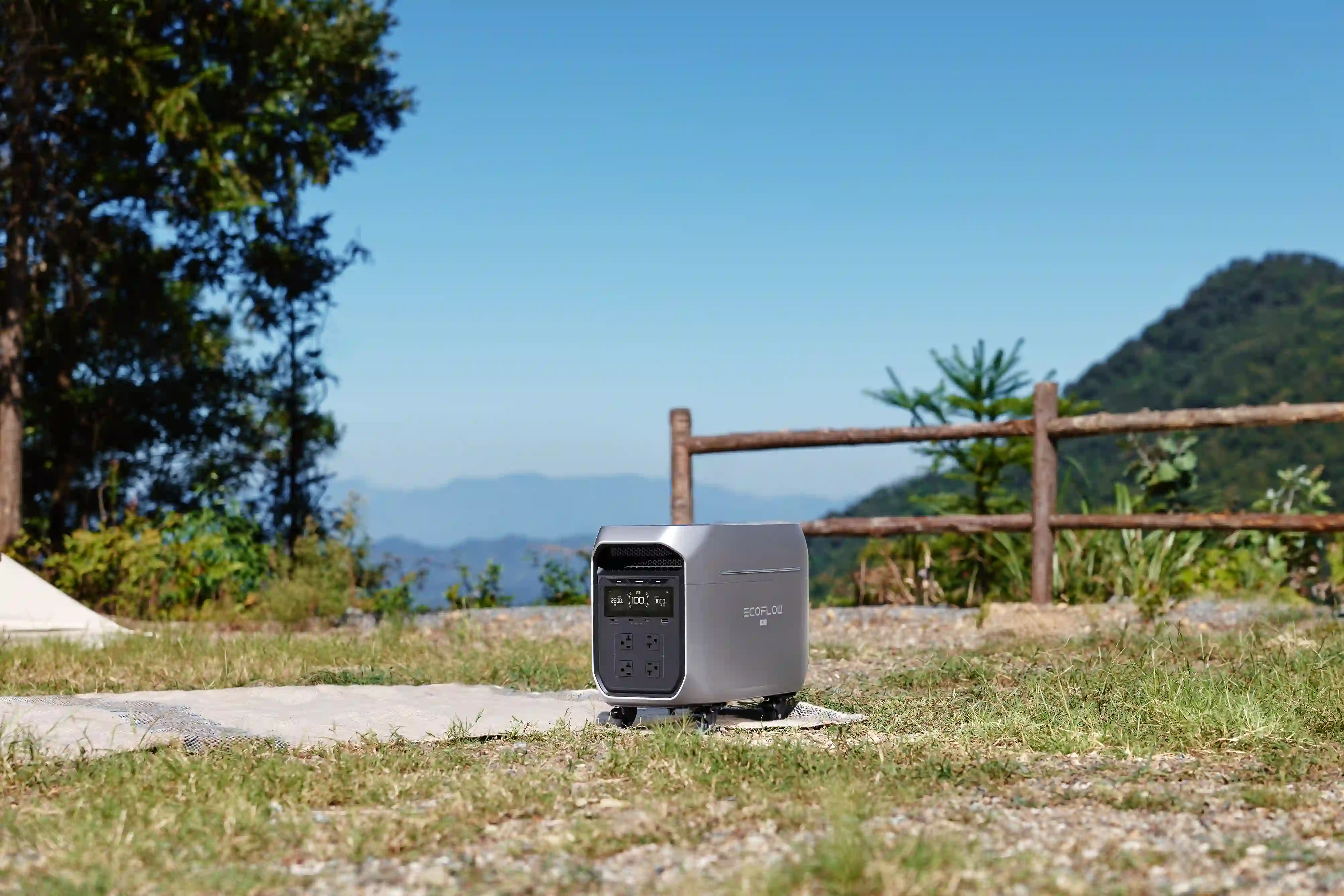
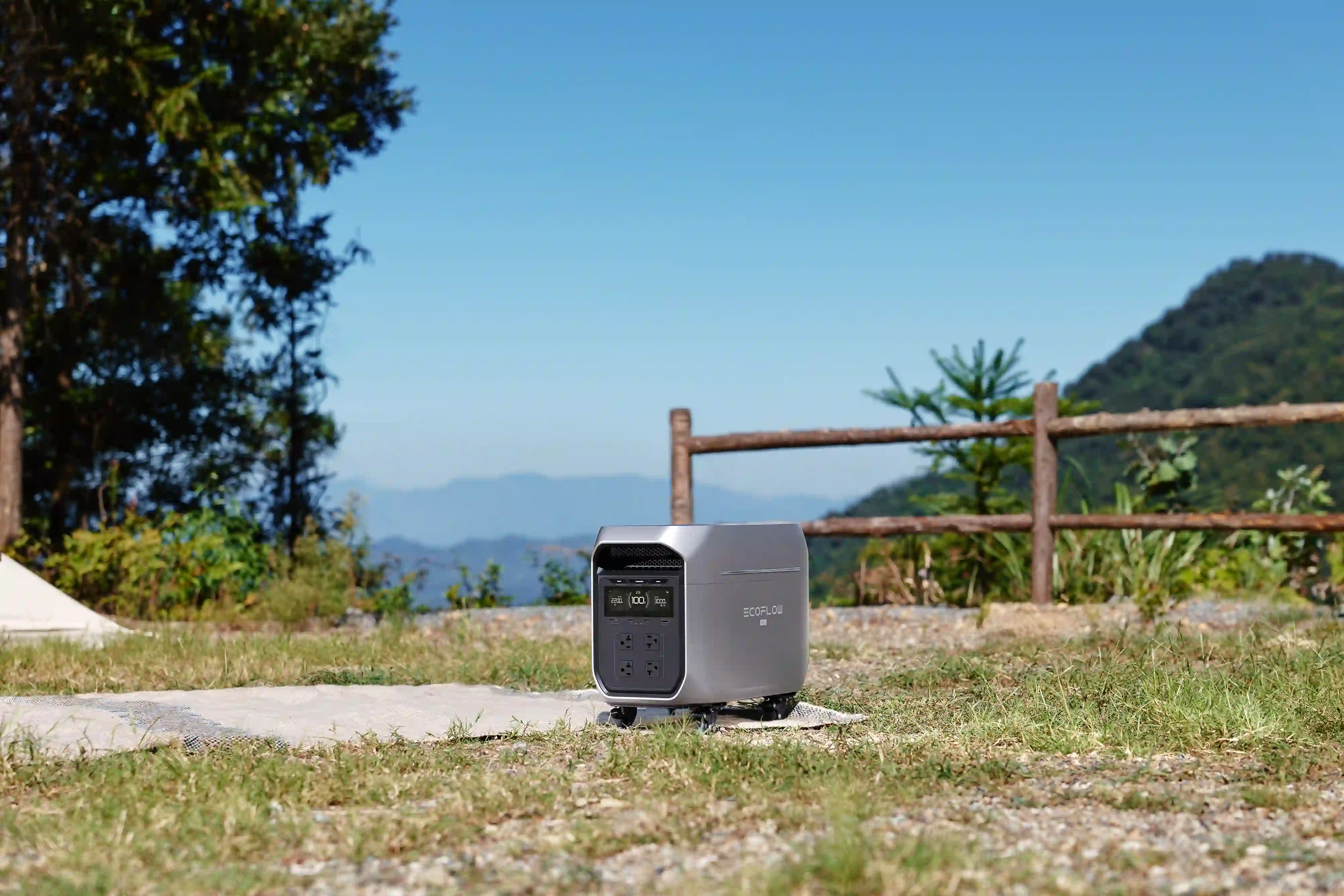
The EcoFlow DELTA 3 Max Plus Portable Power Station (2048Wh) is the MVP for these versatile summer setups. It handles both AC and DC outputs at the same time, so you can fast charge your laptop while your cooler keeps the drinks at a crisp 4°C. Plus: it hits an 80% charge in under 50 minutes via generator. That’s basically the time it takes to pack the cooler and find your hiking boots. Crucially: it gives you that “all scenario freedom” to stay connected without being tethered to a campsite power pole. Plain and simple: it’s enough juice to make the middle of nowhere feel a lot like home.
AC and DC in Modern Energy Systems (Solar, Batteries & Inverters)
The move toward renewables is really a high speed handoff between these two currents. If you’re looking at solar or storage in 2026, you’re basically running a mini power plant.
Solar Panels Generate DC Power: When photons hit a panel on your roof, they knock electrons loose in one direction. That’s pure DC energy.
Why Inverters Convert DC to AC: Since Canadian homes are wired for AC, you need an inverter to translate. It takes that solar DC and “flips” it into the AC your microwave actually understands.
Battery Storage and Portable Power Stations: Your portable power station stores everything as DC. It’s the only way to keep energy “on ice.” When you plug in a tool, the internal computer decides: send DC out the USB-C port or fire up the inverter for the wall plug.
Electric Vehicles and DC Fast Charging: Most home chargers are AC, and your car has a slow converter inside to turn that into battery ready juice. But those “Level 3” fast chargers you see along the Trans-Canada? They bypass the car’s slow guts and pump high voltage DC directly into the cells. That’s why you’re back on the road in 20 minutes instead of six hours.
Conclusion
By 2026, the old “war of the currents” has basically ended in a tie. AC still wears the crown for the Canadian grid, moving massive amounts of power across provinces. But DC has become the undisputed boss of our pockets, our vehicles, and our solar-powered futures. Smart technology is finally making the switch between the two seamless. Using a hybrid system like the gear from EcoFlow, which lets you tap into the strengths of both without overthinking it. It keeps your house running during a July storm and your gear charged while you’re parked by a lake in the Rockies. If you take away one thing, you don’t have to choose one or the other anymore. You just need the right bridge to make them work together.
FAQs
1. Which is more dangerous, 220v AC or DC?
AC usually takes the cake here. Because it flips 60 times a second, it’s much more likely to throw your heart out of its natural rhythm. It also causes muscle spasms that make it harder to let go of the wire. DC can still cause a nasty burn or a heart stop, but AC is generally trickier for the body to handle.
2. Why are batteries DC and not AC?
Batteries are just chemical storage. That chemistry naturally pushes electrons in one single direction between two fixed points. You can’t really “store” a wave that’s constantly changing directions. Basically: if you’re banking power, it’s got to be DC.
3. What appliances run on DC power?
Your phone, laptop, and LEDs are the big ones. But this is the big one: even modern “variable speed” fridges and fans use DC internally because it’s way more efficient. If it has a screen or a smart chip, it’s a DC device at heart.
4. How much more efficient is DC vs. AC?
In your house, you’re looking at a 5% to 15% efficiency jump. By staying in DC, you skip the “conversion tax”, that heat you feel on your laptop’s power brick is basically wasted energy. Also: DC doesn’t suffer from the “skin effect” that causes power to leak out of AC lines.
5. What type of current do solar panels use?
Solar panels produce pure DC. Sunlight hits the panel and knocks electrons loose in a one way stream. Since Canadian wall outlets are AC, you just need an inverter to bridge the gap and make it usable for your toaster.