A Complete Guide to Alberta Clipper
Winter defines our nation, yet few storms rival the notorious speed of an Alberta Clipper. Arriving with little warning, the system transforms sunny skies into swirling whiteouts. The true threat lies not in snow depth, but in the brutal combination of extreme cold and howling winds.
What Is Alberta Clipper
The term itself hints at the nature of the storm. Meteorologists in the mid-20th century needed a way to describe a specific pattern of low-pressure systems that moved with incredible velocity. They looked to history for inspiration. In the 19th century, clipper ships were the fastest vessels on the ocean, designed with sleek hulls to slice through the waves and deliver cargo at record speeds. The name stuck. An Alberta Clipper is, essentially, a ship of the sky that sails on the fast-moving currents of the jet stream.

Why Is It Called Alberta Clipper
These storms originate in the lee of the Rocky Mountains. The process begins when warm, moist air from the Pacific Ocean flows eastward. As the air mass encounters the formidable barrier of the Rockies, it is forced upward. It loses much of its moisture on the western slopes as rain or snow. Once the air crosses the peaks and begins to descend the eastern slopes into Alberta, it warms up owing to compression.
Simultaneously, a cold air mass from the Arctic often lingers over the Canadian Prairies. When the descending warm air meets the stagnant cold air, a low-pressure center forms. The physics of the atmosphere dictate that air flows from high pressure to low pressure, creating wind. The rotation begins, and a cyclone is born.
Where Does Alberta Clipper Go
Once formed, the system does not linger. It hitches a ride on the polar jet stream. During the winter months, the jet stream often dips southward, creating a highway of high-speed winds that runs from northwest to southeast. The storm follows the path. It typically tracks from Alberta, across Saskatchewan and Manitoba, down through the Dakotas, and into the Great Lakes region.
The speed is remarkable. A system can travel from the foothills of the Rockies to the Atlantic coast in three to four days. Most winter storms move at a more leisurely pace, but the Clipper Alberta system races across the map.
How Do We Call It
Canadians love to give colorful names to their weather. While the standard term is Alberta Clipper, the point of origin can shift slightly, leading to different monikers.
Saskatchewan Screamer: If the low-pressure center consolidates further east over Saskatchewan, locals call it a Screamer. The name references the sound of the wind howling across the flat prairie landscape.
Manitoba Mauler: A system forming or intensifying over Manitoba earns the title of Mauler, suggesting a brutal, physical impact.
Ontario Scary-o: As the storm moves into Ontario, it can sometimes be referred to as a Scary-o, though the term is less common and more colloquial.
Regardless of the specific name, the mechanics remain consistent. It is a fast, cold, moisture-starved system that relies on speed and wind to manifest its power.
What Are the Characteristics of an Alberta Clipper?
Identifying an Alberta Clipper requires looking for specific signatures on the weather map and outside your window. These storms possess a distinct personality that differentiates the event from a Colorado Low or a Nor'easter.
Velocity and Duration
The most defining trait is speed. The storm moves quickly. While a major blizzard might besiege a city for two or three days, a clipper often passes through in six to twelve hours. The snow falls in a burst. One moment, the sky is clear; the next, it is white. Then, just as quickly, the snow stops, and the wind takes over. The transient nature of the storm means that snow accumulation is usually light, typically ranging from 5 to 15 centimeters.
The Nature of the Snow
Because the system originates over land and has lost Pacific moisture over the mountains, it is "moisture-starved". The snow it produces is distinct.
Low Water Content: The snow-to-liquid ratio is high, often 20:1 or 30:1. It means twenty centimeters of snow might melt down to only one centimeter of water.
Texture: The flakes are small, dry, and powdery. They do not clump together like the heavy, wet snow of a spring storm.
Blowability: The dry nature of the snow renders it highly susceptible to wind transport. Even a light coating of fresh snow can be whipped into massive drifts and blinding clouds, creating ground blizzards where visibility drops to zero despite no snow falling from the sky.
The Deep Freeze
The system acts as a boundary between air masses. As the low-pressure center passes, it drags cold Arctic air down behind it. The temperature drop is often sudden and severe. Meteorologists call the phenomenon "cold air advection." It is not uncommon to see temperatures plunge 10 to 15 degrees Celsius in a few hours following the passage of the cold front. The air mass is continental polar: dry, dense, and frigid.
Strong Winds
The pressure gradient—the difference in atmospheric pressure between the storm's center and the high-pressure ridge following it—is tight. The tight gradient generates powerful winds, often gusting between 60 and 90 km/h. The wind does double damage: it creates dangerous wind chill values and reduces visibility via blowing snow.
Lake Effect Enhancement
A unique characteristic emerges when the storm reaches the Great Lakes. If the lakes are not frozen, the cold dry air of the clipper moves over the relatively warm water. The system acts like a sponge, soaking up moisture and heat. The process reinvigorates the storm, causing it to dump heavy bands of "lake effect" snow on the lee shores (typically the eastern or southern shores) of the lakes. A system that dropped only 5 cm in Manitoba might drop 30 cm in the snowbelts of Ontario or New York because of the added moisture.
| Feature | Alberta Clipper | Colorado Low |
| Origin | Alberta (Lee of Rockies) | Colorado/New Mexico |
| Moisture | Low (Dry) | High (Gulf of Mexico) |
| Speed | Fast (60-80 km/h) | Slow |
| Snow Type | Dry, powdery | Wet, heavy |
| Temperature | Very Cold | Milder (near freezing) |
| Duration | Short (6-12 hours) | Long (24+ hours) |
How the Alberta Clipper Impacts Our Daily Lives
The arrival of a Clipper Alberta system disrupts the flow of society in specific ways. The impacts are felt across transportation, health, and the economy.
Road Safety and Commuting
Driving presents the most immediate danger. The rapid drop in temperature can flash-freeze any standing water or slush on the roads, creating invisible patches of black ice. The polished surface becomes a skating rink. Furthermore, the light, powdery snow creates whiteout conditions. Drivers may find themselves in a "snow globe" effect, where the road, sky, and horizon merge into a single white canvas, causing spatial disorientation.
Highways across the Prairies often close not because of snow depth, but because visibility is nil. Transport trucks are particularly vulnerable to high crosswinds, which can tip trailers or force large vehicles into neighboring lanes. For the average commuter, a drive that typically takes twenty minutes can turn into a white-knuckle ordeal lasting hours.
Air Travel Chaos
Airports face a dual challenge. While snow clearing crews can often handle the light accumulation, the winds can exceed safety limits for takeoff and landing. Crosswinds on runways force cancellations. Additionally, the rapid temperature drop necessitates aggressive and frequent de-icing of aircraft, which slows down operations. A delay in a major hub like Toronto or Chicago, which sit directly in the clipper track, creates a ripple effect of cancellations across the continent.
Economic Disruption
The economic toll is cumulative.
Retail: Shoppers avoid going out, reducing foot traffic for local businesses.
Shipping: Just-in-time delivery systems falter when highways close. A delayed truck in Saskatchewan can mean empty shelves in Ontario days later.
Construction: Outdoor work halts due to dangerous wind chills, delaying projects.
Conversely, the ski industry often celebrates the arrival of an Alberta Clipper. The dry, fluffy snow is known as "champagne powder," highly prized by skiers and snowboarders, provided the wind is not too strong to run the lifts.
Infrastructure Stress
The combination of wind and cold stresses the power grid. While clippers rarely bring the heavy ice that snaps lines, the wind can bring down weakened branches onto wires. Power outages during these events are particularly dangerous because the house cools down rapidly in the sub-zero air following the storm.
Can Alberta Clipper Cause a Major Natural Disaster
We often dismiss clippers as minor nuisance storms compared to the blockbuster blizzards that bury cities. However, history proves that an Alberta Clipper can trigger major disasters, primarily through the element of surprise and the intensity of the cold.
The Great Lakes Storm of 1913
Often referred to as the "White Hurricane," the storm of 1913 serves as a grim historical marker. While the system was complex, involving the merger of two distinct low-pressure centers, the northern component was a fast-moving clipper-like system. The storm devastated shipping on the Great Lakes, sinking twelve major vessels and claiming over 250 lives. The winds reached hurricane force, and the waves battered ships that were not designed for such ferocity. It remains the deadliest natural disaster in the Great Lakes region.
The Ides of March Blizzard (1941)
In 1941, a "Saskatchewan Screamer" struck the prairies and the upper Midwest. The day began with mild, spring-like temperatures, luring people outdoors in light clothing. The storm struck with ferocious speed in the evening. Temperatures plummeted rapidly, trapping people in their cars or while walking home. The storm killed dozens of people, many of whom froze to death within mere yards of safety because of the blinding whiteout and rapid hypothermia. The tragedy changed the way winter travel safety was taught, reinforcing the rule to never leave a stranded vehicle.
The Modern Threat
In our modern era, the risk shifts from direct exposure to infrastructure failure and mass casualty traffic accidents.
Pile-ups: The sudden reduction in visibility often leads to massive chain-reaction crashes involving dozens of vehicles on major highways like the 401 or the Trans-Canada.
Grid Failure: The 2022 winter season saw several "Super Clippers" that brought damaging winds and record-breaking cold. The strain on the electrical grid, combined with wind damage, can leave thousands without heat in dangerous temperatures.
The potential for disaster lies in the speed of onset. A community that is unprepared for a sudden drop to -30°C and a loss of power faces a life-safety crisis.
How to Prepare for Alberta Clipper
Preparation transforms a terrifying event into a manageable inconvenience. Because the Clipper Alberta system moves so fast, the window to prepare is short. A robust plan covers your home, your vehicle, and your power supply.
Fortifying the Home
Your home serves as your primary shelter. To secure the structure against the cold and wind, you must seal the perimeter.
Draft Prevention: The strong winds of a clipper will find every crack. Use draft snakes at the base of doors. Apply window insulation film to create a dead air space that retains heat.
Pipe Protection: Insulate water pipes that run along exterior walls. In extreme cold, open cabinet doors to let warm room air circulate around the pipes.
Supplies: Maintain a stock of non-perishable food and water. You might be snowed in for a few days, or power might fail, rendering electric pumps useless.
Vehicle Readiness
If travel is necessary, the vehicle must be a survival capsule.
Winter Tires: The rubber compound in winter tires stays soft in cold temperatures, providing essential grip.
The Survival Kit: Every car should carry a kit containing a shovel (metal is best), sand or kitty litter for traction, a warm sleeping bag, extra hats and mitts, a flashlight, and a candle with matches. A single candle can provide enough heat in a car cabin to prevent freezing.
Fuel: Keep the tank at least half full. The extra fuel allows you to run the engine for heat if stranded (in short intervals) and adds weight over the rear axle for better traction.
Power Security
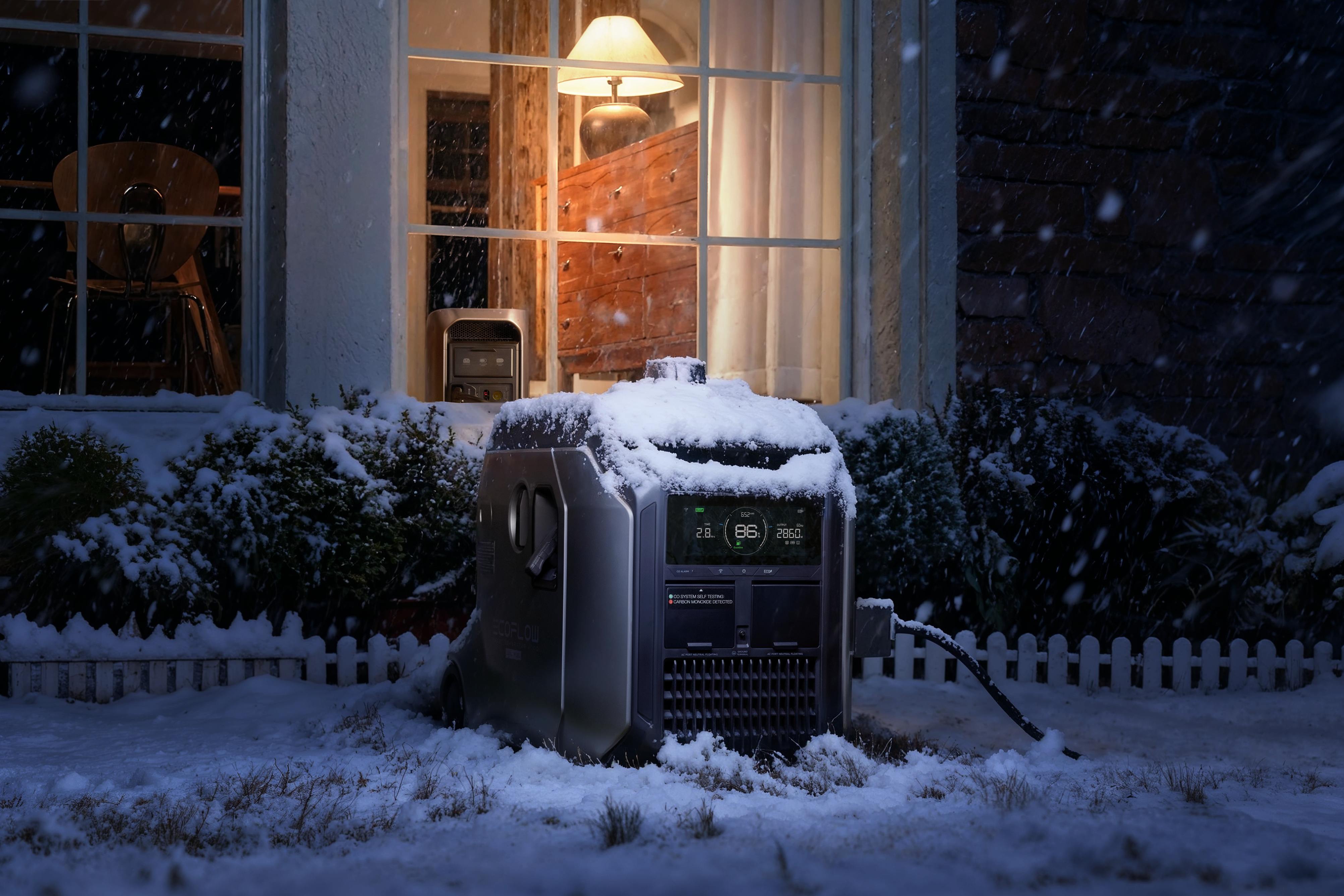
Power outages pose the most critical risk during an Alberta Clipper due to the extreme cold. Compared to traditional gas generators, which have drawbacks like noise and fumes, a Portable Power Station (PPS) like the EcoFlow DELTA Pro 3 provides a quiet, clean, and efficient backup power solution.
The EcoFlow DELTA Pro 3 can safely power essential household appliances, including lights, heaters, and even refrigerators, without the hassle of fuel refills or emissions. With its high capacity of 4096Wh and expandable capacity up to 36kWh using extra batteries, it is more than capable of supporting your home during power outages. Its lithium iron phosphate (LiFePO4) battery ensures long-term reliability with up to 4000 cycles at 80% capacity, making it a durable and cost-effective solution.
For even more peace of mind, the EcoFlow DELTA Pro 3 comes equipped with multiple AC outlets (including 120V/240V options) and USB ports, enabling you to keep critical devices charged and running throughout the storm. Plus, with its fast charging time and the ability to connect solar panels for sustainable recharging, you'll be ready for any emergency, even in the dead of winter.
Final Thoughts
The Alberta Clipper commands respect. Its speed, its chill, and its ability to transform a landscape in hours are testaments to the raw power of the Canadian climate. Yet, for the prepared individual, the storm need not be a source of fear.
We adapt. We build our homes to withstand the wind. We dress in layers to trap our warmth. We embrace technologies like portable power stations to keep our lights on and our families safe. When the forecast predicts a clipper, we do not panic. We verify our supplies. We charge our batteries. We wait for the wind to howl, knowing we have taken the necessary actions to protect ourselves.
Winter storms are inevitable in our latitude. Suffering through them is optional. Through understanding the nature of the Clipper Alberta and preparing accordingly, we weather the storm. The wind will eventually die down. The sun will return. And we will be ready for whatever the season brings next.
Final Bonus: Winter Survival Checklist
November to March
Home Exterior
[ ] Gutters cleaned to prevent ice dams.
[ ] Outdoor water faucets shut off and drained.
[ ] Tree branches trimmed away from power lines.
Home Interior
[ ] Furnace serviced and filters changed.
[ ] Carbon monoxide detectors tested.
[ ] Emergency food supply rotated.
Vehicle
[ ] Winter tires installed.
[ ] Windshield washer fluid topped up (-40°C rated).
[ ] Battery load tested.
[ ] Emergency kit fully stocked.
Tech
[ ] Portable Power Station charged to 100%.
[ ] Charging cables organized.
[ ] Flashlights tested.
Personal
[ ] Boots with good traction.
[ ] Thermal base layers (wool or synthetic).
[ ] Windproof outer shell.
Integrating these habits into a seasonal routine renders the arrival of an Alberta Clipper less of an emergency and more of a standard winter event. It becomes simply another chapter in the story of life in the north.