Does Charging an E-Bike Use a Lot of Electricity?
Electric bicycles are becoming a popular and eco-friendly way to travel. They help reduce fuel costs and pollution. But many people still ask, does charging an eBike use a lot of electricity? The answer depends on the battery size, charging habits, and local electricity rates. In most cases, e-bikes use very little electricity compared to cars or motorbikes. Charging them is affordable and energy-efficient. This article explains how much power e-bikes use, what factors affect the cost, and how you can charge your bike smartly. Whether you ride for fun, work, or daily commuting, knowing this helps you save energy and money.
What Determines How Much Electricity Is Used When Charging?
When you’re investigating does charging an e-bike use a lot of electricity, you’ll find that the actual consumption depends on several key factors. Understanding these gives you control.
Battery Capacity
The size of the battery is a major driver. Battery capacity is measured in watt-hours (Wh). For example, a 400 Wh (0.4 kWh) battery is typical for many commuter e-bikes. A battery rated at 500 Wh uses about 0.5 kWh for a full charge. Battery capacity directly means: the larger the battery (in Wh), the more energy is needed to charge it (all else equal). Take advantage of battery rebates to make eco-friendly batteries more affordable while reducing your carbon footprint.
Charger and System Efficiency
Not all the energy drawn from your power point goes into storing the battery. Some is lost as heat, conversion losses, idle draw, etc. A charger’s rated power (in watts) gives an idea of how much it draws during charging, but real world efficiency matters. For instance, one source lists typical charger draw between 150 W and 500 W, depending on size. Another breakdown noted that charging losses might add ~10% extra energy beyond the battery’s Wh capacity. If your battery is say 0.4 kWh and your system is 90% efficient, you might draw ~0.44 kWh from the grid. As MPPT technology in solar controllers maximizes energy efficiency, ensuring your battery charges effectively even under inconsistent sunlight.
Electricity Rate (cost per kWh) In Australia
In Australia, the household electricity price you pay varies by state, plan, and whether you’re on a peak or offpeak tariff. A reasonable working figure is about A$0.25A$0.35 per kWh. According to CargoCycles, an ebike battery with 0.36 kWh capacity, multiplied by an average rate of A$0.27/kWh, gives a cost of roughly A$0.0972 (~10 cents) for a full charge.
If you assume a slightly larger draw (say 0.44 kWh drawn from the wall) at a rate of A$0.30/kWh, the cost comes to around A$0.13 per full charge. These numbers show that charging an ebike uses very little electricity and costs only a few cents per cycle in an Australian household.
Frequency and Usage Pattern
How far you ride, how often you charge, and your riding style all matter. If you ride 5 km so you only use 100Wh (0.1 kWh) of energy, the charge consumption is lower. If you ride long, up steep hills or heavily load the bike, you’ll use more energy and thus cost more. For outdoor trips, the best solar chargers for backpacking provide a lightweight, renewable power source to keep your devices operational off-grid.
Additional Factors
Charger standby power: some chargers draw a small “idle” current when plugged in but battery full.
Age and condition of battery: older batteries may have reduced efficiency or require more power to maintain charge.
Off-peak vs peak charging: If you can charge during off-peak hours (cheaper rates) you reduce cost.
If you use solar panels: you may effectively pay nothing for charging.
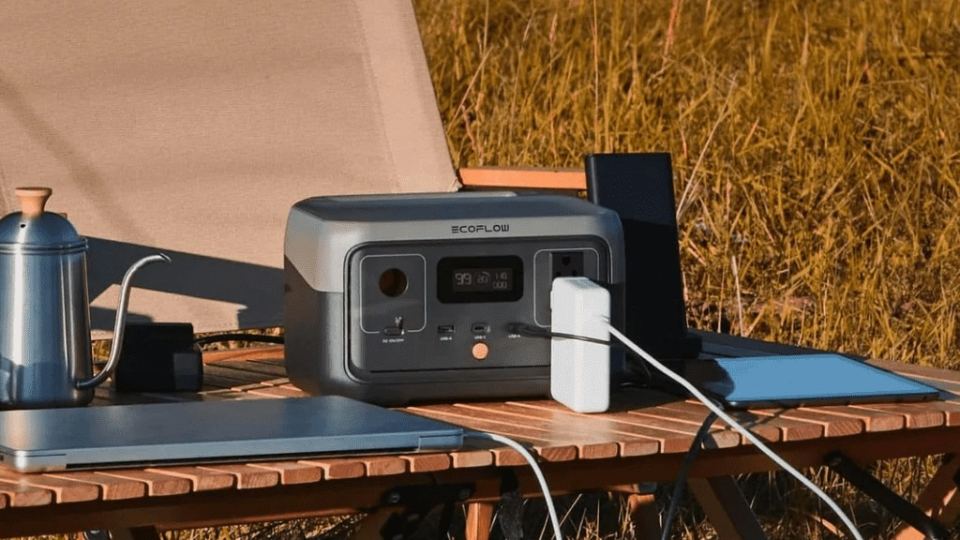
When your e-bike battery isn’t enough, for longer rides or camping trips. A portable power station can keep your devices and even your ebike accessories charged on the go. Lightweight and compact, it’s perfect for outdoor adventures or emergency backup.
Why Does Charging an eBike Use So Little Electricity?
Charging an e-bike uses very little electricity. The main reason is the battery size. Most e-bike batteries store only hundreds of watt-hours (Wh). This is much smaller than electric car batteries, which store tens of kilowatt-hours (kWh).
Another reason is the low energy consumption of the motor. E-bikes usually use 4.8-5 Wh per mile depending on terrain, rider weight, and assistance level.
Most e-bikes assist your pedaling instead of fully powering the bike. This means the motor only adds extra energy rather than driving the bike entirely. Compared to electric cars, e-bikes are very energy efficient. Charging an e-bike has a minimal electricity load. This keeps both energy use and cost extremely low.
Why Using and Charging an E-Bike Is Valuable?
Cost-effectiveness
Because charging cost is low, the cost-per-km of riding an e-bike is minimal. If you get ~30 km per full charge, and the charge cost is ~A$0.13, then cost per km ~0.13/30 ≈ A$0.0043 (less than half a cent per km). That is far cheaper than car fuel, public transport, ride-share, etc. Reflecting on the question, does charging an e-bike use a lot of electricity, the answer is clearly “not really” when seen in context.
Environmental impact
Using an e-bike instead of a car for short commutes reduces fuel consumption and emissions. The electricity used corresponds to a modest CO₂ footprint (depending on Australia’s grid mix). Therefore, beyond cost, e-bikes deliver environmental and convenience benefits with minimal electricity cost.
Practical commuting benefit
In hilly or urban environments (cities such as Sydney, Brisbane, Melbourne), e-bikes open up new commute routes or options for staff, deliveries, site visits, etc. The low running cost supports arguments for integrating e-bikes into business-mobility strategies (e.g., fleet of e-bikes for staff). The cost of charging won’t be a barrier.
Low barrier to entry
Since electricity cost is low, the major cost in adopting an e-bike is upfront purchase, maintenance, battery replacement (after years), not ongoing high operating cost. That makes the value proposition strong.
For added convenience, devices like the EcoFlow RIVER 2 Pro Portable Power Station can easily charge your e-bike at home, outdoors, or on trips, ensuring you always have a reliable, efficient power source without worrying about high electricity bills.
Tips to Charge Your eBike Efficiently and Safely
Even though the cost is low, you can still optimize your charging to keep it as efficient and safe as possible.
Charge during off-peak hours
If your electricity tariff has off-peak periods (e.g., overnight), charging then could reduce cost further. While the difference may be modest (e.g., instead of $0.30/kWh maybe $0.20/kWh), over many charges this adds up.
Avoid leaving the charger plugged in after full charge
Even though the idle draw of a modern charger is small, unplugging when not needed removes standby load and reduces waste. Some chargers may draw a small “vampire” load.
Use the correct charger and maintain the battery
Using the manufacturer-matched charger and ensuring battery health (store in moderate temperature, avoid full discharge/inactive long term) improves efficiency and lifespan. One article cautions about improper chargers or mismatched batteries causing risk.
Charge only what you need
If your commute uses only 10–20 km per day and your battery gives 40 km range, you don’t need to discharge to zero. Keeping battery between say 20–80% can enhance lifespan and reduce energy used for charging. One site pointed out that you may avoid fully charging every cycle to extend life.
Use solar or renewable generation when available
If you have solar panels or off-grid power generation, you can charge your e-bike using “free” electricity (i.e., no grid cost). That makes running cost effectively zero. In that case, does charging an e-bike use a lot of electricity? yes in absolute kWh, but the cost to you may be zero, which makes it very compelling.
Monitor usage for business purposes
If you’re including e-bikes in a business fleet, tracking kWh consumed per bike can help monitor usage patterns, identify inefficient practices (e.g., unnecessary top-ups) and budget effectively. A simple energy meter connected to the charger can log kWh per cycle.
Understand safety & fire risk
While this isn’t strictly about electricity consumption, it is directly related to charging practices. Improper charging setups (cheap batteries, DIY modifications) have led to fires in Australia. Hence, always use certified chargers, correct voltage, and avoid third-party unsafe modifications. This ensures you’re not just paying a little for electricity, but also being safe.
Conclusion
So, does charging an e-bike use a lot of electricity? The answer is clear: no, it doesn’t. With typical battery sizes and charging costs in most regions amounting to just a few cents (or equivalent local currency) per full charge, the electricity load is minimal. For businesses and individuals alike, this means that the electricity cost should not be a barrier to e-bike adoption. What matters more are infrastructure planning, usage patterns, battery health and operational strategy. In essence, charging cost becomes a negligible overhead, and one more reason why e-bikes are smart for cost-efficient, sustainable mobility.
FAQs
Do E-Bikes Need a Lot of Power to Run?
No, most e-bikes use small motors of 250–750 W and batteries of 300–700 Wh. They assist pedaling rather than fully powering the bike, which keeps electricity use very low. Even daily commuting uses less electricity than common home appliances like a fridge or washing machine.
How Far Can You Go on a Single E-Bike Charge in Australia?
Most standard e-bikes in Australia can travel 30–60 km per full charge, depending on terrain, rider weight, and assistance level. Fat‑tire or high-capacity models may reach up to 80 km on flat roads. Using pedal effort efficiently and charging during off-peak hours or with solar power can help maximize range.
How Can I Reduce Electricity Costs When Charging My E-Bike?
Charge during off-peak hours, unplug the charger when full, and use the correct manufacturer-approved charger. You can also use solar panels or only charge the battery partially for short trips. These tips save money, increase battery lifespan, and make e-bike charging even more efficient.