Lithium-Ion Battery Explained: How It Works, Uses & Safety
From phones and laptops to power banks and backup power stations, lithium-ion batteries quietly keep daily life running. But when a battery heats up, drains faster than before, or stops holding a charge, the cause is not always obvious. This guide explains how a lithium-ion battery works, what each main part does, and where Filipino households use this technology, helping you get the most from battery performance and keep your household powered when severe weather strikes.
What Is a Lithium-Ion Battery?
A lithium-ion battery is a rechargeable battery that stores and releases energy by moving lithium ions between two electrodes. When it charges, lithium ions move into the anode. When it powers a device, those ions move back toward the cathode while electrons travel through an external circuit to create usable electricity. This design helps lithium-ion batteries store a large amount of energy in a compact and lightweight form.
Inside the battery, each part controls a different step in how energy moves:
Component | Common Material | Main Role |
Anode | Usually graphite | Stores lithium ions during charging and releases them when the battery powers a device. |
Cathode | Lithium-based compounds, often metal oxides | Receives lithium ions during discharge and releases them again during charging. |
Electrolyte | Liquid or gel electrolyte | Allows lithium ions to move between the anode and cathode. |
Separator | Micro-porous membrane | Keeps the anode and cathode apart while allowing lithium ions to pass through. |
Current collectors | Usually copper and aluminium | Carry electrons between the electrodes and the external circuit that powers the device. |
How Do Lithium-Ion Batteries Work?
Understanding how lithium-ion batteries work starts with a basic electrochemical process. Lithium ions move between the anode and cathode inside the battery, while electrons move through an external circuit to power the device.
This process also relies on intercalation. Instead of using loose elemental lithium, lithium-ion batteries store lithium ions inside tiny spaces in the electrode materials, such as graphite in the anode and lithium-based compounds in the cathode. This helps the battery charge and discharge repeatedly without quickly wearing down the electrodes.
The Discharging Process
When you use a device, the battery releases stored energy through three connected actions:
Electron Flow Creates Power: The anode releases electrons, but the electrolyte does not let them pass through the battery. Instead, they travel through the external circuit, creating the current that powers phones, laptops, power banks, e-bikes, and portable power stations.
Ion Movement Balances the Cell: At the same time, lithium ions leave the anode and move through the electrolyte toward the cathode. This keeps the internal charge balanced as the device uses power.
The Cathode Receives the Ions: The cathode receives the lithium ions and completes the discharge cycle. This movement forms the core of lithium-ion battery working principles.
.PNG)
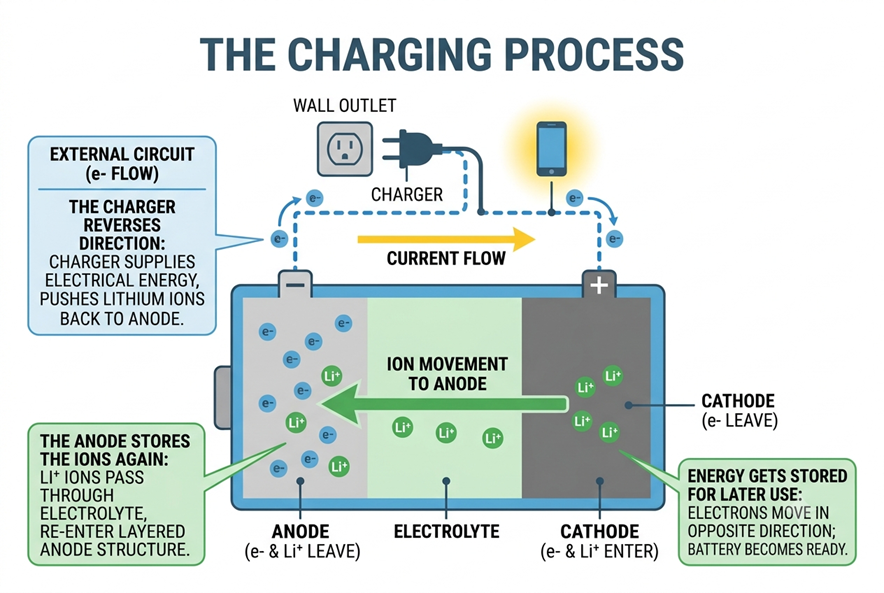
The Charging Process
Connecting the battery to a charger reverses the electrochemical flow so the battery can store energy again:
The Charger Reverses the Direction: The charger supplies electrical energy and pushes lithium ions to move back from the cathode toward the anode.
The Anode Stores the Ions Again: These lithium ions pass through the electrolyte and re-enter the layered structure of the graphite anode, preparing it for the next discharge cycle.
Energy Gets Stored for Later Use: Electrons also move through the charging circuit in the opposite direction. As ions and electrons return to the anode side, the battery stores energy and becomes ready to power a device again.
Where Are Lithium-Ion Batteries Used in Daily Life?
Lithium-ion batteries are already part of daily life in the Philippines. They power personal devices, transport tools, emergency backup systems, and many small electronics used at home, at work, and on the move.
Phones, Laptops, and Power Banks
Across the Philippines, phones, laptops, tablets, wireless earbuds, and power banks rely on lithium-ion batteries to stay compact, light, and rechargeable. Their high energy density and low self-discharge help these devices support messaging, mobile banking, navigation, weather alerts, online learning, and remote work without bulky battery packs.
Some slim phones, tablets, and wearable devices may use lithium-polymer designs, so it helps to compare lithium-ion vs lithium-polymer batteries when choosing or understanding portable battery types. Lithium-ion cells also do not have the traditional “memory effect,” so people can top up laptops or power banks at partial charge levels, although heat and ageing can still reduce capacity over time.
E-Bikes, E-Scooters, and Rechargeable Mobility Devices
Lightweight electric vehicles have become more visible across major Philippine cities, especially for short trips, delivery work, and neighbourhood errands. Lithium-ion batteries provide the stored energy that drives e-bikes, e-scooters, and electronic trikes. Compared with heavier lead-acid batteries, lithium-ion packs help reduce vehicle weight and can support better range, easier handling, and more convenient charging.
Residential Backup and Emergency Power
Frequent tropical typhoons and rotational brownouts present continuous energy challenges across many Philippine provinces. To mitigate the impact of these power interruptions, residents rely on various emergency backup power systems, which are increasingly shifting from old lead-acid setups to advanced lithium-ion battery storage due to its higher energy density, faster charging and lower maintenance requirements.
In residential energy security, lithium-ion batteries serve as the core power cell inside two main types of backup systems:
Fixed Home Energy Storage: Large, wall-mounted lithium battery banks connected directly to residential solar arrays to power whole houses during extended grid failures.
Portable Power Stations: Compact, plug-and-play lithium battery enclosures designed for flexible indoor deployment and targeted emergency power.
For families seeking a reliable baseline safety net during weather-induced blackouts, portable systems built with compact LFP lithium cells, such as the EcoFlow DELTA 3 Classic Portable Power Station, offer a practical choice. This hub delivers stable energy to power essential household appliances like standing electric fans, Wi-Fi routers, laptops, and LED lights, helping remote workers stay online and families maintain communication.
When severe weather threatens prolonged grid failure, larger lithium battery configurations like the EcoFlow DELTA 3 Max Portable Power Station supply a much more substantial continuous output. The durable LFP battery cells inside this unit store enough energy to run demanding, high-draw appliances such as household refrigerators, medical equipment, or water pumps. Featuring rapid recharging and fast automatic transfer speeds, it allows households to maintain essential domestic operations until the primary grid recovers.
Smart Home, Health, and Small Household Devices
Compact lithium-ion cells also power many rechargeable devices used around the home. They provide cordless, ready-to-use energy for daily tasks, safety, and basic health monitoring.
Smart Security & Sensors: Wireless cameras, smart door locks, and connected sensors use lithium-ion batteries to stay active without constant wiring. Battery life depends on device design, Wi-Fi use, and how often the device wakes or records.
Health Devices: Some digital blood pressure monitors, pulse oximeters, and blood glucose meters use rechargeable battery power for regular home checks. The battery supports portability and readiness, while measurement accuracy still depends on the device itself and proper use.
Small Appliances: Rechargeable lamps, handheld fans, cordless vacuum cleaners, and small tools use lithium-ion batteries for flexible power away from wall outlets. This can be useful during short brownouts, evening outages, or daily household routines.
Some thin, lightweight, or custom-shaped rechargeable devices may use a LiPo battery instead of a standard lithium-ion cell, especially when the product needs a slimmer shape or more flexible internal layout.
Lithium-Ion Battery Safety Tips for Philippine Households
Charge in a cool, dry place: Keep batteries away from direct sunlight, parked cars, damp corners, and poorly ventilated rooms. Heat can shorten battery life and raise safety risks.
Use the right charger: Use the original charger or a compatible one from a reliable brand. Avoid loose plugs, damaged cables, and very cheap adapters that heat up quickly.
Avoid soft surfaces while charging: Do not charge phones, laptops, power banks, or e-bike batteries on beds, pillows, sofas, or blankets. A hard surface lets heat escape more easily.
Keep batteries away from floodwater: During typhoon season, move battery-powered devices and backup power equipment away from floors and flood-prone areas. Do not charge or use a battery that has been soaked.
Watch for warning signs: Stop using a battery if it becomes swollen, cracked, leaking, unusually hot, or gives off a burning smell. Do not puncture, press, or repair it at home.
Store backup power safely: Charge power banks and portable power stations before expected brownouts. Keep them in a dry, stable place with enough space around them while charging.
Dispose of old batteries properly: Do not throw damaged power banks or rechargeable batteries into regular household trash. Check LGU collection drives, mall e-waste programs, DENR-EMB activities, or accredited e-waste handlers.
Conclusion
Lithium-ion batteries are used in many parts of daily life in the Philippines, from smartphones and laptops to power banks, e-bikes, and home backup systems. During brownouts or typhoon-related outages, they help keep communication devices, lights, fans, routers, and other essentials running. Understanding how lithium-ion batteries work also helps households charge, store, and use battery-powered devices more safely and efficiently.
FAQs
Is there a difference between a lithium battery and a lithium-ion battery?
Yes, there is a difference. A lithium battery usually refers to a non-rechargeable primary battery that uses lithium metal, while a lithium-ion battery is a rechargeable battery that uses lithium compounds and moves lithium ions between electrodes during charging and discharging. Lithium-ion batteries are designed for repeated use and are commonly found in phones, laptops, and electric vehicles, whereas lithium batteries are typically used in devices that require long shelf life and do not need recharging.
What is the biggest advantage of a lithium-ion battery?
The primary benefit of a lithium-ion battery is its exceptional energy density, which allows it to deliver substantial power capacity from a highly compact and lightweight structure. Unlike bulky lead-acid options, this technology concentrates electrical storage efficiently, making it practical for space-saving integration into mobile phones, laptops, and emergency power stations.
How long will a Li-ion battery last?
A Li-ion battery typically lasts between 2 to 5 years, depending on usage patterns, charging habits, and environmental conditions. Most lithium-ion batteries can handle several hundred to a few thousand charge cycles before their capacity significantly decreases. Factors such as frequent deep discharging, exposure to heat, and fast charging can shorten its lifespan, while proper charging practices and moderate temperatures can help extend it.