Solo RV Camping: Unique Challenges, Benefits, and Practical Tips for Travelling Alone
Key Takeaways for Solo RV Travelling
Prioritize Safety First: Share your complete itinerary and carry a satellite communicator for remote routes.
Test Systems Proactively: Check voltage pedestals and verify rig mechanics before settling into any campsite.
Verify Power Capacity: Rely on equipment with fast-charging capabilities for off-grid self-reliance.
More Canadians are hitting the road alone each season, drawn by the flexibility that RV travel offers when no one else’s schedule is involved. Retirement, remote work, and a broader cultural shift toward solo travel have all pushed the numbers up. The demographic is wider than ever, from retirees exploring the Maritimes to younger travellers taking extended trips through British Columbia.
Real Challenges of Solo RV Camping and How to Handle Them
Solo RV camping removes the safety net of a travel partner. These challenges are manageable, but they deserve honest attention before you leave the driveway.
Safety on the Road
Fatigue is a genuine risk when driving without a co-pilot. Organizations like Transport Canada strongly advise resting every two hours during long stretches to prevent driver exhaustion on isolated routes through northern Ontario or across the Prairies. On a long stretch through northern Ontario or across the Prairies, tiredness builds faster than most drivers expect. No one is watching the rig while you step away at a rest stop, either.
Practical counters are straightforward. Share your full itinerary with a contact at home before you leave. A GPS tracker on the vehicle adds another layer of visibility. Arriving at campsites before dark removes a lot of stress, since navigating an unfamiliar campground loop in the dark is harder alone than it sounds.
Mechanical Problems Alone
A flat tire on a Class C motorhome is a very different task from changing one on a car. Without a second person to help stabilize the situation or flag traffic, even minor mechanical problems become more demanding.
Carry a basic toolkit and know how to use it on your specific rig before you leave home. Keep roadside assistance coverage active and paid up. Store the rig’s manual somewhere easy to find, not buried under gear in a storage bay, because in a stressful moment you want it in ten seconds, not ten minutes.
Loneliness on Long Trips
Extended solo travel includes long stretches without real conversation, and that affects some people more than they expect. The quiet that feels peaceful on day two can feel heavy by day seven.
Campgrounds with communal areas, shared fire pits, or organized social programming make a difference. Scheduling regular video calls with family or friends before you leave, rather than trying to arrange them on the road, keeps those connections consistent. The goal is not to fill every moment with social contact, but to have some structure around it.
Each of these challenges has a practical fix, and knowing them in advance takes most of the anxiety out of the first trip. The benefits of solo RV travel, covered next, make working through them worthwhile.
The Genuine Benefits of Solo RV Life
Solo RV life offers freedoms that group travel rarely allows. These benefits are specific and worth naming clearly.
Your schedule is entirely yours: you can extend a stay at a lake in northern Ontario or leave at dawn with no negotiation required.
Budget control is simpler because every spending decision is yours alone, from fuel stops to campsite fees.
Solo travel builds practical self-reliance, since you learn to manage hookups, dump stations, and basic repairs faster when there is no one else to delegate to.
You tend to connect more with other campers when travelling alone, because solo travellers appear more approachable at communal fire pits and camp kitchens.
Mental reset happens more completely when the trip is shaped entirely around your own pace and interests, with no compromise required.
These advantages compound over multiple trips, and many solo campers find that the self-sufficiency they build on the road carries into daily life. The next section looks at how to prepare before the trip so these benefits are not undermined by avoidable problems.
Practical Preparation Tips Before Your First Solo RV Trip
Good preparation is the single biggest factor separating a smooth solo trip from a stressful one. These steps are sequenced in the order they should happen.
Take a short shakedown trip close to home, ideally one or two nights, to find mechanical issues and comfort gaps before committing to a longer route.
Build a pre-departure checklist that covers propane levels, water tank status, tire pressure, hitch security, and interior latch checks so nothing is left running or open.
Plan your campsites in advance and book them, especially for summer travel in popular Canadian provincial parks where walk-in spots fill weeks ahead.
Set up a reliable communication plan: share your route and expected check-in times with someone at home, and carry a satellite communicator if you plan to go off-grid.
Pack a comprehensive medical kit. Groups such as St. John Ambulance Canada recommend carrying supplies specifically tailored to remote travel, alongside extra prescription medications to cover the full trip plus a few additional days.
Learn to back into a campsite alone by practicing in an empty parking lot before you need to do it under pressure with other campers watching.
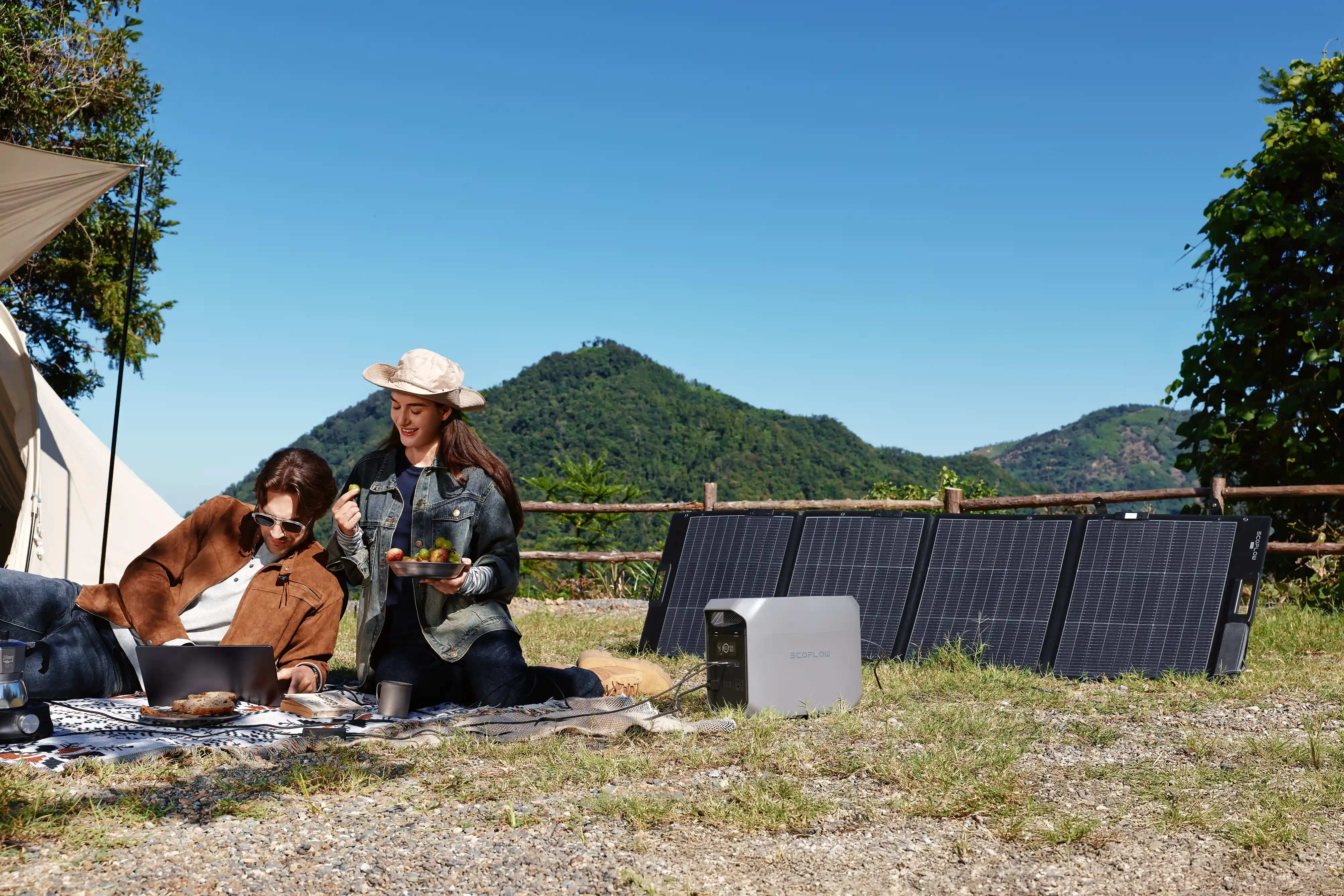
For campers who rely on battery-powered devices or appliances, power capacity matters more when you are alone. For example, the DELTA 3 Classic (1024Wh) charges from 0 to 80% in just 45 minutes and reaches a full charge in 60 minutes with AC charging, which is useful when a shore power window is short.
These six steps reduce the most common first-trip problems to manageable ones. With logistics covered, the next section looks at how to get the most out of the experience itself while you are on the road.
Campsite Habits That Make Solo RV Camping More Comfortable
Once you are at a campsite, small daily habits make a significant difference in comfort and safety. Experienced solo campers tend to act ahead of problems rather than react to them. The table below compares reactive habits, common among first-timers, with proactive ones that become second nature over time.
| Situation | Reactive Habit | Proactive Habit |
| Arriving at a new campground | Pull in and figure out the layout as you go | Drive through the loop once before choosing a spot to assess lighting, neighbours, and exit angles |
| Connecting to electrical hookup | Plug in and check later if something trips | Test the pedestal voltage with a surge protector before connecting your rig |
| Feeling unsafe at a site | Stay and hope the situation improves | Move to a different site or campground without hesitation, you have that freedom |
| Meeting neighbouring campers | Wait for them to approach first | Introduce yourself briefly, since a known neighbour is a resource if something goes wrong overnight |
| Ending the day | Leave the awning out and doors unlocked for convenience | Retract the awning, lock up, and note the campground host’s location before sleeping |
A few of these habits, like the pre-hookup voltage check, also protect your equipment. Others, like introducing yourself to neighbours, cost almost nothing but significantly increase your safety net at an unfamiliar site.
Proactive habits cost almost no extra time but reduce risk and discomfort noticeably. Building them into a routine means they become automatic by the second or third trip.
Start Your Solo RV Adventure With Confidence
A shakedown trip near home, a solid communication plan, and proactive campsite habits will take you further than any single piece of gear. Solo RV camping rewards preparation more than experience. Plan one short trip first, two to four nights in a well-serviced provincial park, learn what you actually need, and build from there. The first solo trip is always the hardest, and it is almost always worth it.
Frequently Asked Questions
Q1: How Do You Stay Safe While Solo RV Camping in Remote Areas of Canada?
Tell someone your full route and expected check-in times before you leave. Carry a satellite communicator, since large parts of rural Canada have no cell coverage at all. Park in well-lit or populated areas when possible, and move on without hesitation if a site feels wrong. Your instincts are a reliable signal.
Q2: What Type of RV Works Best for a Solo Traveller?
Smaller rigs, such as Class B campervans or compact Class C motorhomes, handle most solo travel needs well. They fit into more campsites, use less fuel, and require less setup time than larger units. A solo traveller rarely needs the extra space, so the tradeoffs usually favour going smaller.
Q3: Can You Find Good RV Parks and Resorts That Are Welcoming to Solo Campers?
Yes. Most RV parks and resorts across Canada welcome solo travellers, though some charge a flat site fee regardless of group size. Checking reviews for solo-friendly atmosphere and on-site amenities, such as communal fire areas or recreation programs, helps identify options that suit solo RV travel well.
Q4: Why Do Solo RV Campers Often Spend More Per Night Than Group Travellers?
Campsite fees are typically charged per site, not per person. A solo camper pays the same nightly rate as a family of four using the same spot. Fuel costs are also absorbed by one person rather than split among several. Budgeting for the price difference upfront prevents surprises on longer trips across Canada.
Q5: How Long Should a First Solo RV Camping Trip Be?
Two to four nights is a practical starting length. That window is long enough to test your systems, routines, and comfort with solo RV life, but short enough that any problems stay manageable. Many solo campers extend their subsequent trips significantly once the first one builds real confidence.
Disclaimer: The information provided above is for general guidance and recreational planning. Solo RV travel involves inherent risks, and road conditions across Canada change frequently. Prioritize personal safety by reviewing official travel advisories and campground regulations before departure. For authoritative updates on national park rules, route closures, and safety protocols, consult Parks Canada.